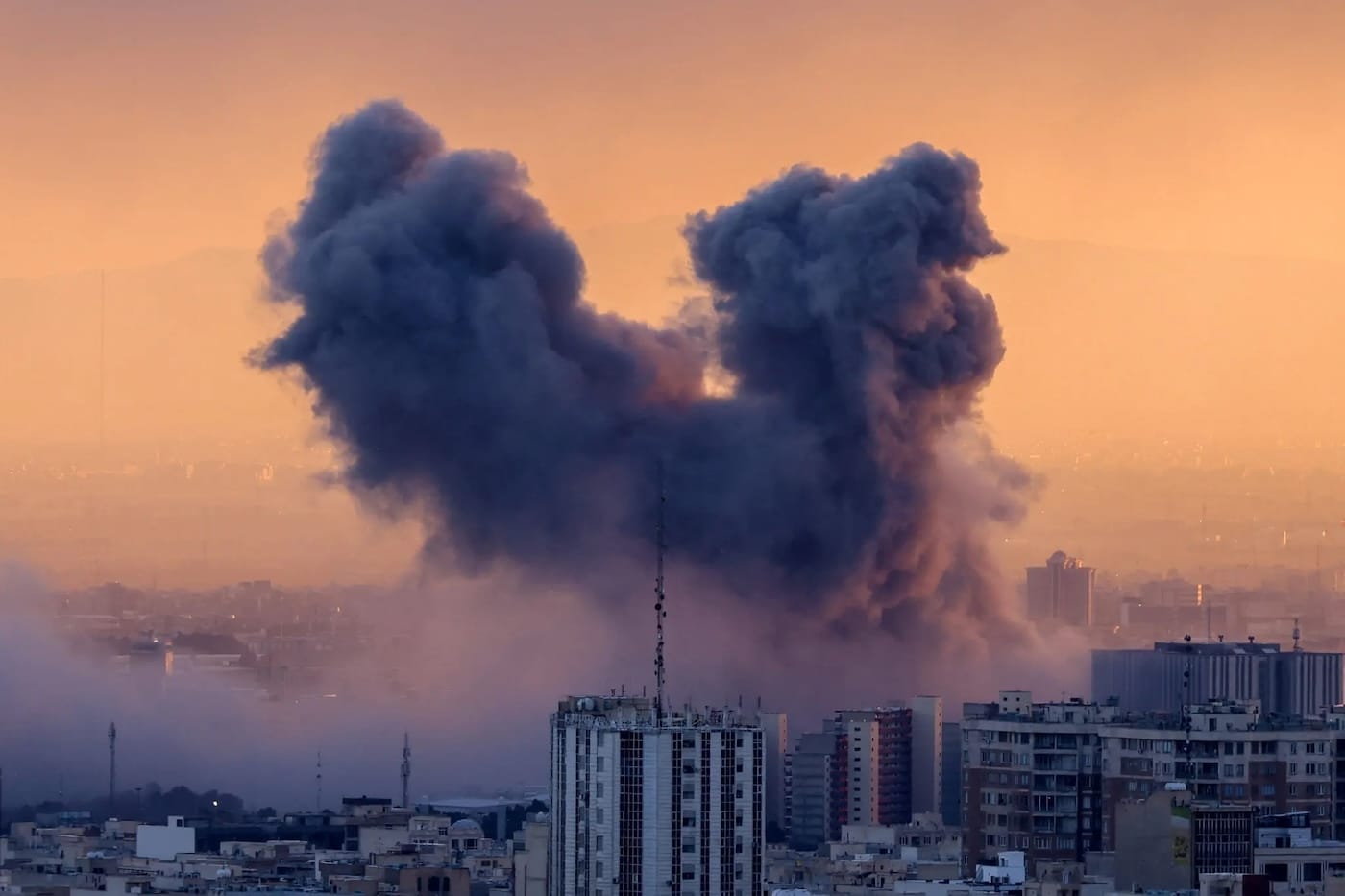

Four weeks into the U.S.-Israeli campaign against the Islamic Republic, Iran has shown striking resilience. Despite the destruction of its air defenses and the elimination of many of its senior leaders, neither the Iranian regime nor the country’s military is showing signs of collapse. The Strait of Hormuz remains effectively blocked, with Iran using its influence over global oil prices as its main military lever. The public has not taken to the streets in protest — instead, after strikes on civilian infrastructure and civilian casualties, the country appears to be experiencing a “rally around the flag” effect. Control over the Islamic Revolutionary Guard Corps is being seized by a younger, more radicalized generation, and the IRGC is not interested in settling the conflict without receiving major concessions from the United States. But Donald Trump is not prepared to compromise, writes Antonio Giustozzi, a senior research fellow at the Royal United Services Institute (RUSI) in London. In fact, America is sending additional troops to the Middle East.
Iran without air defenses
The first week of the U.S.-Israeli war against Iran offered at least one pleasant surprise: the decapitation of much of the leadership in Tehran. The ensuing two weeks, however, presented the coalition with a less pleasant development: the regime’s surprising resilience. Although by week three no Iranian air defence “system” remained in place, meaning the Israelis and Americans were able to bomb at will throughout almost all of the country, Iran’s ability to de facto block the Strait of Hormuz and to fire missiles and drones at targets all across the region indicated that the threat posed by the ayatollah’s was nowhere close to being eliminated.
The destruction of the country’s air defense network was the result of a major failure from the Iranian side. As has been previously discussed, the poorly integrated and technologically backward air defense network was no match for the Israeli and American capabilities, and any substantive fixes would necessarily have taken more time than the regime turned out to have.
The destruction of the country’s air defense network was a major failure for Iran
Iran attempted to mitigate the problem, buying 7 or 8 batteries of HQ-9B long-range anti-aircraft missiles from China, with deliveries starting in late summer 2025. But deliveries of the YLC-8B radar, which is supposed to be able to detect stealth planes and while integrating with the HQ-9B, started only in February 2026, and the Chinese technicians and advisers who accompanied these systems were pulled out the day before the war started, according to IRGC sources.
Under the circumstances, there was no way the Iranian operators could have managed to fully familiarise themselves with the foreign systems (especially with the YLC-8B). The new HQ-9B and YLC-8B network, moreover, made no progress towards integration with the existing Iranian air defense network, leaving two parallel systems to deal with the threat.
The HQ-9B/YLC-8B network was one of the priority targets of the Israelis and Americans, and by week two of the war all the HQ-9B missile systems had been destroyed, with just one or two radars still in operation, according to a source in the Iranian armed forces. The clearly disappointed Iranians blamed the Chinese technology, but clearly the network and its crews were not mature enough for operational deployment (especially after Beijing had pulled out its personnel).
Notably though, the non-Chinese part of the Iranian air defense system performed little better. According to an Iranian airspace forces source, only one of four S-300 batteries was operational as of week three, and only half a dozen batteries of the Iranian-made Bavar 373 system were still in service (while a large number of less capable platforms continued to operate). Neither the S-300 nor the Bavar 373 were able to track, let alone to shoot down, stealth planes. Moreover, Iranian sources acknowledge that their country is also far behind the U.S. and Israel in terms of electronic warfare capabilities. All the S-300s and the Bavar-373s managed to do was shoot down enemy drones.
Adapt and survive
What the Iranians could have done, however, was to use their available resources more flexibly — for example, by switching their air defence on and off to make Israeli and American air defence suppression operations more difficult to carry out. (For the little it’s worth, a source in the Iranian airspace forces says that they are doing something like this now with the relatively few systems they have left.)
With Iranian air defense all but done for, the Israelis and Americans have focused on taking out ballistic missile sites and drone and missile factories. Initially, this effort was quite successful too, aided by the Iranians’ merely partial adaptive efforts following the June 2025 war. Although Tehran’s forces started shifting to mobile launchers for ballistic missiles, as of Feb. 28 they still had a substantial number of fixed ramps. These did not last long. The attackers also managed to identify some of the underground missile bases used by the Iranians, as well as at least one each of the missile and drone factories, destroying them with bunker-busting bombs.
However, when faced with an existential threat, the Iranians began coordinating their missile launches to minimise the risk of detection and destruction. As a result, while the overall number of missile launches dropped after the first few days of war, it has since stabilised.
By the end of the first week, almost two-thirds of the ballistic missile launchers were destroyed, says one source in the airspace forces of Iran, but by the fourth week around a quarter were still left. The remaining mobile launchers emerge from their hideouts to fire and regain cover in just a few minutes, and as a result, the losses of mobile launchers have now declined dramatically. As of week four, the Iranians were still able to fire a few dozen ballistic missiles per day, as well as several dozen drones.
Most importantly, the Iranians’ de facto blockade of the Strait of Hormuz went all but unchallenged throughout the first 3.5 weeks of the war. Initially, Iran enforced the blockade against “hostile” countries mainly by using aerial drones (although a few missiles have also been fired from the shores of Iran and a few boat drones and fast attack crafts have been used). Then, according to a source in the Iranian Navy, it also started laying “smart” magnetic mines that can be activated or deactivated as needed — a move likely made in anticipation of a possible American attempt to seize control of Hormuz. While U.S. air strikes against the Iranian coastal installations around Hormuz can reduce or eliminate the threat of anti-ship missiles, it would take U.S. warships weeks to sweep the area, especially while under fire from drones and Iran’s remaining missiles.
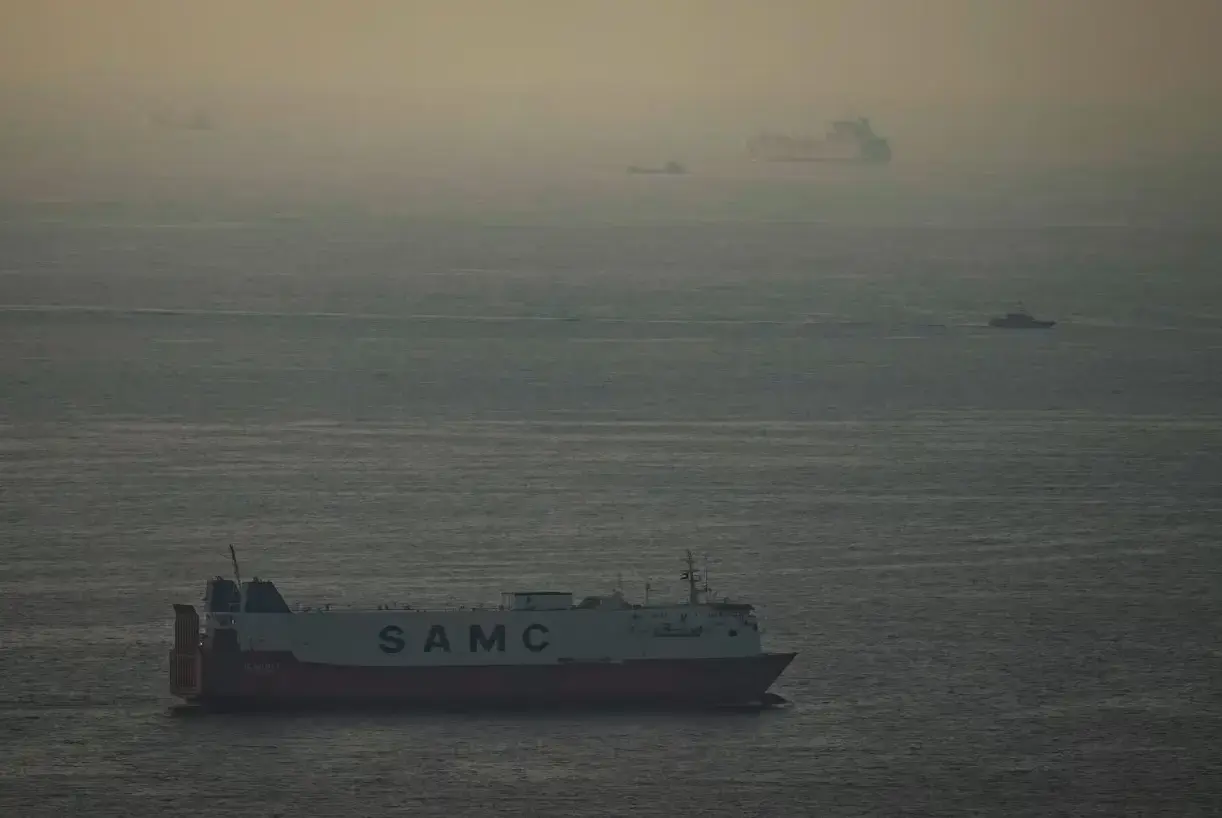
Ships in the Strait of Hormuz in March 2026
In short, as of the fourth week of the war, the Americans had not figured out how to re-open Hormuz, and Trump was even hinting that he might leave the task to those countries that have a greater commercial dependence on the regular functioning of the strait. Control over Hormuz, with the impact it has over oil and gas prices worldwide, is recognised by the Iranian regime as their most valuable asset in the war.
Rally around the flag
Despite the intense bombing and effective decapitation of the political and military elite, by week four there was also still no sign of the armed forces beginning to fragment. On the contrary, morale appeared to be on the rise, as the American oversights in strategy and preparation were clearly becoming visible.
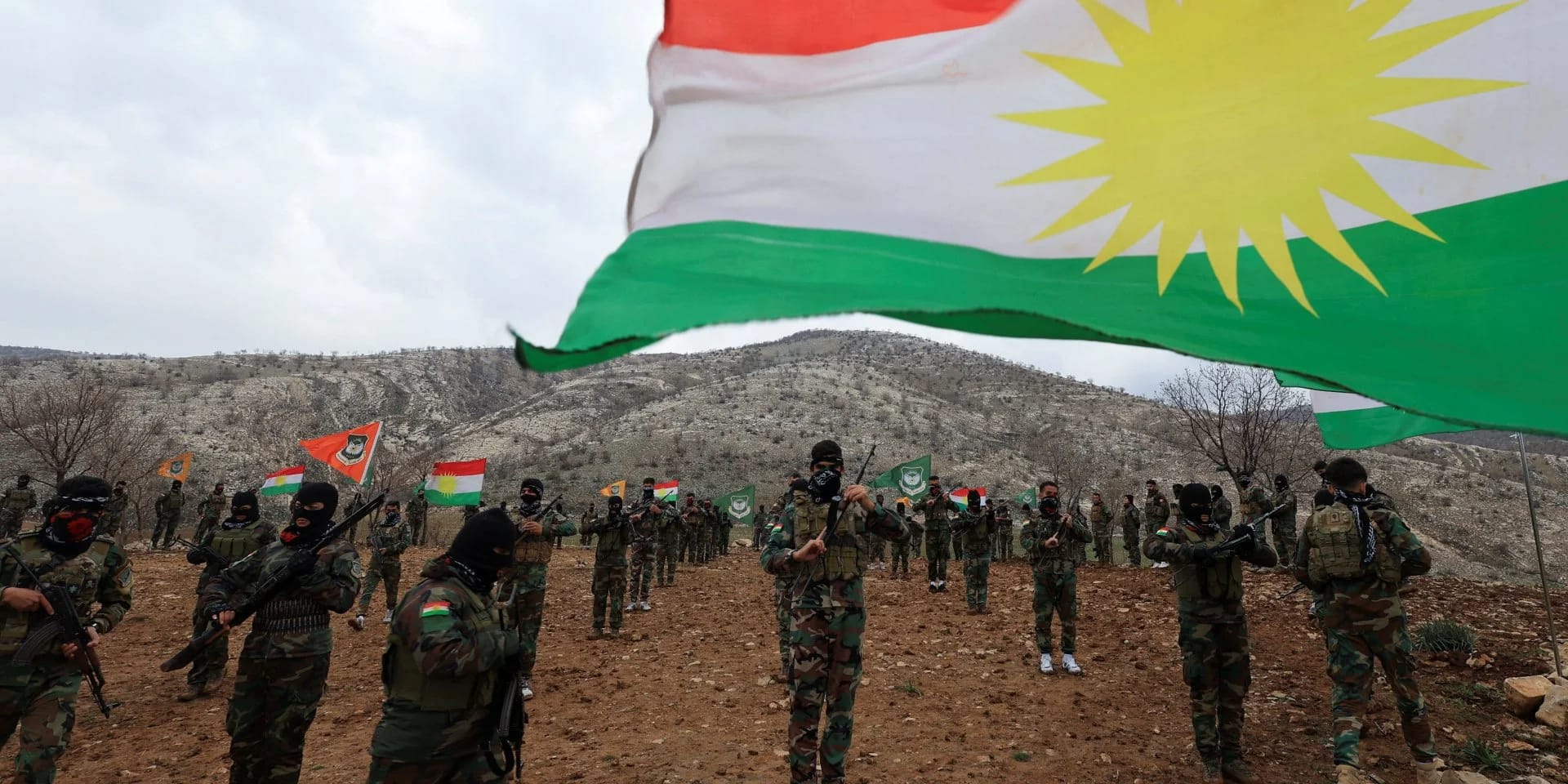
One clear sign that Tehran’s armed forces remain formidable comes by way of Kurdish military commanders and political leaders, who for three weeks have been trying and failing to convince the pro-regime Kurdish militias of western Iran to defect.
Gauging the state of opinion inside Iran is understandably difficult, but limited indicators suggest that after a short-lived period of high expectations for regime change at the start of the war, much of the Iranian population is feeling increasingly hostile towards the Israeli-American campaign.
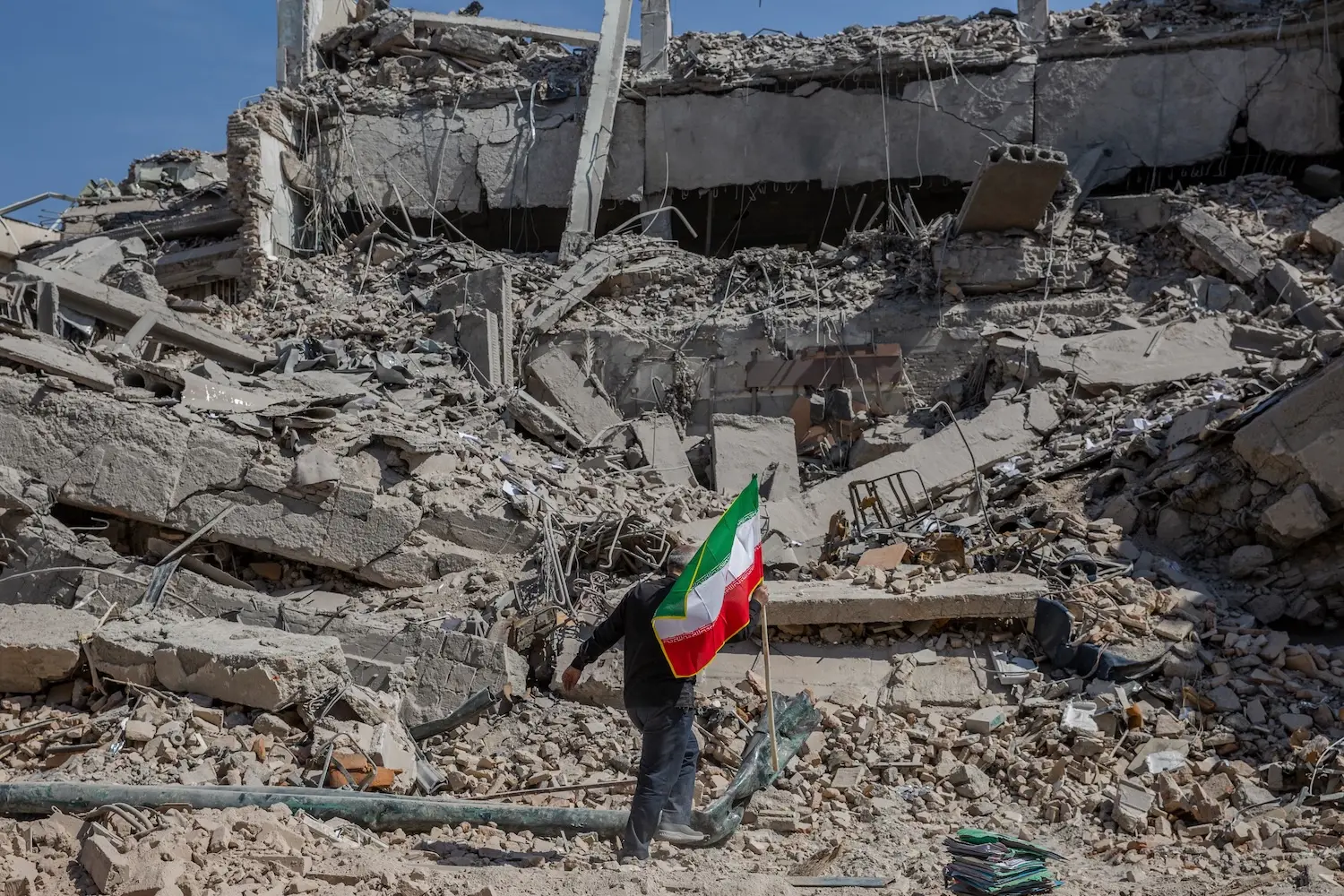
The strikes against hospitals, historical monuments, and energy infrastructure, as well as the rising number of civilian casualties, are casting doubts over the real motivation of the attack on Iran. The number of citizens buying into the regime change narrative appears to be in decline, while those who see the attackers’ objective as outright state collapse seem to be rising. A source within the IRGC who mere weeks ago was sceptical of the regime’s chances for survival now speaks of a limited “rally around the flag” effect, with spikes in volunteer recruitment into the ranks of the IRGC and the Basij.
Much of the Iranian population is feeling increasingly hostile towards the Israeli-American campaign due to the strikes against civilian infrastructure and the rising number of civilian casualties
According to the Kurdish sources mentioned above, many Iranians who remain opposed to the ayatollahs nevertheless express a sort of awe towards a regime that is seemingly able to keep up its fight against the combined forces of the U.S., Israel, and the Gulf countries.
The IRGC believes that there are still dozens of “Mossad” cells of armed “provocateurs” (with a couple dozen of members each) ready to step into action at the first opportunity. However, despite repeated appeals by Reza Pahlavi, Iranians are not descending on the streets to protest. As some critics of the regime were already saying back in June, it is impossible for them to believe that the people behind the Gaza massacres somehow wish Iran well.
A younger and more radical IRGC
In the meantime, in just a few weeks the process of gradual transformation of the regime has been dramatically accelerated by the decapitation strikes carried out by the U.S. and Israel. The air campaign has been successful in setting out “regime transformation,” but seemingly not of the type hoped for by the Trump administration.
There is no strong political figure left in Tehran who is able to control or restrain the IRGC and its associated organisations, let alone to move Iran towards some kind of “Venezuelan solution.” The last candidate, Ali Larijani, was killed on March 17, and Mojtaba Khamenei, appointed new Supreme Leader in a controversial process, is too close to the IRGC to act as a restrainer. Moreover, the former Supreme Leader’s son was seriously injured in the strike that killed his father, leaving him unable to manage state affairs on a day by day basis. Rumours even circulate that he might have been moved to Russia for treatment, but regardless of his true whereabouts and condition, one thing is certain: very few people seem to have any access to him.
The last strong political figure that could move Iran towards some kind of “Venezuelan solution” was Ali Larijani, who was killed on March 17
IRGC sources say that the organisation’s “younger generation” is taking over, exploiting the transition to decentralized operations that started immediately after the first wave of attacks. This young generation is angry, radical, and full of destructive energy — and old guard types like Ali Khamenei and Ali Larijani are no longer there to manage them.
The upstarts see politicians as an impediment to the successful conduct of the war, believing that the only road to success is to strike where the enemy is weakest — namely, the Gulf’s energy interests — and to hit it hard.
The Ministry of Foreign Affairs and President Pezeshkian worry that this radical approach will compromise relations with the Gulf states for the long term, but the IRGC's younger generation, supported by the few surviving senior commanders of the older generation (who are all radicals themselves) maintain that if the Gulf states, too, are moved to a state of awe at Iran’s resilience, they will come to terms.
In any case, Pezeshkian cannot control the IRGC, and its previous commander Pakpour, a moderate who had the task of doing exactly that, died with Khamenei on Feb. 28.
IRGC sources say that Iran has stockpiles of up to 100,000 drones — accumulated before the war, when the country was manufacturing several thousand of them per month — and only a relatively small portion has been destroyed by the airstrikes. Even now production continues, albeit at around half of the previous rate, as some of the factories have not been discovered by Israel and the Americans yet, and several small production lines are being set up all over the country.
Iran’s missile stockpiles are more of a mystery. The same sources say that the aerospace forces, distrustful of their own colleagues due to the pervasive presence of Israeli spies, did not even share true stockpile numbers and location within the IRGC. In any case, the main problem faced by the IRGC is the difficulty with replacing launchers, as they take longer to manufacture than the missiles themselves.
Another potential Iranian weak spot involves infrastructure, which is extremely vulnerable to airstrikes. After the South Pars strike of March 18, further U.S.-Israeli attacks on oil and gas production facilities might not be so likely, as they would send prices skyrocketing. However, Trump has threatened attacks on energy generation facilities, even as the IRGC's younger generation remains confident they can retaliate by targeting similar sites — along with desalination facilities — in the Gulf states.
Over the past few days, the IRGC appears to be growing more confident that it can see this conflict through successfully. However, like the Trump administration, they have no clear “off ramp” for bringing hostilities to an end. It is not the IRGC’s interest to let the Americans bail out of the war without submitting to some major concessions, but at the same time, their list of demands for re-opening Hormuz includes the payment of war reparations to Iran — something not remotely realistic. Trump, for his part, has no interest in making obvious concessions to Tehran. After four weeks of fighting, it remains as unclear as ever when and under what conditions the ongoing conflict will end.