Until recently, GRU lieutenant colonel Yuli Deryabin advised his Iranian counterparts on the use of Russian radar stations, helping identify vulnerabilities in Tehran’s air defense system. But despite Deryabin’s assistance, Israeli and U.S. strikes were able to destroy 90% of Iran’s air defense systems on the very first day of their ongoing campaign, leaving the attaché out of a job. Against the backdrop of a major war in the region, Lt. Col. Deryabin is now facing another threat — he risks losing his colony of rare ants, which he was unable to evacuate from the Russian Embassy in Tehran.
On Feb. 18, 2026, the Russian and Iranian navies held joint exercises in the Gulf of Oman. On the Russian side, the Baltic Fleet corvette Stoikiy and its accompanying tanker Yelnya took part in the after previously visiting the Omani port of Muscat. On the Iranian side were the frigate Alvand, the missile boat Neyze, and the corvette Shahid Sayyad Shirazi. (A Chinese squadron was also expected to arrive in the Gulf, but Beijing pulled out of the exercises at the last moment.)
According to the official account put out by Russia’s Defense Ministry, Iranian and Russian sailors jointly ran drills focused on communications and ensuring the safety of civilian shipping. In reality, the exercises rehearsed possible scenarios for blocking sea lanes and attacking a mock enemy.
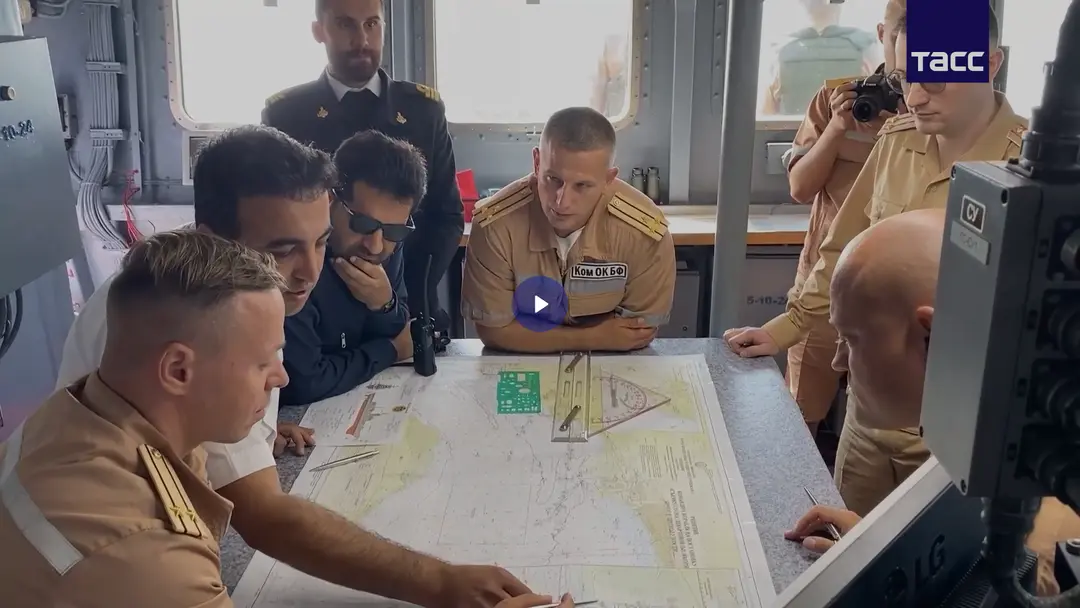
Iranian and Russian sailors during the Feb. 18 exercises
The end of the exercise was marked by a joint tea party. The sides exchanged commemorative souvenirs and assured one another of their strong military friendship. Many understood that a major war could soon begin and that the sailors might be seeing each other alive for the last time. The mood among those present was correspondingly somber.
Among those in attendance was 37-year-old GRU Lt. Col. Yuly Deryabin, a senior aide to the military attaché at the Russian Embassy in Iran. Deryabin arrived in Tehran in August 2023 and led a group of advisers on the operation of the latest Russian-supplied Resonance-NE radar systems, which are capable of detecting targets including ballistic missiles and stealth aircraft at a distance of up to 1,100 kilometers.
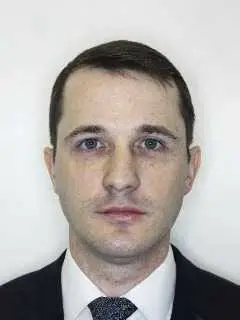
Yuli Deryabin
Radar systems specialist
Deryabin was invited to serve in the GRU after graduating from the Frunze Combined Arms Academy in Moscow in 2014. Later, he studied at the Military Diplomatic Academy’s agent-operational intelligence faculty,which trains officers for military attaché posts.
Deryabin is a co-author of the patent “Radar Station With Inverse Synthetic Aperture and Two-Level Neural Network Target Recognition.” According to the patent abstract, the system “belongs to the category of radar devices and is intended to determine the classes and types of airborne targets from range profiles and two-dimensional radar images on the basis of a neural network method.” (The technology is not exactly new; similar inventions have already been in use by the U.S. military and NATO forces for several years.)
After graduating from the “spy” academy, Deryabin completed further courses at the 106th Air Defense Training Center in Orenburg. He was then assigned to the GRU residency in Afghanistan, flying to the country several times.
For example, travel records show that in 2019 Deryabin accompanied Alexander Kononov, an officer from the GRU 170th Operational Coordination Center’s (OKTs) military unit 46179, to Kabul. OKTs is part of the Defense Ministry’s Special Control Service and is responsible for monitoring seismic and radiation conditions both near Russia’s borders and around the world. Among their various tasks, OKTs personnel track the atomic ambitions of North Korean dictator Kim Jong Un, monitor the situation at the Russian-occupied Zaporizhzhia Nuclear Power Plant in Ukraine (in the guise of civilian specialists), and serve on site at nuclear facilities in Iran.
In 2021, when the U.S. hastily withdrew its forces from Afghanistan, Deryabin was sent to Kabul again, where he studied captured weapons that had fallen into the hands of the Taliban. He was mainly interested in the missiles and loitering munitions that the Americans had left behind. Two additional Russian Foreign Ministry employees, Yevgeny Yegorov and Alfat Urumbayev, arrived in Afghanistan together with Deryabin. What the diplomats were doing in Kabul remains a mystery, but in April 2023 Putin decorated both men with medals “For Courage.”




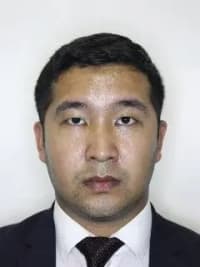
Deryabin and his colleagues remained active in the Middle East even as Russia’s war in Ukraine continued to eat up a substantial portion of the military’s resources. A source for The Insider at the Russian Embassy in Tehran said Russian intelligence learned in advance about the looming U.S. and Israeli airstrikes on Iran:
“As early as Feb. 25, Ambassador Alexei Dedov convened a general meeting and announced an urgent evacuation. Chaos ensued, and everything was done in a rush. On March 2, all the women and children, school teachers, and Rosatom employees, a total of 147 people, were transported to Azerbaijan, where they boarded a plane provided by the Ministry of Emergency Situations. It’s an eight-hour bus ride [from Tehran] to Lankaran, then another three and a half hours by plane to Zhukovsky Airport [in Moscow].”
On Feb. 28, when the United States and Israel launched massive strikes on Iran, the Russian Resonance-NE air defense systems overseen by Deryabin were among their first targets. In all, military experts estimate that 90% of Iran’s missile and anti-aircraft systems and radars were destroyed, including the latest Chinese HQ-9B and YLC-8B systems, which had been advertised as “stealth aircraft killers.” As a result, the Iranian military no longer had any need for consultant Deryabin’s advice.
Incidentally, the Iranian frigate Alvand, which took part in the joint military exercises with Russia, has already been sunk, and the destruction of the missile boat Neyze and the corvette Shahid Sayyad Shirazi appears to be only a matter of time.
A love since childhood
Among the evacuated employees of the Russian Embassy was Deryabin’s wife, Maria, who took an empty ant farm back to Moscow in diplomatic baggage, leaving its roughly 1,000 prior inhabitants behind.

Maria Deryabina
As The Insider found, Deryabin’s love of insects was instilled in him by his father, Albert, who until the mid-2000s worked as an engineer at a shipbuilding plant in the northern town of Severodvinsk before — to the surprise of relatives and friends alike — suddenly giving up everything to settle in the abandoned village of Anosinki in the Smolensk Region, where he founded a “Birch Bark Museum” while living in a Baba Yaga-style hut. Local television even aired a report about him.

Yuli Deryabin’s father, Albert Deryabin
The recluse himself did not watch television, rejected the expertise of doctors, and treated himself with folk remedies. In May 2021, a group of travelers from St. Petersburg visited the museum. After they left, the elder Deryabin fell ill with COVID-19. Because of poor communications and impassable roads, an ambulance could not reach him in time, and he died.
The younger Deryabin set up his first home ant colony in the top-secret dormitory of the Military Diplomatic Academy in Moscow, at 52 Narodnogo Opolcheniya Street, where he established a trade in insects. The academy’s leadership either did not know about his side business or else simply chose to look the other way.
Australian Diacamma ants are back on the market
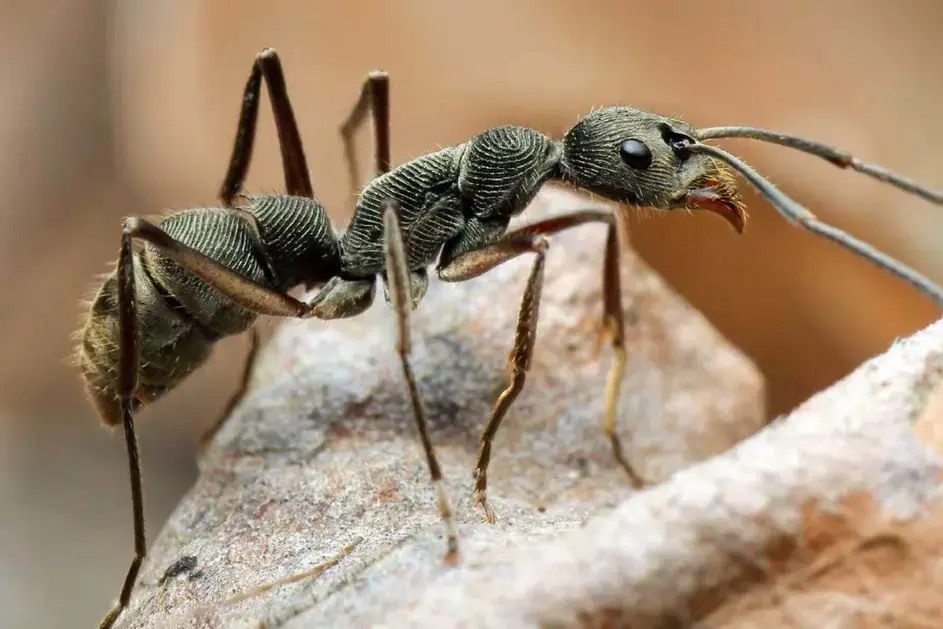
Among Moscow’s ant traders, Deryabin is a highly visible figure. The Insider obtained several text messages sent to Deryabin by other dealers in live insects: “Australian Diacamma ants available for sale, call now. The ‘Heel’ formicarium is an excellent solution for both beginners and experienced breeders. The formicarium consists of a nest and a large arena. The nest has three modules. Each module consists of two living chambers and a humidifying chamber.”
Deryabin’s money transfers also show that he ordered special equipment and feed for the ants.
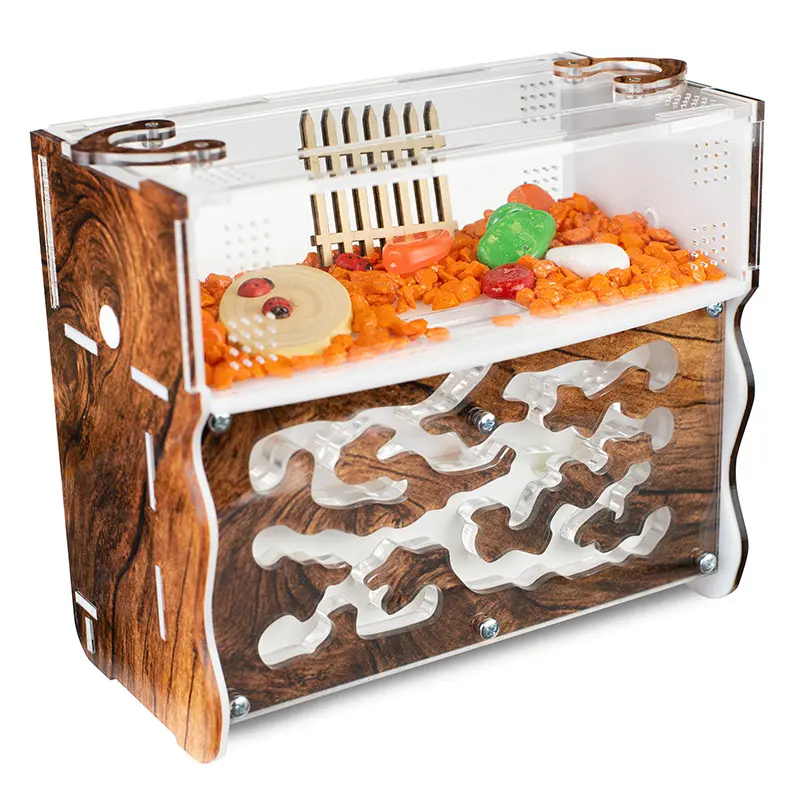
An example of a typical ant farm
Most likely, the GRU officer brought exotic specimens back from his foreign postings. Transporting rare ants without special authorization from sanitary control and customs is strictly prohibited, but the military attaché appears to have used his diplomatic immunity, and his baggage was not inspected.
Incidentally, the trade in smuggled ants can be quite lucrative. On Russia’s black market, for example, a Laotian Diacamma orbiculatum queen and 30 worker ants cost more than 100,000 rubles ($1,200). The price for a Messor arenarius queen and 40 members of the “service staff,” a species found in Israel, North Africa, and Saudi Arabia, comes in at a still substantial 30,000 rubles ($365). An Egyptian harvester ant costs 15,000 rubles ($180), while a colony of African predatory ants, Camponotus cf. fellah, sells for 9,000 ($110) rubles.
Lt. Col. Deryabin hid his costly live cargo in the bunker of the Russian Embassy in Tehran, where staff shelter from airstrikes. The Insider can report that he placed the ants in test tubes and empty bottles of mineral water, but the ants nevertheless began dying en masse.
The military attaché asked Igor Dyomkin, a GRU resident in Iran whose activities were previously covered by The Insider, to let him take the remainder of the colony back to Moscow. But Dyomkin refused, citing the difficult operational situation.