POLITICS
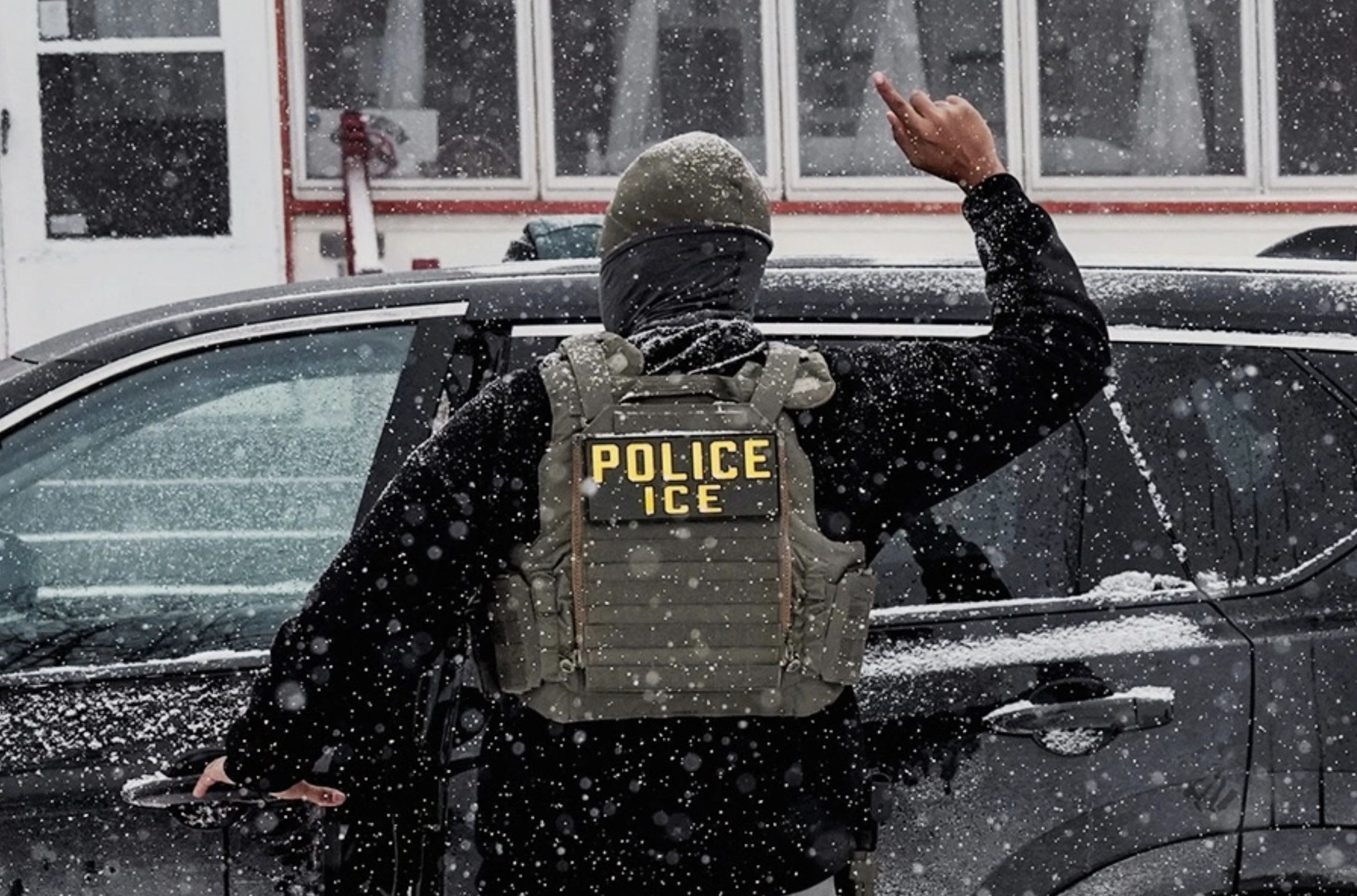
The U.S. Immigration and Customs Enforcement service (ICE) emerged from a bureaucratic overhaul launched in the wake of the 9/11 attacks. For years, the agency remained one federal body among many responsible for enforcing immigration laws. But during Donald Trump’s second presidential term, ICE has seen its workforce double and its budget triple. At the same time, the rising number of innocent people harmed by the agency’s officers has sparked growing outrage across the United States. In response, Trump appears willing to let go of some of his own appointees — but not to ease his hardline stance on immigration.
What a difference a term makes
Gregory Bovino, a MAGA hero
Kristi Noem, the “humane” embezzler
Agents or radicals?
Killings without punishment
America’s Immigration and Customs Enforcement (ICE) service was created in 2003 as part of the sweeping post-9/11 reorganization that saw several federal agencies consolidated under the authority of the new U.S. Department of Homeland Security (DHS). ICE itself is not a single unified structure. It includes Homeland Security Investigations (HSI), which targets criminal organizations; Enforcement and Removal Operations (ERO), which is responsible for detaining and deporting undocumented migrants; and the Office of the Principal Legal Advisor (OPLA), which provides legal support for deportation cases.
In the early 2000s, after undocumented migrants were declared a national security threat, the creation of ICE led to tougher policies and more frequent deportations, though not on a scale anywhere close to what has been seen since Donald Trump’s return to the White House.
In 2016, for the first time in its history, the ICE employees’ union openly endorsed a presidential candidate — Donald Trump, who had vowed to aggressively combat undocumented immigration and increase deportations. A month after being sworn into office, the new president signed an order to hire an additional 10,000 ICE officers. Still, in practice, staffing numbers grew slowly, and the number of deportations during Trump’s first term was even lower than under his predecessor Barack Obama. Yet the president’s abrasive anti-immigration rhetoric, combined with ICE’s harsh enforcement methods, had already begun to shape negative public attitudes toward the agency.
This period also saw the first campaign calling for “abolishing ICE.” Meanwhile, officers with Homeland Security Investigations reported that local governments had become less willing to cooperate with them, and the agency’s recruiters were being booed at job fairs. As a result, in 2024 HSI removed references to its affiliation with ICE from its website and issued staff email addresses under its own domain.
Far more sweeping changes came at the start of Trump’s second presidential term. As part of the “One Big Beautiful Bill Act,” he allocated more than $170 billion for border security, with $75 billion directed specifically to ICE, boosting the agency’s budget by around a factor of three.
As part of the “One Big Beautiful Bill Act,” Trump allocated $75 billion to ICE, tripling the agency’s budget
As of early 2025 ICE had roughly 10,000 employees, but to meet the administration’s reported goal of deporting one million people from the United States in a single year, the agency had to expand its workforce even more. By year’s end, its staffing level had already surpassed 22,000.
The surge in deportations was no accident. Previously, the agency had focused on the relatively small group of undocumented migrants who committed crimes and posed a threat to public safety. But with the start of Trump’s new term, they began targeting non-citizens on seemingly any available pretext.
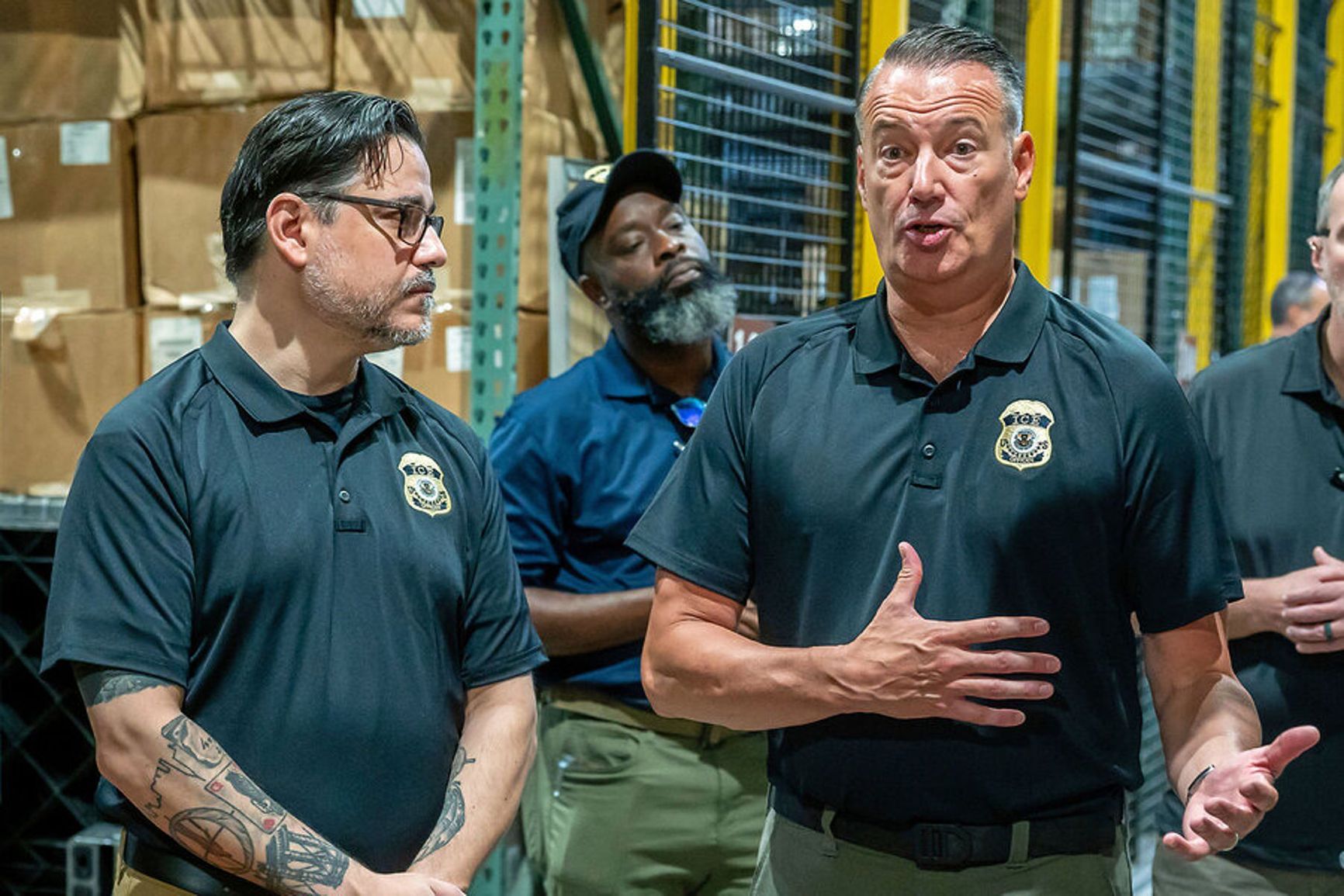
The expansion of ICE’s staffing and funding effectively gave Trump an internal security force reporting directly to him. The agency is now led by acting director Todd Lyons, who was appointed by the president but never confirmed by the Senate. Meanwhile, the actions of the agency’s officers are not being properly investigated.
ICE agents often cover their faces with masks, move around in unmarked vehicles, and wear uniforms without department patches. They have also begun carrying out operations in places where they previously did not — in hospitals, churches, and schools. The agency’s officers violate hundreds of court orders.
The latest aggressive raids in cities led by Democrats are associated not with Lyons but with Gregory Bovino, who has long advocated expanding the powers of the Border Patrol and tightening immigration enforcement. In 2010, while serving as station chief in Blythe, California, Bovino launched raids at an airport and at bus stations. The operation was supposed to last three days, but it was halted after just an hour following criticism of the harsh arrests from Democratic senator Harry Reid.
In 2020 Bovino became chief of the Border Patrol’s El Centro sector in California. An investigation by the independent organization Project On Government Oversight found that under Bovino’s leadership, incidents of excessive force increased in situations where no clear threat to the lives or safety of his officers existed.
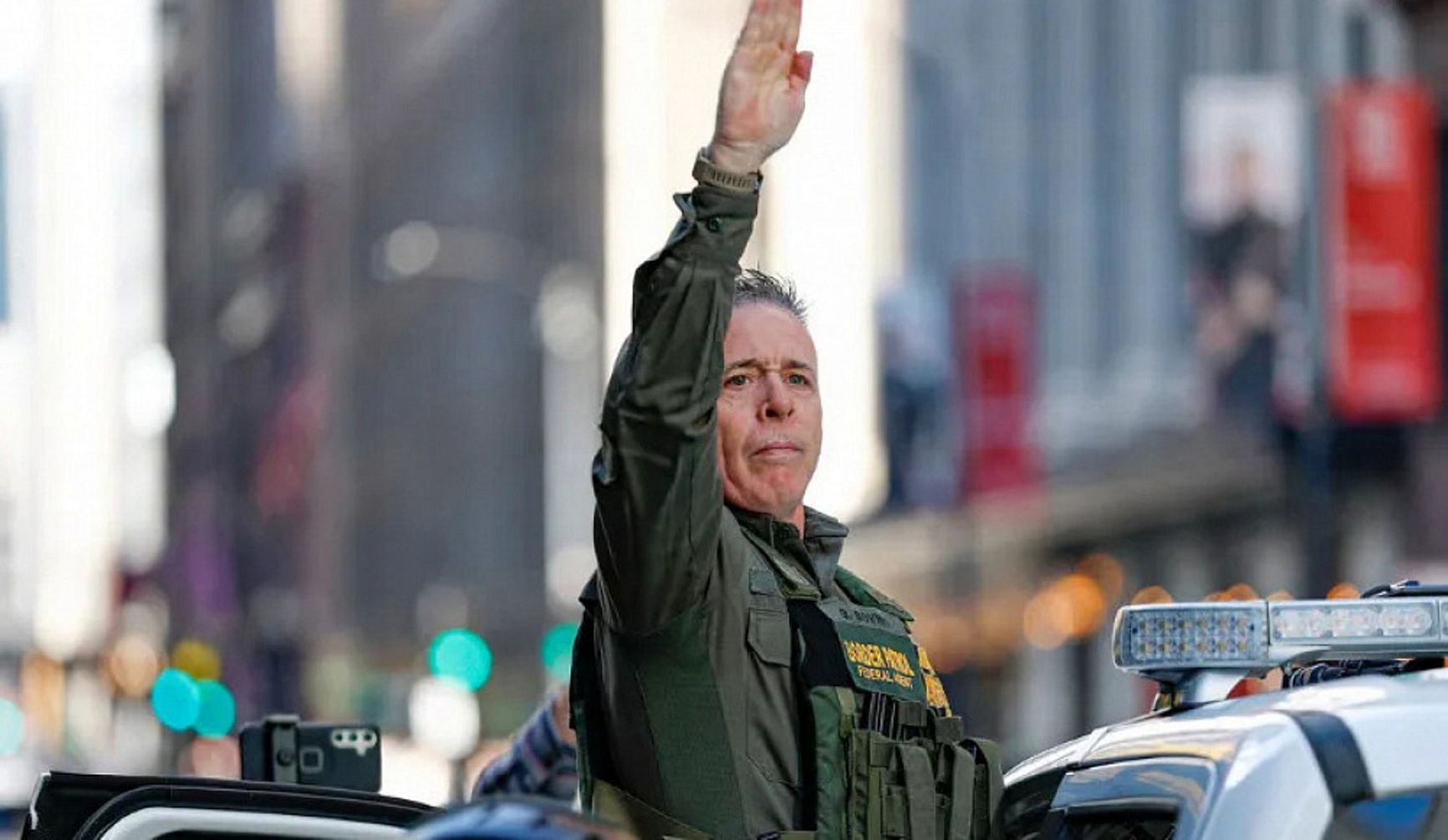
In addition, Bovino carried out several media-driven stunts. For example, in 2021 he crossed the All-American Canal at the Mexican border with a group of journalists to demonstrate how dangerous it is to enter the U.S. illegally by that route. In 2023, he locked reporters in a car trunk to give them a sense of the risks associated with undocumented immigration.
That same year, Bovino was briefly removed from his position as chief of the Border Patrol after he criticized conditions at the border under the Biden administration (according to the Associated Press, the decision was also influenced by Bovino’s social media posts, which included photos of him posing with an assault rifle). After Trump returned to the White House, Bovino became a hero of the MAGA movement, and the previously deleted photograph featuring an M4 rifle reappeared on his profile.
It is no surprise that in 2025 Bovino became the “commander-in-chief” of the Border Patrol during ICE operations in Los Angeles, Chicago, Minneapolis, and Saint Paul. This appointment strengthened his position within the agency and made him one of the most influential figures in the Border Patrol. In this role, he frequently clashed with local officials who were unhappy with the agency’s actions.
When Los Angeles mayor Karen Bass criticized ICE’s methods, Bovino advised her to “better get used to us now, because this is going to be normal very soon.” In Chicago, mayor Brandon Johnson signed an order prohibiting ICE from enforcing immigration laws in the city, but Bovino refused to comply. During the raids, his agents smashed car windows to pull people out without arrest warrants, raided Home Depot stores, and used force against protesters — deploying tear gas, pushing demonstrators to the ground, and detaining them.
A judge even issued a temporary order barring federal agents from using harsh crowd-control tactics. Bovino violated that ruling himself in October when he was accused of throwing at least one tear-gas canister into a crowd of protesters.
It also became known that, in a civil lawsuit filed against the Department of Homeland Security, Bovino gave false testimony under oath. In one instance, he repeatedly claimed he had not pushed a protester to the ground, despite video evidence showing otherwise. In another, he repeatedly changed his account of why he used tear gas, first saying he had acted after being struck in the head by a rock, later that a rock “nearly hit” him. On the final day of testimony, Bovino admitted he used gas before anyone threw a rock at him and that he failed to issue a warning, as is required by protocol.
Only after the second ICE-related killing in three weeks occurred in Minneapolis last month was Bovino removed from his position as “commander-in-chief” of the Border Patrol and returned to his previous job in California. Sources at The Atlantic say he is expected to resign soon.
Another key figure responsible for ICE’s actions is U.S. Secretary of Homeland Security Kristi Noem. She also has a rather notable background.
In 2020, Noem’s 26-year-old daughter was denied a real-estate appraiser’s license. At the time, Noem was governor of South Dakota and decided to summon senior officials to her office. What happened at that meeting is still unknown, but a few days later the denial was reversed, and Sherry Bren, the head of the licensing program, soon left her position.

Beyond using her office to deal with personal matters, Noem was also frequently accused of using public funds for private needs. In 2021, she spent approximately $70,000 to renovate her residence, and over her tenure as governor her office expensed more than $640,000 on trips — for dental procedures in Houston, bear-hunting in Canada, and a “World Freedom Initiative” conference in Paris. In 2023, while still serving as governor, Noem secretly transferred $80,000 from political donations gathered for the nonprofit American Resolve Policy Fund into her personal account, without reporting it in any disclosure forms.
She is also known for making unfounded accusations. For example, in 2024 Noem presented no evidence to support her claim that drug cartels were operating on Native American reservations in South Dakota and that tribal leaders were profiting from the drug trade. In response, all nine tribes barred the governor from entering their reservations, which make up roughly 12% of the state’s territory.
That same year, in her book No Going Back, Noem wrote about shooting her 14-month-old dog Cricket. Another example of her “humanitarianism” came after her appointment to a post in Trump’s cabinet when she personally blocked $1.3 billion in FEMA funding intended for disaster-mitigation programs. More recently, Noem said that the people killed by ICE agents in Minneapolis were “domestic terrorists,” who had been planning to injure agency officers — a description not supported by video evidence from either incident.
In her book, Noem wrote about how she shot her 14-month-old dog because she couldn’t handle training it
In late January 2026, House minority leader Hakeem Jeffries accused Noem of misusing budgetary funds to the detriment of citizens and openly demanded that Trump fire her, even threatening to introduce articles of impeachment if he did not comply. Although Jeffries did not follow through, dissatisfaction with Noem’s actions has grown not only among opposition lawmakers but also among supporters of tough immigration policy — and even within the broader MAGA camp.
At the end of 2025, The Washington Post obtained access to internal ICE documents. They show that it plans to spend $100 million in 2026 on recruiting new personnel, in part by targeting people who attended UFC events, listened to patriotic podcasts, or showed an interest in firearms. According to the document reviewed by reporters, after already doubling its workforce the agency was planning to hire another 10,000 people, significantly lowering its standards in the process. In order to get new recruits into the field as quickly as possible, training time was cut from 13 weeks to six, age limits (previously no younger than 21 and no older than 40) were removed, and the requirement that officers have a college degree was waived.
At the same time, the rhetoric used by ICE in its advertising increasingly resembles wartime messaging and primes potential recruits for a hard-edged mission. “The enemies are at the gates,” reads one ad. “Defend the homeland, deport all foreign invaders,” urges another. “America has been invaded by criminals and predators. We need YOU to get them out. You do not need an undergraduate degree,” goes a third.
“America has been invaded by criminals and predators. We need YOU to get them out,” an ICE ad declares
Alongside this broadly aggressive rhetoric, the agency constantly flirts with right-wing and far-right audiences, using memes such as “Which way, American man?” In October, the agency also used a frame from the game Halo in its advertising with the slogan “Destroy the flood.” In the game’s universe, “the Flood” refers to an alien life form, and similar language is often used by far-right groups to describe immigrants.
After the killing of Renee Good in Minneapolis, ICE posted a message with the slogan “We'll have our home again.” The line comes from the band Pine Tree Riots and is popular almost exclusively among white nationalist circles.

Tellingly, a chapter of the far-right neo-fascist organization Proud Boys reposted the message featuring the line “We'll have our home again,” adding the comment: “Message received.” Unsurprisingly, in December of last year,the Senate’s Permanent Subcommittee on Investigations released a report in which one detainee claimed he had seen several ICE agents who had Proud Boys tattoos.
In a Chicago suburb this past Sept. 12, during a roadside document check, ICE agents shot and killed Mexican national Silverio Villegas González. The investigation into the incident is still not complete. Then, on Jan. 7 in Minneapolis, an ICE agent shot and killed a U.S. citizen, 37-year-old Renee Nicole Good, a mother of three who was behind the wheel of her car. After that incident, Minnesota authorities sued the Trump administration, seeking to ban the agency’s operations in the state. However, less than three weeks later, a Border Patrol officer working alongside ICE shot and killed another U.S. citizen — nurse Alex Pretti — during an arrest.
Three more people died in 2025 in accidents occurring during attempted arrests. In October, José Castro Rivera tried to flee from ICE agents and ran onto a busy highway in Virginia, where he was struck by a car. In August, Roberto Carlos Montoya Valdés was also hit and killed on a freeway while attempting to escape an ICE raid in California. And in July, Jaime Alanis García died after falling 30 feet from an agricultural greenhouse while trying to evade federal agents.
In addition, at least 20 people died in ICE custody in 2025, the highest figure since 2004.
In 2025, at least 20 people died while in ICE custody
Naturally, these incidents have triggered waves of mass protests. The first major example was the No Kings! demonstrations that were held on Donald Trump’s birthday last June 14. They turned out to be among the largest single-day protests in U.S. history. Trump has made it clear he does not intend to pay attention to the protests (though he did post an AI-generated video showing him bombing demonstrators with excrement dropped from an airplane).
The American president continues to insist that his immigration policy is popular. Speaking in Iowa on Jan. 27, he claimed that 80% of Americans support his deportations. Yet even the Republican polling firm Echelon Insights found that 51% of Americans believe ICE makes cities less safe. In addition, a New York Times/Siena University poll published on Jan. 23 showed that only 36% of voters approve of ICE’s performance, and a Wall Street Journal poll conducted from Jan. 16-18 found that 58% of respondents view the deportation efforts as excessive.

More than that, a Jan. 16 CNN poll conducted by SSRS showed that 58% of Americans consider Trump’s first year back in the White House to have been a failure. And although most respondents are concerned about the president’s inability to address economic problems, security issues are also contributing to the drop in his approval rating.
According to data from the independent think tank Migration Policy Institute, ICE itself deported 340,000 people in 2025 — 25% more than in 2024. However, the overall number, taking into account operations by other agencies (such as the U.S. intelligence services), will likely be roughly equal to or slightly below the final-year total under Biden, when 685,000 deportations were recorded without anywhere near the same level of violence and public unrest.
In recent weeks, the White House has been trying to create the appearance of a course correction when it comes to ICE operations. Bovino was removed from his post in Minneapolis, and Kristi Noem seems to have fallen out of Trump’s favor. In addition, officials including the president himself have at least begun to describe the deaths caused by the agency’s officers as tragedies, rather than blaming the victims.
However, this offers little reassurance to protesters. Bovino has been replaced by another hardline supporter of deportations, Tom Homan, who has already declared that he is here to “restore law and order.” And the U.S. Department of Justice has launched an investigation against Minnesota governor Tim Walz, who had demanded that the federal government “end the occupation” of the state. In short, Trump is not about to begin playing nice when it comes to controversies created by his favorite immigration enforcement agency.
К сожалению, браузер, которым вы пользуйтесь, устарел и не позволяет корректно отображать сайт. Пожалуйста, установите любой из современных браузеров, например:
Google Chrome Firefox Safari