In August 2025, Polish border guards returned a 16-year-old Russian citizen to Russia after he attempted to seek political asylum. The case became known in October, when criminal proceedings against the teenager reached a Russian court. The incident is part of a larger trend. By 2025, European Union countries bordering Russia and Belarus have effectively closed themselves to political asylum seekers. Whereas just a few years ago Russians could expect their asylum claims to be examined, such attempts now increasingly end in forced returns — so-called pushbacks. Experts say the mechanisms that once allowed refugees to apply for protection have changed after Russia and Belarus engineered a migration crisis in 2021 that saw migrants funneled en masse to the Lithuanian, Polish, and Finnish borders. Still, asylum remains possible — but only if applicants contact human rights groups before crossing the border.
“We don’t need people like you”
In August and September 2022, six anarchists and anti-fascists were detained in the Russian cities of Tyumen, Yekaterinburg, and Surgut. Investigators labeled them a “terrorist community,” alleging they had planned acts of railway sabotage, along with arson attacks on draft offices and police stations. All six were tortured — beaten, shocked with electric current, suffocated with plastic bags and threatened with sexual assault — in order to extract confessions.
One of their friends, a Yekaterinburg resident identified as Nikita, decided to flee Russia after learning his name had appeared in case materials. “I could be detained the same way, tortured the same way, and imprisoned on fabricated charges,” he told The Insider.
Nikita did not have a passport for international travel and could therefore legally leave the country only for Kazakhstan, Kyrgyzstan, or Armenia — all three of which share an interstate wanted-persons database with Russia. Those destinations seemed too dangerous given that Russian journalist Yevgeniya Baltatarova had already been detained in Kazakhstan at Russia’s request.
Nikita therefore decided to seek refuge in the European Union, where political asylum is available. He planned to cross the Belarus-Lithuania border — a route previously used by other political refugees — and apply for protection there.
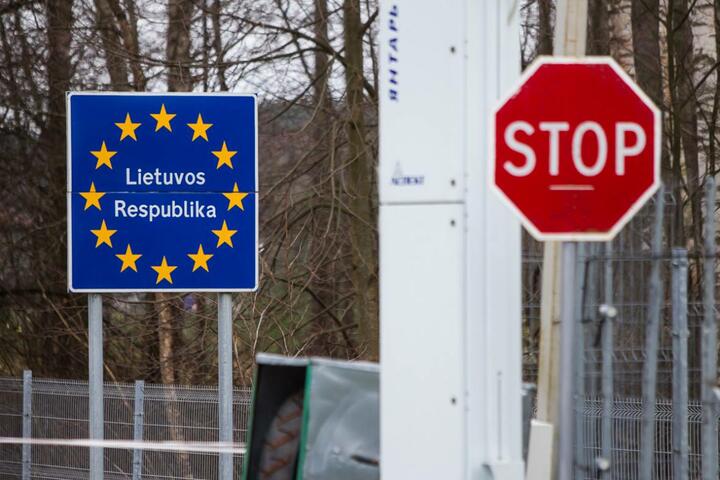
In October 2022, Nikita set out. The crossing itself went smoothly, though on the final stretch he was forced to swim a considerable distance through cold water. Reaching the Lithuanian shore, he asked a local resident in the nearest village to call border guards.
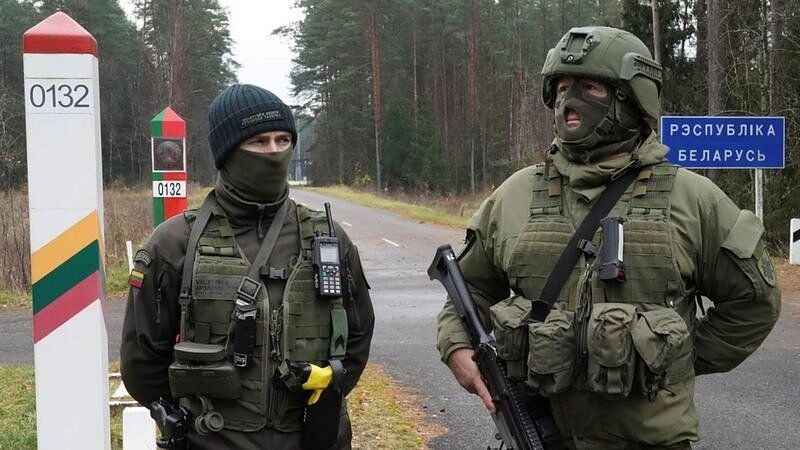
Lithuanian border guards
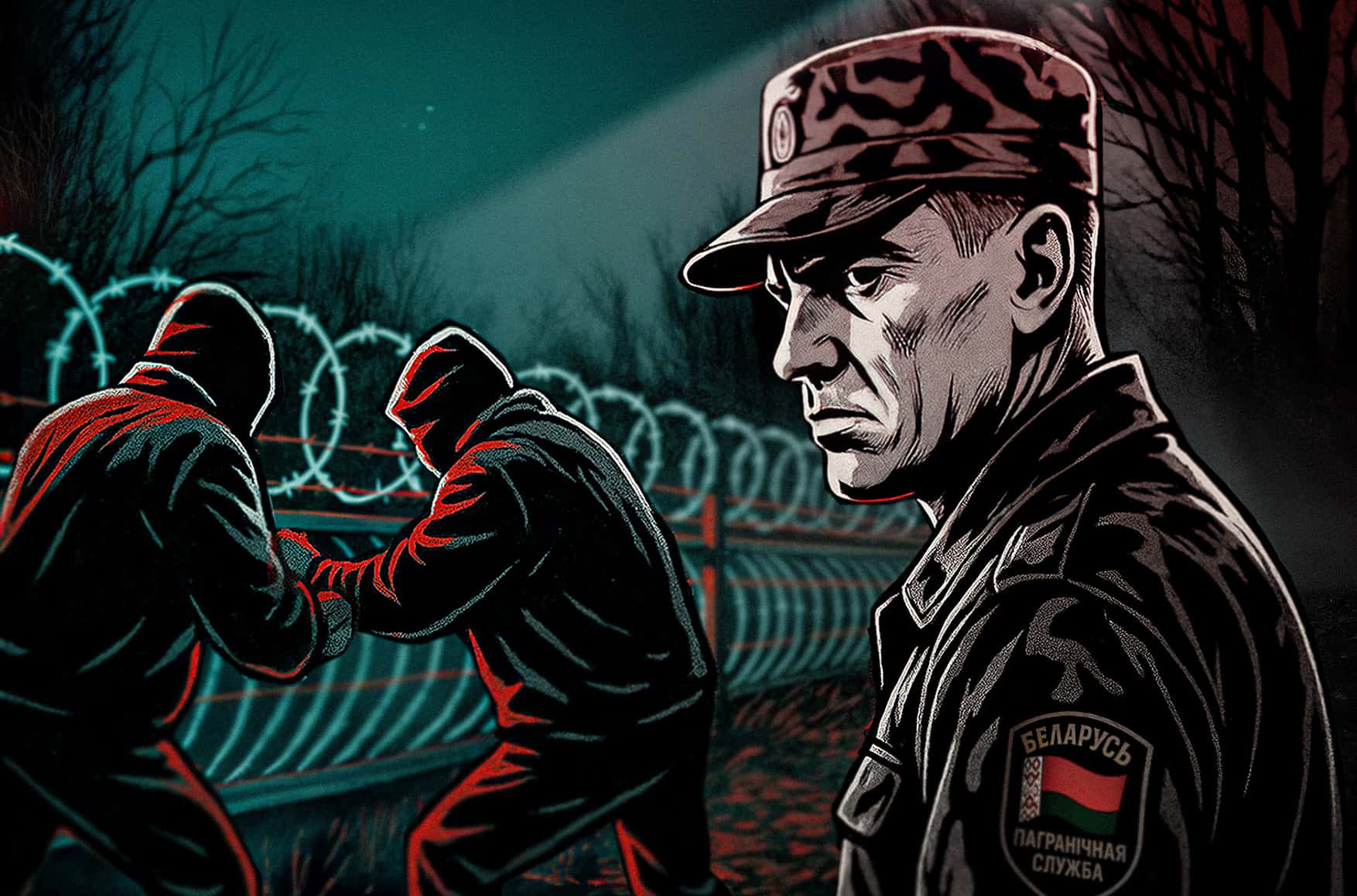
When officers arrived, Nikita immediately said he was seeking asylum, showed his passport, and described the case and the torture. He expected standard asylum procedures to begin. Instead, he was photographed, told to wait, and then driven back to the border without any paperwork.
“The senior border guard said: there is a war going on now, you have no relatives here, and we don’t need people like you,” Nikita recounted. He was dropped at the border and pushed through a gate in a barbed-wire fence into the neutral zone.
Nikita managed to get out of the border forest, bypass a Belarusian checkpoint, and reach the city of Grodno. A few days later, he tried again — crossing the border once more and making it to Vilnius, where he went to the migration department. There, he gave a detailed written account of his story and handed over a flash drive with documents and evidence related to the “Tyumen case.”
But at the migration department, Nikita said, officials questioned him, calling him a “saboteur.” They did not look at the materials he provided and then, without issuing any decision or protocol, drove him back to the border and forcibly pushed him out again, tossing his documents over the barrier.
This time, Belarusian border guards detained Nikita. He was sentenced to several days of administrative arrest and fined for attempting to cross the border illegally. After that, he was forced to move on to another country, where he again sought protection. Lithuanian authorities never returned to his application.
“When they expelled me, I felt doomed,” Nikita said. “Several thousand kilometers had been traveled in vain. When Europe doesn’t accept you and Russia awaits you with torture, you don’t understand where to go next or where you can feel safe.”
Human rights defenders describe Nikita’s case as one of the first documented pushbacks after the start of Russia’s full-scale invasion of Ukraine: a Russian national facing clear political risk was twice expelled from EU territory without the legally required asylum claim evaluation procedure being completed.
Rights advocates told The Insider that such cases are far from isolated. They say forced returns and refusals to register asylum applications occur far more often than is publicly known. Many people deliberately avoid publicity, fearing that any mention of an illegal border crossing could complicate future attempts to obtain visas or legal status.
How Eastern Europe closed its borders
Nikita’s story illustrates a broader shift in border practices. Instead of initiating the legally mandated asylum procedure, border authorities simply send political refugees back — often to the places they fled. Asylum claims are ignored, and individuals are denied basic guarantees such as registration of their application, access to a lawyer, and the right to appeal. This practice is known as a pushback.
Pushbacks differ from formal deportations, which are carried out through established procedures that include basic human rights protections and are usually subject to judicial review. With pushbacks, border guards turn away people who cross outside official checkpoints, disregarding asylum requests and the dangers they may face at home.
Such practices violate the principle of non-refoulement enshrined in the 1951 Geneva Convention on Refugees and the Convention Against Torture, and contradict rulings of the European Court of Human Rights. The principle prohibits returning people to places where they risk torture, arbitrary detention, or political persecution. Nonetheless, on the EU’s eastern borders pushbacks have become routine: people are detained in border zones and pushed back across the line without consideration of their circumstances.
The 1951 Geneva Convention prohibits returning people to places where they risk torture, arbitrary detention, or political persecution.
Just a few years ago, the situation was different. EU countries bordering Russia and Belarus examined asylum claims even from those who crossed illegally, provided that applicants had grounds to fear political persecution. Russians and Belarusians prosecuted for participating in protests or for holding opposition views received refugee status or humanitarian residence permits. How a person crossed the border mattered less than why they did so. Crossing through forests or rivers was seen as a forced step, not a crime.
In 2020, for example, Russian activist Mikhail Pulin entered Lithuania by illegally crossing several border rivers. Authorities accepted his asylum application and granted him protection, recognizing the real risk of persecution he would have faced in Russia.
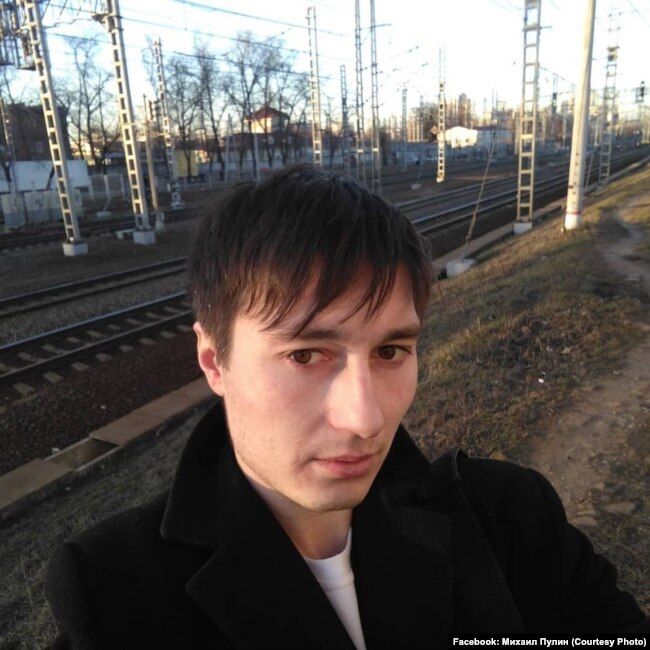
Russian activist Mikhail Pulin
Two years later, Lithuania granted protection to Vladimir Ratnikov, a defendant in the “Black Bloc” case, who likewise crossed outside an official checkpoint. Similar stories involved Belarusian protesters after the 2020 unrest. One example is Andrei Kazimirov, who managed to flee Russia illegally in 2022 and take refuge in Lithuania after the European Court barred Moscow from extraditing him to Minsk.
Beyond illegal crossings, from the second half of 2021 Lithuania also accepted several thousand Russian and Belarusian citizens who received refugee status, temporary protection, or humanitarian visas, which do not require formal employment or proof of funds. Among them were opposition activists, journalists, human rights defenders, IT specialists, and civil society figures facing genuine persecution, recalled Eitvydas Bajarūnas, Lithuania’s former ambassador to Russia.
Pushbacks as a rejection of the very idea of asylum
The European Court of Human Rights has repeatedly ruled that a refusal to examine an asylum request can qualify as a violation of Article 3 of the European Convention on Human Rights, which guarantees protection from inhuman or degrading treatment. In one such case involving Chechen families who tried to enter Poland in 2016 through the Terespol border crossing, the court found that Polish border guards systematically refused to accept their applications and sent them back to Belarus. The applicants included women and children who explicitly cited the risk of torture in Russia. The court ruled that the border guards’ actions deprived the asylum seekers of access to international protection and thus violated Article 3 of the convention.
Stefania Kulaeva of the Memorial Anti-Discrimination Center told The Insider that pushbacks are not merely a human rights violation, but effectively a denial of the very concept of asylum.
“People have the right — in cases of political persecution — to cross a border in any way at all, even in a suitcase or by parachute, as people once crossed between East and West Germany,” Kulaeva said. “What matters is that a person has reached the territory of a country that recognizes refugee rights and that they have grounds to seek asylum. Everything else is legally insignificant. But border guards are afraid of this: they do not want a person to become an asylum seeker in Europe, so they try to get rid of them. In any case, this violates the very idea of refugee rights. It is a violation even when some procedures are formally observed.”
Migration crisis
Human rights defenders interviewed by The Insider agree on one point: in the early 2020s, pushbacks on the EU’s eastern borders were a formally prohibited practice that were nonetheless occasionally used. After the migration crisis on the Belarusian border with Lithuania, Poland, and Latvia, they first became an “emergency measure” and later began to be embedded in legislation.
Before Russians became widely affected, pushbacks were primarily used against refugees from Syria, Iraq, Afghanistan. According to Amnesty International, since 2021 Lithuanian authorities have arbitrarily detained and returned thousands of people who crossed the border from Belarus.
A report published by Amnesty on June 27, 2022, said many of the asylum seekers — including people from Cameroon, the Democratic Republic of Congo, Iraq, Syria, and Sri Lanka — were held for months in prison-like conditions, subjected to humiliation and violence, and denied access to asylum procedures.
“Migrants from the Global South remained at the border for months. Lithuanian border guards forced them face down on the ground, where they lay for hours. They were not allowed to move on until they agreed to crawl back into the ‘gray zone,’” said an expert with Vyvozhuk, a human rights organization that has since shut down.
Authorities in Lithuania and Poland justified the tougher border policies by saying they faced organized pressure from Belarus in 2021. The Lithuanian government officially described the situation as a hybrid attack by Alexander Lukashenko’s regime. That assessment followed Lukashenko’s public remark in May 2021 that Belarus had “stopped drugs and migrants,” but that now “Europe will have to catch them itself.”
Lithuanian officials interpreted the comment as a threat to orchestrate migrant flows to the EU border. That summer, the number of people attempting to cross the Lithuanian-Belarusian was suddenly dozens of times larger than usual. Officials said entities linked to the Belarusian state were actively transporting migrants to the frontier.
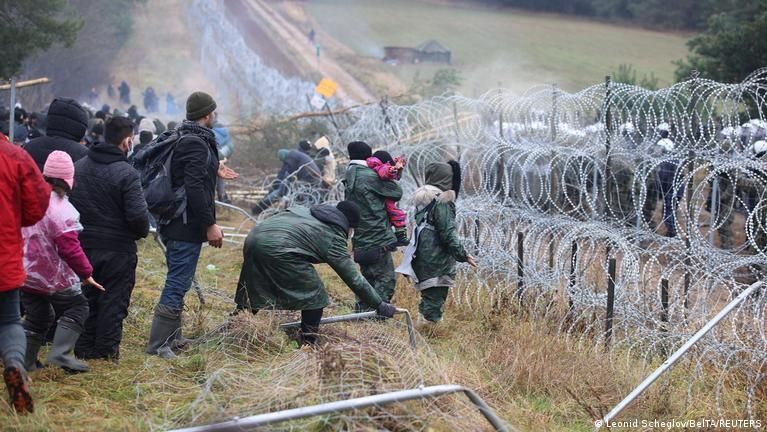
“Lithuania and Poland were forced to react harshly because this was not a humanitarian crisis but a hybrid attack organized by the Lukashenko regime with Russia’s support,” said former Lithuanian ambassador to Russia Bajarūnas. “Belarusian state bodies deliberately brought migrants from third countries, escorted them to the EU border, and pushed them to cross illegally. It was part of political pressure and blackmail in response to EU sanctions. For Lithuania and Poland, protecting the border meant protecting the EU’s external border, public security, and the rule of law.”
Polish authorities took a similar view. Deputy Interior Minister Maciej Wąsik said Belarus was “waging a hybrid war with the European Union with the help of illegal immigrants.” In the first weeks of the crisis, the number of migrants detained at Poland’s border surged compared with previous years. In a recent interview with The Insider, a former Belarusian border guard described ferrying migrants to the frontier, while an Iranian refugee recounted how he crossed the border in 2023 with the help of Belarusian authorities.
Ultimately, the EU officially recognized Minsk’s actions as the instrumentalization of migration, providing legal grounds for sanctions and stricter measures, including physical border fortifications, accelerated procedures, and restrictions on illegal crossings.
Attempts to cross the border illegally, however, have not stopped. According to the latest data released by Lithuania’s State Border Guard Service in November 2025, since the 2021 crisis Poland, Lithuania, and Latvia have blocked about 200,000 people who were trying to enter the EU outside official checkpoints. Earlier this month, Polish border guards reported discovering a fourth tunnel running under the border barrier and a service road. Authorities estimated that upwards of 180 people may have entered the country through it.
Border routine
The fallout from the migration crisis is now being felt by those who genuinely need protection from persecution in Russia and Belarus.
An expert with Vyvozhuk said that since 2021 pushbacks have become routine. “Even if a person explicitly says they are seeking asylum, it is usually not recorded anywhere. They are simply turned back. At the borders with Belarus and Russia, people find themselves outside the legal framework: no access to a lawyer, no official documents. What used to be considered a violation [by the border guards] has become part of everyday border practice,” the expert said.
Bajarūnas attributed the shift to the unprecedented scale of the crisis. “Before 2021, illegal border crossings were isolated cases, treated as individual requests for international protection under the Geneva Convention,” he said.
Before 2021, illegal border crossings were isolated cases, treated as individual requests for international protection.
At the same time, Bajarūnas said Lithuania has accepted a disproportionately large number of political refugees relative to its size, adding that the country “cannot and will not open its border to uncontrolled flows, especially when they are used as a tool of pressure.”
Evi Chayka, head of the international human rights group EQUAL PostOst, told The Insider that some EU countries have already “laid legal groundwork” to effectively legitimize pushbacks. In April 2023, Lithuania’s parliament adopted amendments to the law on the state border allowing authorities to expel people who cross outside official checkpoints without the right to appeal.
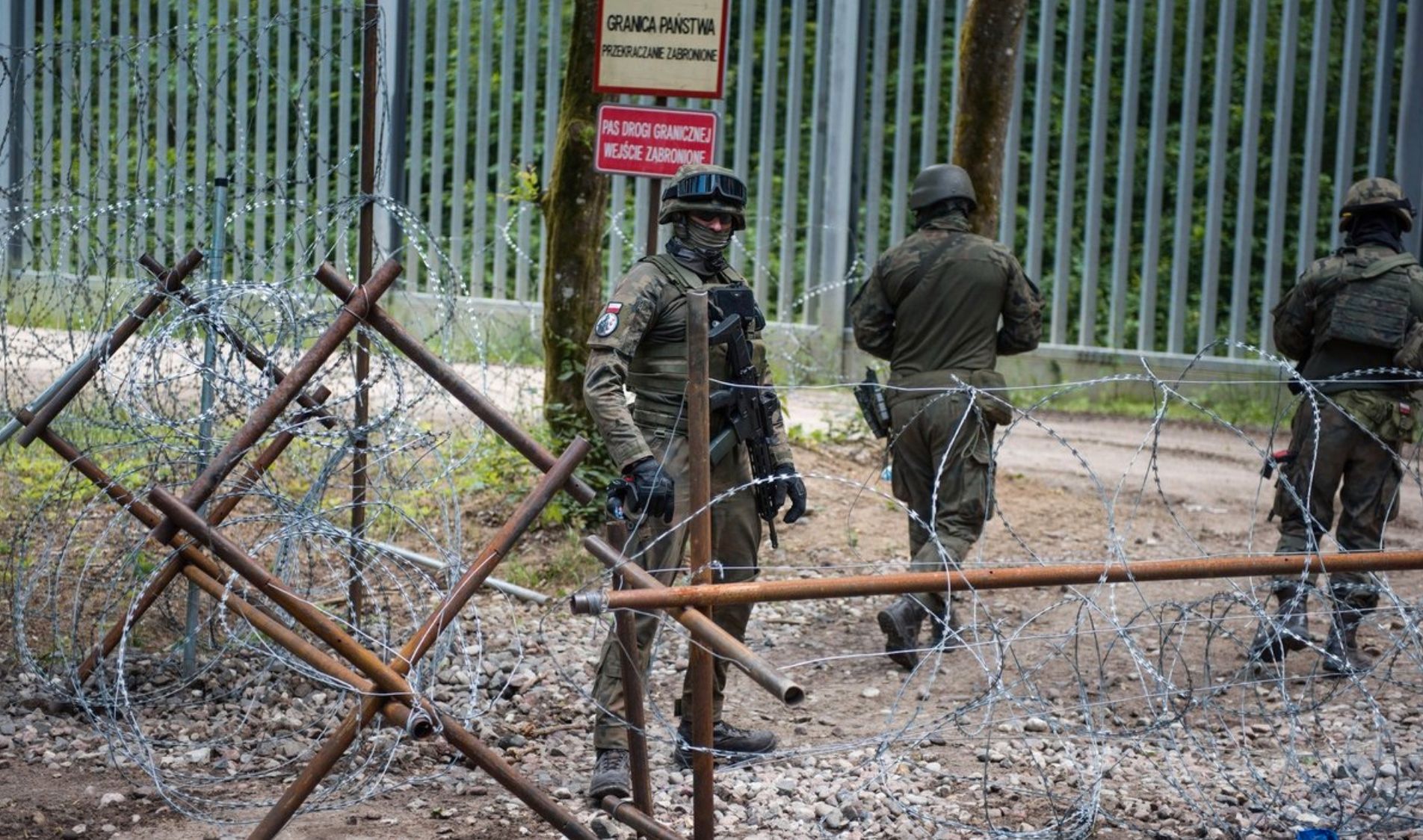
In Poland, similar mechanisms were introduced through temporary government decrees. According to an official response provided to The Insider by the national border guard command, a “temporary restriction on the right to apply for international protection” has been in force since Sept. 23, 2025, under a cabinet order.
On Dec. 15, 2025, in response to near-daily launches of meteorological balloons from Belarus toward Lithuania, the EU even introduced a new sanctions criterion targeting individuals, organizations, and bodies from Belarus. The measure aimed at countering illegal entry into the EU from that country.
“We do not recommend crossing borders on your own”
Human rights advocates interviewed by The Insider agree that attempting to cross into the European Union illegally today is extremely risky. Since pushbacks have become routine and some EU countries have codified them in law or temporary decrees, the chances of a successful outcome have sharply declined.
Even when a person has genuine grounds for asylum, they are likely to be sent back without a formal decision and without the ability to appeal. For that reason, rights groups stress that such a step should be considered only in exceptional circumstances — when there is an immediate threat of arrest, torture, or abduction and all legal routes have been exhausted.
Such a step should be considered only in exceptional circumstances, when there is an immediate threat of arrest, torture or abduction and all legal routes have been exhausted.
Evi Chayka says EU policy currently works against refugees and is largely shaped by anti-migrant sentiment. In Poland and Lithuania, this is compounded by fears that saboteurs or provocateurs could enter the country.
As Bajarūnas explained, “Under conditions of mass and organized attempts to cross the border illegally, it is impossible to quickly and reliably determine who a person is — whether they truly need protection or could be used for provocations. Given that the regimes of Belarus and Russia are using migration as a tool of hybrid pressure, Lithuania is obliged to apply preventive security measures. This is not distrust of people but the state’s responsibility for providing security while preserving the possibility of seeking asylum through legal channels.”
Chayka laid out what this reality means for potential asylum seekers: “In principle, we currently do not recommend that anyone cross EU borders on their own, especially from Russia and Belarus. If a person does this, everything happens very harshly, very quickly, and the chances of success are very small. Everything is closing down at a geometric pace, and far fewer loopholes remain than even a couple of years ago.”
In emergency cases, she recommends contacting human rights organizations that work closely with Lithuanian and Polish authorities and traveling with their assistance. If such help is not available, she advises leaving independently for safe third countries that do not require visas. “There are countries where you can live without a visa, and there are countries you can even enter with just an internal passport. Once there, you can work on obtaining a foreign passport through a consulate,” she said.
According to Chayka, if a case is so “exceptional” that negotiations with another country are possible or an extraction might be attempted — as in the cases of draft office arsonist Alexei Rozhkov or Leviy Blok (“Left Bloc”) activist Lev Skoryakin, who were removed from Kyrgyzstan by security services outside official procedures — then trying to reach the EU directly may be justified. In such cases, however, human rights groups are almost always involved with providing support.
If the persecution is “less extraordinary” — such as a draft notice or threats without a formal criminal case — it may be safer for many people to leave legally for a visa-free country and, from there, seek asylum in the EU or pursue other forms of protection. In all cases, Chayka recommends contacting human rights defenders.
A representative of Vyvozhuk added that crossing a border outside official checkpoints is a serious and risky step, justified mainly in two situations:
- if a person has long been on a federal wanted list and legal routes are truly closed;
- or if the case is extremely high-profile and draws attention, making international intervention and coordination possible.
In all other cases, Vyvozhuk advises first clarifying the situation through acquaintances and contacts, human rights networks, or lawyers. Often there are options to leave for third countries or use other legal routes that are less dangerous than those leading to Europe.