POLITICS
In early December, a new criminal case was opened against Yabloko party deputy chairman Lev Shlosberg, who almost immediately ended up on Rosfinmonitoring’s “list of terrorists and extremists.” Since June, the list has increasingly begun to include not only defendants in “terrorist” and “extremist” cases, but also those merely charged under articles concerning the spread of “fake news” and the “discrediting” of the Russian army. The 20,000 or so Russians who have been named face severe restrictions on the use of banking services, making it all but impossible to live and work normally. In order to simply survive, they are forced to switch to cash payments and to keep money in foreign currencies — preferably not at home.
No card, no bank account, no work permit
“Cards are not allowed, but you still have to pay the debt”
20,000 “terrorists”
Using other people's bank accounts
EU: beyond the reach of Rosfinmonitoring
“Keep money in foreign currency in a stocking and away from home”
Several months ago, an opposition blogger, Vladimir (name changed at the interviewee’s request), was released from prison after serving a sentence on charges of making public calls in support of extremist and terrorist activity. Now, even though he is “free,” starting a new life has proved impossible — his name will remain on Rosfinmonitoring’s “list of terrorists and extremists” for the next eight years, and until then, he must find a way to survive with extremely limited access to the Russian banking system.
“The ‘list of terrorists and extremists’ does not allow me to get a bank card from any bank. It turns out I am simply not entitled to be issued one,” Vladimir explains in a conversation with The Insider, noting that because he cannot open a bank account, he also cannot find a job.
In practice, even if an employer is willing to hire an “extremist,” the issue of wages immediately arises, and almost all firms in Russia now pay employees via transfers directly to a bank card. Vladimir says he tried to negotiate a compromise option — to open a so-called universal account without a card, but even if an institution agrees, such an account comes with strict limitations.
“I was told bluntly: you can open an account, but without a card and with a limit of 22,440 rubles ($284) — that is, no more than the monthly minimum wage. And just renting a room costs me 16,000 ($203),” he says.
At the same time, Vladimir emphasizes, the restriction applies regardless of actual income. Even if an employer were theoretically willing to pay more, there would still be no way to use that money. “Whether it’s 100,000 ($1,266) or 300,000 ($3,797) — I’ll still only be able to withdraw those 22,440. It’s impossible to live with such a limit,” he complains.
But according to Vladimir, things rarely even get that far. As soon as employers realize that a candidate cannot have a regular bank card, the conversation ends immediately. “Sometimes I try to explain that I don’t want a card — for example, because of unpaid loans. But almost always the answer is the same: we need a card in your name. And if you’re on the list, it’s a refusal,” Vladimir says. He tried to find work as a porter, in security, at any unskilled job — but without success. “Employers are afraid. No one wants to deal with the police again, let alone the FSB.”
Employers are afraid; no one wants to deal with the police again, let alone the FSB
In the first weeks after his release, Vladimir says, he was supported by volunteers who help people in his situation raise money and find housing. Later he had to turn to friends and relatives. “I’m ashamed to say this, but there were moments when I literally had nothing to eat,” Vladimir admits.
This story is a vivid example of how inclusion on Rosfinmonitoring’s list turns into a separate form of punishment that continues even after release. A person leaves prison but in effect remains without the basic tools needed for a normal life.
The same restrictions apply even to those who were merely fined for activities falling under “extremist” and “terrorist” articles. And starting in 2025, they have also been applied in cases involving “fake news” and “discrediting” the army. As human rights defenders told The Insider, 57-year-old activist Svetlana Zotova, who was sentenced to a 330,000-ruble ($4,177) fine over two comments she made on Telegram, is also unable to obtain a bank card.
Another example of how the list functions as an automatic punishment is the story of gender studies researcher and former DOXA editor Daria Manzhura. In November 2024, Rosfinmonitoring added her to the “terrorists and extremists” list. By that time, Manzhura was already outside Russia and learned about her inclusion after the fact.
“In Russia, everything was immediately blocked for me. They didn’t warn me, didn’t explain anything. I tried to log into the T-Bank app, but access was already gone,” Manzhura tells The Insider.
In addition, Manzhura found herself in a paradoxical situation with an unpaid loan. Bank cards and regular accounts were unavailable, but the bank nevertheless demanded that her obligation on the loan be fulfilled. “I asked them: how do you imagine that I fulfill this? They replied that I had to top up a special account to repay the loan. Basically, cards are not allowed for you, but you still have to pay off the debt,” she says.
The bank sent the details on how to perform a cashless transfer of rubles. “But how exactly I was supposed to send them rubles while being abroad and without accounts in Russia, no one, of course, clarified,” she adds. For some time, bank employees insisted on full repayment of the amount, but then stopped responding, apparently fearing the consequences of accepting money from a “terrorist/extremist.” The sum in question was about 20,000 rubles ($253).
Manzhura’s story shows that inclusion on Rosfinmonitoring’slist deprives a person of the tools to manage their money — but it does not relieve them of their financial obligations to banks.
As of the end of December 2025, Rosfinmonitoring’s list includes more than 800 organizations and almost 20,000 people (for comparison, that is more than the membership of Al-Qaeda and ISIS combined). In theory, the list is supposed to include only those for whom there is information indicating involvement in extremist activity or terrorism. In practice, it is one of the harshest extrajudicial mechanisms available for restricting the rights of those who oppose the Putin regime.
The list appeared in 2001 alongside Federal Law No. 115-FZ “On Countering the Legalization (Laundering) of Proceeds from Crime and the Financing of Terrorism.” Initially, it was conceived as a financial monitoring tool — primarily for banks, so that they could track possible financing of real terrorism. For a long time, the list was classified: only law enforcement agencies and financial institutions had access to it.
The list became public in 2011, when Rossiyskaya Gazeta published its open section. At that time, it contained around 1,500 people. Even then, as human rights defenders noted, a significant share of those included in the list had no connection whatsoever to the financing of terrorism or to violent crimes.
A significant share of the people included on the list as far back as 2011 had no connection whatsoever to the financing of terrorism or violent crimes
On July 1, 2013, new provisions of Law No. 115-FZ came into force that radically changed how it was applied. Banks and other financial institutions were effectively stripped of the ability to allow individuals on the list to receive any income, regardless of its source or purpose. Wages, pensions, benefits, and social payments all became subject to blocking.
That same year, Larisa Romanova, an expert in international and constitutional law, founded the informal “Movement to Defend Victims of Rosfinmonitoring’s Actions”, which brought together opposition figures whose accounts had been blocked. In December 2013, Romanova’s movement submitted a petition to the UN office in Moscow against Rosfinmonitoring’s list.
The petition stated that more than two thirds of the people on the list were not connected to the financing of terrorism and that many of them had found themselves in a vulnerable financial position. According to the authors, the authorities were using anti-money-laundering and counterterrorism legislation for large-scale economic repression of a political nature, including by depriving people of the ability to work officially and earn income.
Romanova, who herself ended up on the list, notes that from the very beginning inclusion took place extrajudicially and without a clear appeals procedure. “They immediately began adding people prosecuted for ‘verbal extremism’ — someone wrote something, spoke out, posted a video. That is, people who had nothing to do with mafia-type criminal communities or real terrorism involving killings and hostages,” she says.
As a result of the petition and appeals to lawmakers, in December 2013 the authorities adopted “mitigating amendments” that allowed those on the list to use part of their frozen funds — up to 10,000 rubles per month for the person themselves and 10,000 rubles ($127) for each family member without independent income. It also became permissible to pay taxes, fines, and mandatory charges. However, the key restrictions remained: banks were required to refuse to open accounts or to issue cards to such people.
As Romanova points out, from the outset the mechanism did not comply with international standards for combating the financing of terrorism. According to her, the recommendations of the Financial Action Task Force (FATF) envisage individualized restrictions subject to judicial oversight, with the possibility of humanitarian exemptions. The Russian model, by contrast, was originally constructed as an extrajudicial system of “disenfranchisement.” “FATF became a convenient cover for a repressive practice that quickly went beyond the fight against real terrorism,” Romanova says.
Over time, the grounds for inclusion on the list were consistently expanded. It began to include not only those who had been convicted on the relevant charges, but also suspects and defendants — people for whom no verdict had yet been handed down. Financial restrictions in such cases were applied automatically at the investigation stage.
Now the list includes not only those who have been convicted on relevant charges, but also suspects and defendants
Another major set of amendments came into force on June 1, 2025. Law No. 115-FZ introduced new grounds for inclusion on the list — cases involving “fake news” and “discrediting” the army (along with a number of other offenses provided that investigators believe there are “motives of political, ideological, national, or social hatred” involved). As a result, the formal status of a “terrorist or extremist” can now be assigned to a person who has merely been accused, for example, of making an antiwar statement.
In practice, this means that inclusion on Rosfinmonitoring’s list is increasingly becoming not a consequence of a verdict, but an independent form of punishment. A person can be deprived of access to the banking system even before trial, and in the event of a guilty verdict, the restrictions remain in place until the criminal record is expunged — that is, for years after release from prison.
Kirill (name changed at the subject’s request) left Russia for Armenia in 2022. He had served a sentence under a “terrorism” article and was released in 2018. Kirill’s name still remains on Rosfinmonitoring’s list — and this fact largely governs his life, even abroad.
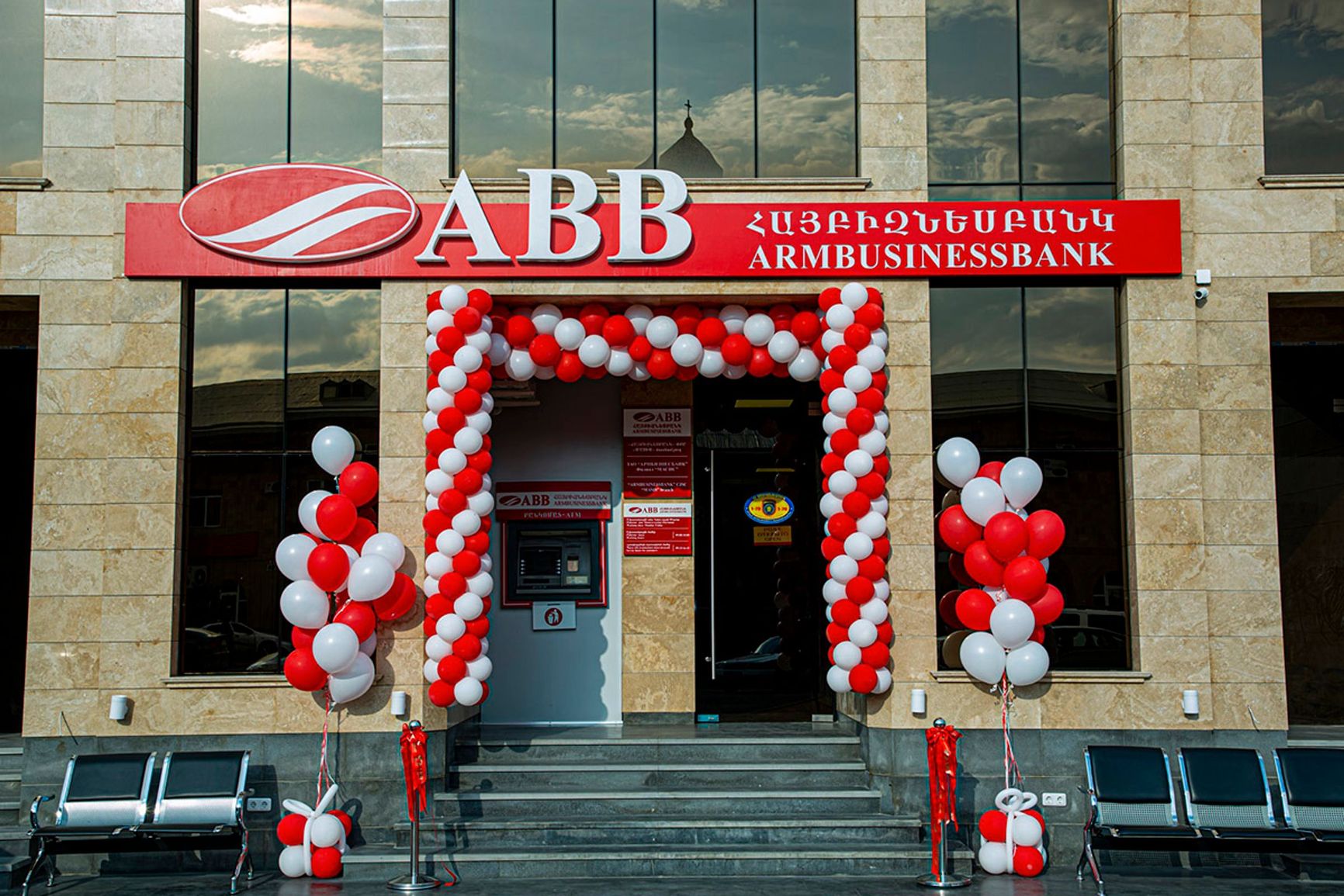
In Armenia, Kirill tells The Insider in an interview, he had no trouble obtaining a residence permit — the first two for one year each, and the third one for a five-year period. He registered as an individual entrepreneur. But he still ran up against the same wall as in Russia – banks.
“I couldn’t open an account at a single bank. There are just under thirty of them in Armenia, and I went to all of them,” Kirill says.
In some banks they would not even accept his documents, citing requirements such as proof of income, which he could not possibly provide. In others, they simply refused without explanation. Only at one non-capital branch of Ararat Bank was an account for him initially approved. He even signed the documents, but the next day they called back and asked him to come in again.
“They said they had received a call from Yerevan and were told to close the account and not open anything else for this person. Naturally, no one explained the reason,” Kirill recalls.
He cannot prove that the refusal is connected specifically to Rosfinmonitoring’s list — officially, banks do not state reasons, but the coincidence, he says, is too obvious. After all, he had exactly the same problems in Russia.
As a result, as he did in Russian, Kirill receives his salary via other people’s accounts. “There was simply no other way,” he says.
Problems also arose with international payment services. For example, Payoneer initially opened an account for him, completed all checks, and approved a card. But then, without explanation, everything was blocked — including funds that had already been credited.
“I wrote to them every week, to every possible address. Only after nine months was I allowed to withdraw the money — and immediately afterward they wrote that the account was permanently blocked,” he recalls.
At the same time, other services behave differently. According to Kirill, Wise remains the only stable option (albeit without a card). But even here there are limitations: without a bank card in one’s own name, it is impossible to link or activate many other payment systems.
Another telling episode dates back to Kirill’s life in Russia. He bought a car but was unable to register it in his own name, as no insurance company would agree to issue him a policy. One insurance agent did nevertheless try to help — she manually entered his data and issued the policy. But the next day, Kirill says, she called him in a panic and asked him to submit a refusal. “I’m being threatened with losing my certificate and my job because of the person I entered into the system,” the agent told him.
In the end, the car had to be registered in another person’s name, as did just about everything else.
“It’s not just banks. It’s insurers, employers, any systems where money is involved. Because, generally speaking, no one wants to transfer money to a ‘terrorist’ — that’s the whole answer,” Kirill sums up.
Lawyer and founder of the Roskomsvoboda project, Sarkis Darbinyan, explains that the problems faced by people on Rosfinmonitoring’s list outside Russia may be linked not to direct decisions by local authorities, but to the structure of international and regional financial compliance. According to him, even after Rosfinmonitoring’s membership in the international financial intelligence network Egmont Group was suspended, data that had already been transmitted continued to circulate within closed banking compliance systems and are still used when screening potential clients.
In addition, Russia retains channels for exchanging financial information through bilateral agreements and regional cooperation formats with certain countries, including many in the post-Soviet space. In such cases, banks may rely not on court rulings, but on internal compliance “red flags” and signals, without disclosing to the client the reasons for refusal.
“Most international databases are closed to private people. They cannot gain access even to their own data or find out why they were flagged, — not even in order to file an appeal or request a correction. This system is opaque and not subject to appeal,” Darbinyan notes.
Unlike in Russia and a number of post-Soviet countries, in EU member states inclusion on Rosfinmonitoring’s list in itself does not entail automatic financial restrictions. European banks and payment services do not use the Russian register as a legal basis for blocking potential clients — and in practice this is confirmed by the experiences of people who have ended up on the list but live in the EU.
That’s why Daria Manzhura, who lives in the EU, has not encountered any problems with banks. “In the EU, no one froze my accounts — there were no questions at all,” she says.
A similar situation applies to another former DOXA editor, Maria Menshikova, who lives in Germany. After her inclusion on Rosfinmonitoring’s register, she received a notification from PayPal about the closure of her account. However, this concerned the Russian account of the service. “The European PayPal account linked to local accounts was not touched. Banks also made no moves whatsoever,” Menshikova detailed in a conversation with The Insider.
Even more illustrative is the experience of anarchist Denis Kozak. Despite the fact that he is still listed by Rosfinmonitoring in a case on the “justification of terrorism,” after moving to Germany he had no difficulty opening an account at the state-owned bank Sparkasse. “There were no questions at all,” he says.
Feminist Zalina Marshenkulova, who was also added to Rosfinmonitoring’s register and lives in the EU, explains that her Vivid card was temporarily frozen several times, but each time it was restored without consequences. “Revolut has never blocked me,” she notes.
At the same time, accounts belonging to Russians in EU countries are indeed periodically frozen, but as a rule this is done on grounds not directly related to Rosfinmonitoring’s list. Thus, former State Duma deputy Gennady Gudkov, who was added to Russia’s “terrorists and extremists” list in 2024, told the BBC Russian Service about the closure of accounts in a Bulgarian bank and one French bank. According to Gudkov, the institutions explained that the action was related to his status as a politically exposed person (PEP) — someone who previously held senior public office and is therefore subject to enhanced financial scrutiny.
Account blocks affecting Russians in EU countries do indeed occur, but as a rule they are not linked to Rosfinmonitoring’s list
Gudkov left Russia back in 2019, long before his inclusion on Rosfinmonitoring’s list. In a conversation with the BBC Russian Service, he emphasized that European banks were interested in the origin of his funds and his ties to state structures. His Russian status as a “terrorist or extremist” did not feature in the banks’ official explanations.
Larisa Romanova stresses that people included on the list still have no real mechanism for protecting their rights. According to her, it is impossible to be removed from the register before a person’s criminal record is expunged. “Law No. 115 from the outset did not provide for either an appeals procedure or temporary exemptions. And it still does not,” Romanova says.
The only notable easing of the law — the 2013 provision allowing those named to conduct banking operations with the limit set at the country’s minimum subsistence level — came not as a result of systematic legal reform, but after direct appeals to lawmakers, Romanova says. “We achieved this by getting an appointment with Valentina Tereshkova. No further concessions have appeared in the law since then,” she notes.
In practice, Romanova says, this means that for people on the list the only way to survive is to rely on cash. She also offers advice to those who risk being added to the register: “Don’t keep much money in accounts — only in foreign currency, in a stocking and out of the house. Personally, this old Soviet rule saved me.”
К сожалению, браузер, которым вы пользуйтесь, устарел и не позволяет корректно отображать сайт. Пожалуйста, установите любой из современных браузеров, например:
Google Chrome Firefox Safari