SOCIETY
For two weeks now, Moscow has been experiencing problems with mobile internet. The restrictions, which the authorities justify on security grounds, are affecting not only ordinary people but also businesses. Carsharing, utility payments, transactions, parking, taxis — all of the digital services Muscovites had become accustomed to have been significantly disrupted, and there is no sign that they will be restored in full anytime soon. By the most conservative calculations, in just the first five days of the shutdown the capital’s businesses lost 3 billion rubles ($34.8 million). A similar situation is unfolding in many other regions.
Shutdowns across the country
Offline chaos
No longer a smart city
Difficulties of adaptation
A new reality
At the underground shopping mall near the Okhotny Ryad metro station, just steps from the Kremlin and the State Duma, at least one high-end clothing store has been operating on a cash-only basis for the second week in a row. Card payments simply cannot be processed, says Kirill (name changed), a cash register service specialist who works with this store, among others:
“They submit requests to us, but there’s nothing we can do. The registers themselves are working as usual — the problem lies with promo systems and loyalty programs. That data is stored on third-party resources, so the register simply refuses to process payments. That’s why they have to sell for cash. Right now, retail outlets across central Moscow are facing the same issues. The internet went down ahead of International Women’s Day (March 8), and many stores missed out on the holiday rush.”
Problems with mobile internet in the city center began as early as March 6. Four days later, presidential press secretary Dmitry Peskov explained that access to the network had been cut off “to ensure security.”
Starting on March 13, authorities claimed that connectivity had been partially restored, and in some areas, the sites listed on government-approved «whitelists» regained connectivity, allowing users to access the services of IT giant Yandex, social network VKontakte, propaganda outlet REN TV, and McDonald’s knockoff Vkusno i Tochka, among others. However, the list excludes smaller brands, local internet providers, taxi services, independent shops, pharmacies, restaurants, airports, and much more. Most importantly, according to eyewitnesses, access even to “whitelisted” sites remains spotty.
What is happening amounts to a full shutdown, says Sergey (name changed), a developer of the Amnezia VPN:
“Similar scenarios have been implemented in other regions of Russia for several months, and now it’s Moscow’s turn. The trend of recent blockages in Russia shows that Roskomnadzor is now deploying new methods. Previously, they tested them during the holiday season to minimize incidental damage to the economy. Now, it appears they are testing how the economy will function under harsh restrictions.”
Why were the restrictions introduced at this particular moment? Cyber lawyer Sarkis Darbinyan links the development to a report about a recent detention in the Vladimir region, where a man allegedly acting on orders from the Security Service of Ukraine was preparing drone attacks against Russian military aircraft: “I think the authorities are very afraid of a repeat of Operation ‘Spider’s Web.’ Security measures have now taken center stage — measures that will no longer take into account any side effects or inconvenience. Moscow has now plunged into the same atmosphere in which the regions have been living over the past year.”
Internet disruptions are being reported nationwide. Authorities in the Volgograd and Ulyanovsk regions have publicly announced mobile internet shutdowns, while in other parts of the country, such measures have been introduced more quietly. For example, one of The Insider’s sources recently took part in a major project in the Kaluga region. At first, the connection there worked perfectly and even allowed people to place online orders in a neighboring village. As he explains:
“A pickup point for Ozon had just opened in the village. We started ordering all our supplies there. But in early June, the internet suddenly disappeared. The village had a new cell tower, and the Ozon point was right underneath it. Everyone was very surprised when the internet went down. The elderly woman working at the pickup point had to stop scanning QR codes and instead call somewhere on a basic phone, reading out the tiny numbers on each package.”
Since the summer of 2025, mobile internet has been unavailable in most cities of the Vladimir region. The government there did not officially announce this, but after complaints from residents it did ultimately acknowledge the shutdown. Similar measures in Omsk also largely went unnoticed outside the affected area.
Regional authorities have tried to avoid drawing attention to the problem. In Belgorod, for example, the government demanded that local journalists not raise the issue of internet shutdowns — a group of local lawyers filed a complaint against Roskomnadzor, but they received no response from the agency.
A video circulated online showing a programming class at Moscow’s Higher School of Economics. Students were unable to access the online system, and the interactive board was also down, meaning the instructor had to write Python code on a whiteboard with a marker.
Moscow residents interviewed by The Insider described a wide range of small but unexpected difficulties. Airline passengers are facing long waits as carriers struggle to register them for flights. Theaters are asking patrons to print out electronic tickets in advance. Online queues for government services have encountered disruptions.
It is also impossible to determine exactly where a taxi is waiting. “You order a taxi, leave an office with Wi-Fi into a space with no connection, and from there it’s down to luck,” one source said.
“You order a taxi, leave an office with Wi-Fi into a space with no connection, and from there it’s down to luck”
Maxim Shusharin, director of the taxi-ordering service Maxim, complained to RBC that during the shutdown his service loses 10–30% of orders. Meanwhile, unlicensed taxi drivers have reappeared on Moscow’s streets. The return of these “gypsy cabs” was also confirmed in the same RBC report by one of the drivers, who said that in the absence of internet access, lines for such private operators have formed.
So far, the difficulties have affected only central Moscow, though even there it is difficult to make sense of the service map. Inside the Garden Ring there are pockets where communication works completely normally, while in other areas even cellular service is down. As IT entrepreneur Vsevolod (name changed) explains:
“It feels very unusual to meet people, because we stopped agreeing on a specific time and place a long time ago. The assumption is that we’ll message each other — but now messaging doesn’t work. In other places, calls work but there’s no internet. In others, the internet works more or less fine. You’re riding the metro, listening to music or watching a movie over Wi-Fi, and suddenly, at some station, everything cuts out, even cellular service.”
Vsevolod lives on Leninsky Prospekt, meaning government motorcades pass by on their way to Vnukovo Airport. At such moments, both communication and geolocation are completely shut down.
These everyday inconveniences for ordinary people are turning into major losses for businesses. According to Kommersant’s estimates, courier services, taxis, carsharing, and retail have been hit the hardest. In the first five days alone, total losses for Moscow entrepreneurs amounted to between 3 billion and 5 billion rubles ($34.8 million to $58.0 million).
The Internet Protection Society says the losses could be even higher. According to its calculations, a single day of total mobile internet shutdown in Moscow would lead to roughly $60 million in economic losses. However, since the current restrictions remain sporadic, the organization’s director, Mikhail Klimarev, told The Insider that it is more accurate to count 20–25% of that amount — in line with the higher-end estimates.
Cyber lawyer Darbinyan describes the effect:
“For businesses, this is a catastrophe: online cash registers, courier services, and logistics software are not functioning. Companies are, of course, trying to adapt by using wired internet where possible, foreign SIM cards, offline maps. Dispatchers will appear in order to coordinate couriers. But before our eyes, one of Europe’s most digitalized cities is rapidly losing its former advantages.”
Many city services have also been affected, says Vladimir Ryazansky, head of the digital SobDoma.RF project, which manages apartment buildings:
“Mos.ru has been down for five days. One of my projects relies on data from Mos.ru, and I send automated requests to it. Today, roughly one out of thirty requests went through. The official city Telegram bot for submitting meter readings has also stopped working. There is no such bot in Max. In effect, overnight they have destroyed all of Moscow’s competitive advantages as a digital city. If they had simply blocked things, that would at least be predictable, but the clumsy implementation has created total chaos.”
According to Ryazansky, apartment management systems, along with building and street cameras. have not been affected, as they typically transmit data via wired connections. However, everything tied to geolocation and mobile internet has stopped functioning properly. Bus arrival times on city displays and in apps no longer correspond to reality (a fact confirmed by other sources interviewed by The Insider).
Parking barriers in some courtyards are now permanently open — they cannot function correctly because they also rely on mobile internet. This issue was acknowledged even by Andrey Svintsov, deputy chairman of the State Duma Committee on Information Policy and one of the most prominent public advocates of internet restrictions.
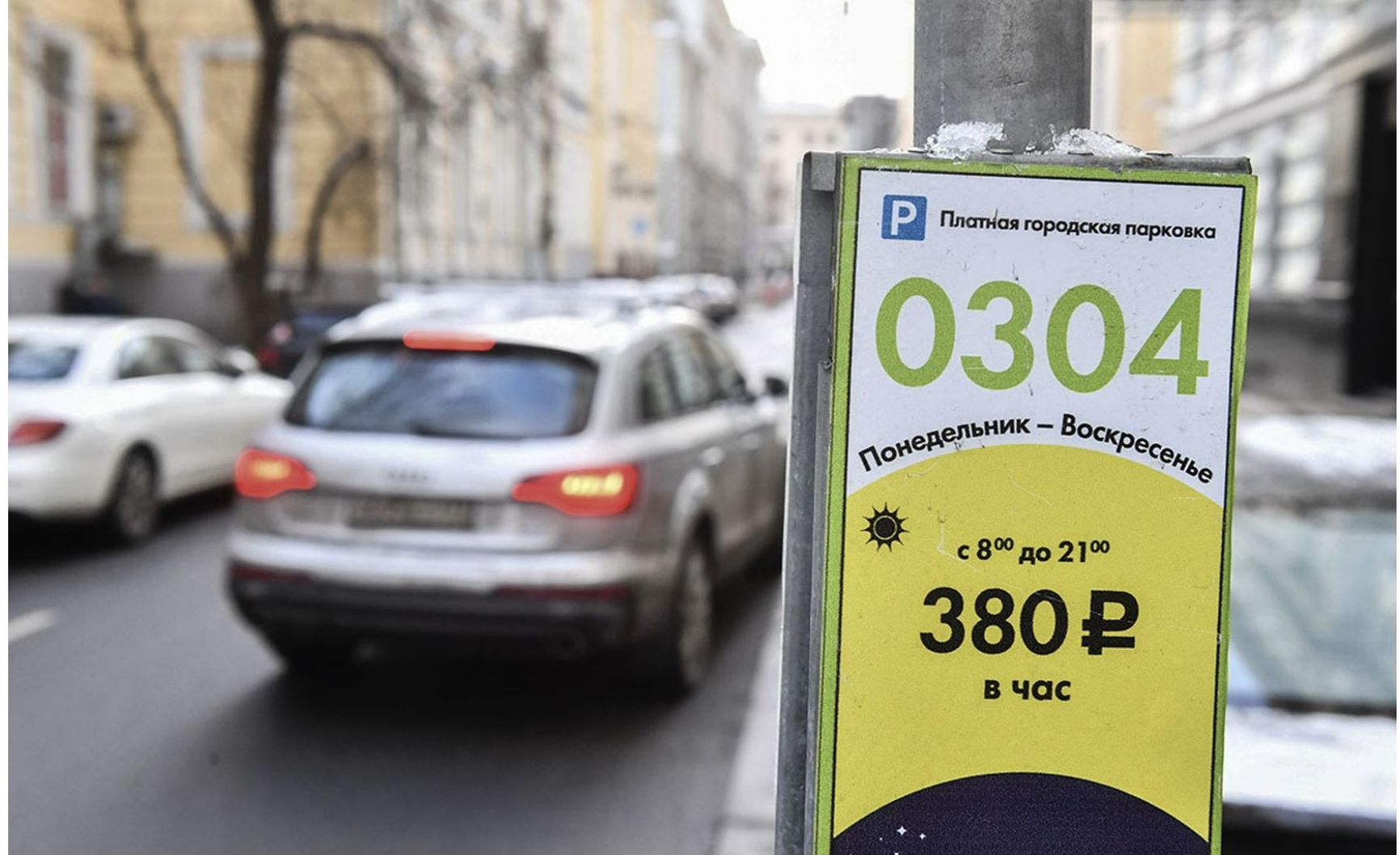
Parking a car in Moscow has also become difficult. When paid curbside parking was introduced in the capital in the 2010s, fees could be paid through special terminals, but that practice was abandoned fairly quickly in favor of apps and QR codes. Now, however, the system no longer works, says Roman (name changed), a former employee of the Department of Transportation: “There is a short SMS number listed at parking spots. You can’t actually pay for parking through it, but you can register that you’ve left your car. Then you have to make the payment later in the day.”
Using carsharing has become even more complicated. Although cars can now be opened and closed via Bluetooth, without using the internet, drivers are now asked to photograph the vehicle thoroughly from all sides after finishing a rental in order to help the next user locate the vehicle. As Vsevolod explains: “Sometimes you end up searching for the car based on those photos. The thing is that with carsharing now, you never know whether the car is actually where it’s indicated to be. You can walk to a location for ten minutes and find nothing.”
“The thing is that with carsharing now, you never know whether the car is actually where it’s indicated to be”“The thing is that with carsharing now, you never know whether the car is actually where it’s indicated to be”
Problems have even affected the Moscow government’s internal secure messenger, TDM, which was not included on the “whitelists” and has stopped working in many medical institutions, a Moscow healthcare employee told The Insider. Internal communication in these institutions depends on it, and staff have now switched to using email for work-related correspondence.
The only Moscow innovation that has thrived amid the mobile internet shutdown is the city’s public Wi-Fi network. A source in Moscow’s Department of Information Technology told The Insider that the number of users has increased by around 50% since the start of the disruptions. The department is now considering expanding the number of access points — for example, extending coverage not only in metro cars but also at stations and in passageways. Notably, the city’s wireless networks have avoided strict content filtering, at least thus far.
On the morning of March 10, mobile internet shutdowns also began in St. Petersburg, and on March 14, residents of the Moscow region were warned about upcoming restrictions. As the geography of the restrictions expands, various professional associations have begun lobbying to have their websites and apps included on the “whitelists.” (For example, the Association of Tour Operators has made such a request to the authorities.)
Taxi services in St. Petersburg had previously made similar appeals. They say that even partial internet restrictions in the city are causing losses. According to Fontanka, the service “Taksovichkoff” completed 13% fewer rides from Jan. 1 to Jan. 25, 2026, as compared with the same period a year earlier. Its competitor “Citymobil” saw a 65% drop.
Deputy chairman of the State Duma Committee on Information Policy Andrey Svintsov has sought to reassure the public, saying that over time 99% of familiar services will be included on the “whitelists.” But even when major websites and apps begin functioning again, problems remain.
Taxi driver Georgy (name changed), from a city where internet restrictions began around six months ago, described to The Insider how the process operates in practice:
“Even Yandex didn’t work. I would take an order near my home, using my home Wi-Fi. I’d send the passenger a message telling them when to come outside and that they should write down the car’s license plate number. I’d get confirmation from the client and drive out. After dropping them off, I’d return home and take the next order. All the taxi drivers I spoke to were doing the same.”
Later, the promised “whitelists” did indeed began to function. In any part of the city, people could open Yandex and order a taxi; however, navigation problems did not disappear, meaning routes have to be planned using offline maps that do not account for traffic, accidents, or road closures. Navigation errors lead to constant conflicts with passengers, Georgy says:
“They think you’re taking them the wrong way, that you can’t pick them up from the point they specified in the order. At first it was very difficult, but then most passengers got used to the new reality. People are, of course, upset, but they don’t understand the reasons — they think it’s all for protection against drones. After all, during the strictest restrictions, there were drone strikes in our city.”
Many smaller services used by taxi drivers also stopped working over mobile internet. For example, some taxi fleets have systems for managing fares, including the option to disable cash payments — which has now become a matter of safety, Georgy explains:
“All military personnel undergoing treatment or on leave are potentially dangerous. They killed one of our drivers. These people usually withdraw all their money from their accounts so that it won’t be stolen, and they pay in cash. I was attacked once myself. Since then, I also try not to accept cash.”
Efficiency is suffering alongside security. Services that allow drivers to see which areas have higher fare multipliers do not function within the “whitelists.” These tools used to help meet peak demand while allowing drivers to earn more. Combined with navigation problems, this has significantly reduced incomes, Georgy says: “In the same amount of time, you complete fewer rides. As a result, taxi work now only covers rent, fuel, and food. Many have stopped washing their cars, and passengers have stopped complaining about dirt — they understand there’s no money.”
Businesses that operate through social media platforms blocked in Russia are facing a double blow. Internet entrepreneur Vsevolod says his entire operation is built around popular pages on Facebook, Telegram, and YouTube. He has tried Russian alternatives, but they simply lack the necessary audience:
“We created a group on VKontakte back in 2018, when it was still quite decent. We still have 10,000 people there versus an active audience of 150,000 on Facebook. Advertisers face a dilemma: they can be punished for advertising on banned social networks, while on permitted platforms there are no people. So we sign very general contracts for ‘placing information on social media.’ The word ‘advertising’ is not used, and banned platforms are not mentioned.”
Things turned out even more absurd with Rutube. When the platform introduced a button for automatic imports from YouTube, Vsevolod immediately used it. The transfer of videos took a full day, and much of the process had to be done manually. Then the service simply blocked the channel. Later it restored access — but not to all videos. As a result, most of the content has only a handful of views.
Alexander (name changed) sells Chinese cars. His company has no physical showroom, only a small office for closing deals before the cars are purchased in China for specific clients. The main channels for reaching customers are YouTube and Telegram, as the development of alternative Russian social platforms has not worked. As Alexander says: “Our VKontakte group is barely growing — it accounts for about 5% of our audience. On Rutube and Zen, the numbers are negligible. We’re a business and we are willing to grow everywhere. It’s just that there are no people there. Meanwhile, over the past year, our YouTube audience has grown noticeably, despite the restrictions.”
Even platforms included in the “whitelists,” such as VKontakte and Yandex Telemost, have been affected. On March 17, hundreds of users complained that the services were unavailable.
Cyber lawyer Darbinyan believes that the restrictions and “whitelists” are here to stay: “On Feb. 20, 2026, Vladimir Putin signed a law that allows any internet access to be shut down at any time and for any duration, even without the presence of external threats. The technical infrastructure is already in place. Traffic filtering equipment has been installed at the nodes of all major operators across the country. This is life under new conditions, and Moscow residents will have to get used to it.”
This is life under new conditions, and Moscow residents will have to get used to it
Sergey, the developer for Amnezia, is convinced that internet restrictions will soon cover the entire capital. In a “whitelist” regime, VPNs become harder to operate, he explains: “Servers need to be located within these ‘whitelists’ — that is, within the networks of major Russian providers or cloud platforms whose subnets may remain accessible during restrictions. It is also important that the VPN protocol used can effectively disguise traffic as permitted services or common types of connections.”
In professional terms, this is called “obfuscation,” meaning the masking of code to make it harder to filter. “Whitelists” do not mean that everything except approved websites is unreachable, Vsevolod explains: “It means the provider allows some data packets through — say, those directed to Yandex — and blocks others, such as requests to independent media. A VPN sends a dummy packet as if it were going to Yandex, the provider lets it through, but inside is the real request. It’s like those Coca-Cola sleeves people used to put over beer cans to drink in public. My VPNs connect to the Max messenger.”
As an advanced user, Vsevolod has set up two personal VPNs on a home server and connected 20 relatives to them. Nearly all of The Insider’s sources, including those working in the public sector, described how they bypass restrictions, install VPNs for older family members, or organize unrestricted internet access for colleagues.
For Vsevolod, the situation reminds him of his Soviet childhood. “When I was young, my father used to tune in to ‘enemy voices,’ stringing wire antennas all over the room. Now we’re doing something similar,” he says.
К сожалению, браузер, которым вы пользуйтесь, устарел и не позволяет корректно отображать сайт. Пожалуйста, установите любой из современных браузеров, например:
Google Chrome Firefox Safari