OPINION
In 2025, the European Union was forced to seriously rethink its role in the world — and its objectives in the geopolitical sphere. While the bloc is undoubtedly the most successful supranational union in human history, it was conceived as a peacetime structure. As the successor to the European Economic Community (EEC), the EU has traditionally prioritized economic and monetary integration over international affairs. But events of recent years have shown that EU values need protection from without — and that its challenges extend far beyond budget disputes. Now, however, after Russia’s full-scale aggression against Ukraine had already compelled Europe’s political class to reassess its views, the return of Donald Trump to the White House has further accelerated the emergence of a new European political course.
Formally, Article 42 of the Treaty on European Union establishes the primacy of security and defense policy. However, as Belgian Foreign Minister Mark Eyskens characterized things back in 1991, “Europe is an economic giant, a political dwarf, and a military worm.” Experts today still often cite this phrase when describing the EU’s modest contribution to resolving foreign policy crises.
In 2016, the EU adopted its “Global Strategy for the European Union's Foreign and Security Policy,” with measures ranging from the creation of a common defense fund to the joint development of drones. A year later, French President Emmanuel Macron said: “Only Europe can guarantee genuine sovereignty or our ability to exist in today’s world to defend our values and interests.”
However, by the early 2020s, defense spending in the EU’s largest states had fallen close to historic lows. Military cooperation among countries was largely confined to NATO frameworks and interaction among individual corporations. Paris and Berlin occasionally raised the idea of creating a European army, but they mostly did so to irritate the Americans amid whatever comparatively minor (by today’s standards) dispute was underway. The Global Strategy mentioned “hybrid threats” at the end of its agenda — placing it below the issues of migration, extremism, and climate change — and did not address comprehensive threats posed by individual states at all. The European Defence Fund was created only in 2021, five years after the decision was made. Even then, it came with a caveat: a ban on financing the procurement of weapons for military conflicts.
Paris and Berlin occasionally raised the idea of creating a European army, but mostly did so to irritate the Americans
In the foreign policy realm, the European Union positioned itself as a peacemaker, in line with the pacifist outlook of its leader: Germany. Strategically, Brussels banked on cooperation and balancing relations with the United States, China, Russia, and other actors. Relations with Moscow, apart from sanctions imposed after the annexation of Crimea and the outbreak of fighting in Donbas, were built on a business-as-usual basis.
EU leaders treated the Balkan wars of the 1990s, Russia’s invasion of Georgia in 2008, and the first phase of the Russian-Ukrainian war as local conflicts outside of their purview. Even in relatively small confrontations that took place directly on the EU’s borders, such as the armed clashes in North Macedonia in 2001, the European Union was, at best, a “secondary” venue for negotiations, operating in NATO’s shadow. At worst, as in Georgia and Ukraine, it barely featured as an autonomous actor at all, limiting itself to statements and appeals.
As a result, a bloc that by 2022 accounted for 15% of global GDP and 14% of world trade, voluntarily accepted the role of a “political dwarf.”
Overall, Brussels did not exactly hide the fact that the European Union was unprepared for the two main geopolitical events of the past decade: Trump’s election as U.S. president and Russia’s full-scale attack on Ukraine. Moreover, the actions of Trump 2.0 have in some ways been an even more severe stress test for EU officials than the war on their doorstep. Russia’s aggression, as monstrous and absurd as it was, at least demanded a clear response — something that was reflected in the EU Council’s first “military” document, the Strategic Compass on Security and Defence, adopted at the end of March 2022.
Dealing with a less domestically constrained Trump proved to be far more complicated. The media used the word “shock” to describe the reaction of European leaders and EU politicians to the early events of his second presidency, just as they had in 2016. The plans proposed in the “Compass” relied on a close EU-NATO alliance, following the old habit of assigning the Alliance the role of Europe’s “shield and sword” while leaving the EU in the role of “wallet.”
In 2022–2024, Brussels’ reassessment of the global landscape remained limited to an important but insufficient acknowledgment: “peaceful coexistence” with Russia is impossible, the new security architecture must now be built around confrontation with Moscow, and the continent’s microscopic defense spending is inadequate for the current political situation.
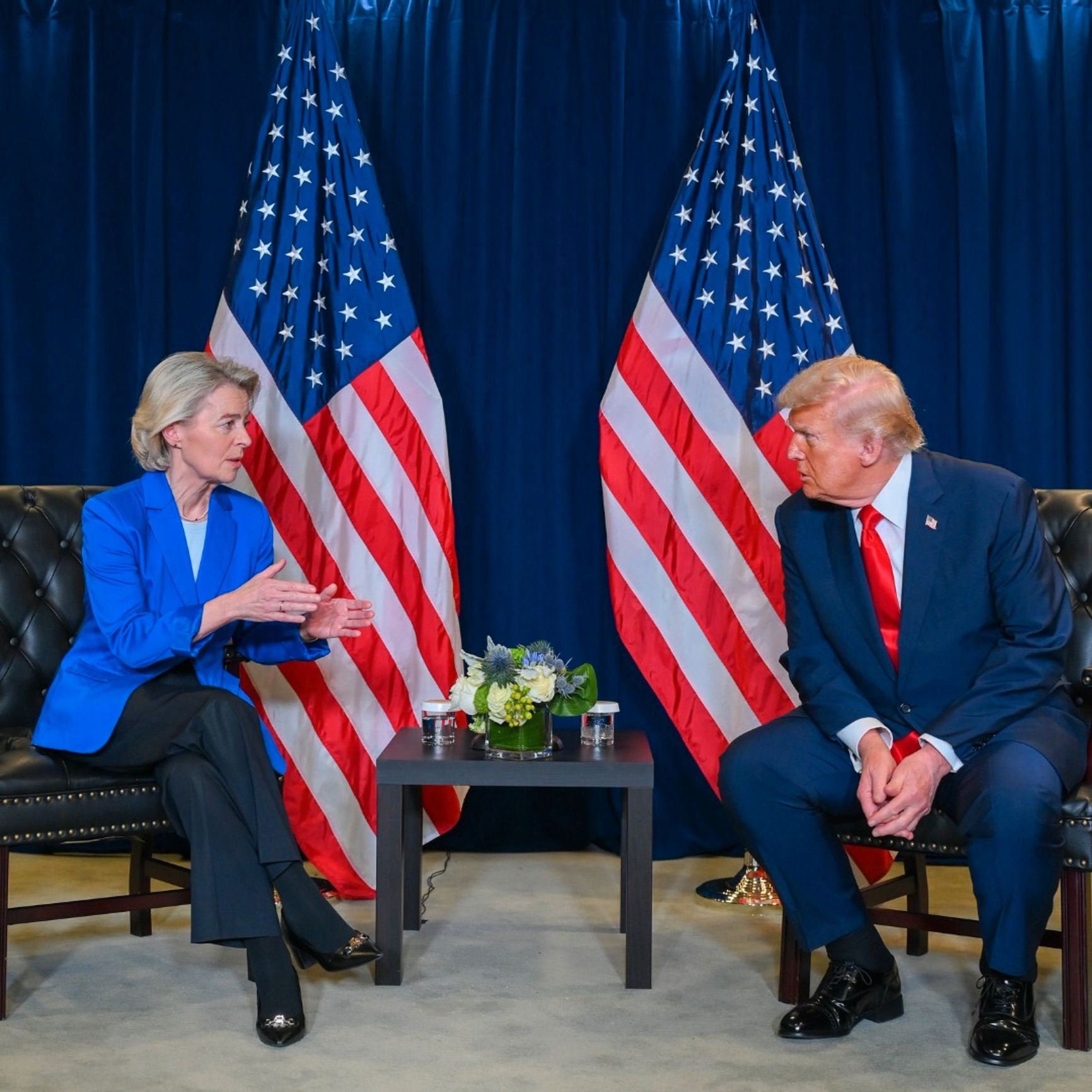
In 2025, EU leadership realized that Washington was no longer a reliable and predictable partner on a number of key issues. The most negative scenario — a full withdrawal of U.S. troops from Europe and a direct refusal to fulfill its NATO obligations — was still considered unlikely. However, one could no longer rely on Washington in efforts aimed at maintaining support for Ukraine, containing Russia, or providing the collective defense of the West. Moreover, the positions of Trump and his new vice president J.D. Vance had become so openly anti-liberal and friendly toward anti-European forces that ignoring the new reality was simply no longer an option.
The EU owes its political renaissance largely to the strong composition of its directive bodies. After a new pool of European Commissioners was formed in the 2024 European Parliament elections, the position of EU High Representative for Foreign Affairs and Security Policy and Vice President of the European Commission was given to Kaja Kallas, the former Prime Minister of Estonia and a firm advocate of strengthening Europe’s political influence and countering Russian aggression. For the first time in EU history, the post of European Commissioner for Defence and Space was also created, filled by former Lithuanian Prime Minister Andrius Kubilius.
The EU owes its political renaissance largely to the strong composition of its directive bodies
The EU’s key member state, Germany, held early parliamentary elections in February 2025. Germans elected Christian Democrat Friedrich Merz — a supporter of more active assistance to Ukraine who called for the development of a stronger Europe — as their new chancellor. Ursula von der Leyen retained her position as President of the European Commission, while the 2024–2025 election cycle across the Union saw anti-isolationist forces come to power in only two new places: Slovakia and the Czech Republic.
Officially, the United Kingdom ceased to be an EU member in January 2020. Until then, London and the European Commission were focused on a “civilized divorce” and the creation of a new system of post-Brexit cooperation.
The Russian invasion has noticeably brought the UK and EU closer together. Both condemn Russian aggression and support Ukraine. The defense industries of Great Britain and continental Europe require close cooperation and effectively complement each other, but London has historically been closest to Washington.
But under Prime Minister Keir Starmer, the UK has made a strategic return to Europe, signing a security and defense partnership agreement this past May that provides for a permanent strategic dialogue, close cooperation to counter hybrid and cyberattacks, protection of critical infrastructure, exchange of military technologies, and direct participation of British troops in potential EU military missions. In December, the European Commission extended the transfer of data to the UK for another six years in a move that runs counter to the “classic” stance of the European bureaucracy, which has traditionally been highly cautious about granting access to electronic data outside the Union.
Under Prime Minister Keir Starmer, the UK made a strategic return to Europe
A close rapprochement also occurred between London and Berlin. Even in the absence of major conflicts, Post–World War II cooperation between Germany and the UK could hardly be called “friendship” (a brief period of thaw prompted by the shared ideological interests of Gerhard Schröder and Tony Blair excepted).
Over the past two years, London and Berlin concluded two breakthrough security agreements: the Trinity House Agreement on Defence Cooperation in October 2024 and the 17-point framework Treaty on Friendship and Bilateral Cooperation in July 2025. These documents provide for maximum integration of forces and mutual obligations in countering any aggression, joint development and production of weapons (with the initial list of models already approved), as well as strategic planning and integration of armed forces.
Bilateral and EU-wide agreements with London have a clear and explicit focus. Every document, speech, or communiqué emphasizes NATO’s irreplaceable role as the foundation of the West’s collective defense. At the same time, outlines of a “Plan B” — a “backup” Brussels-London model of collective security — are also evident, intended for use in case NATO proves less effective due to the isolationist policies of the current U.S. administration.
The year 2025 was marked by an unprecedented number of European initiatives aimed at ending Russia’s war in Ukraine. However, whereas during Joe Biden’s presidency the Americans still played the “leading role,” with Europeans supporting and complementing them, in the past year European independence and decisiveness have grown noticeably.
In February 2025, London and Paris created a “Coalition of the Willing” for the possible deployment of peacekeeping contingents in Ukraine. In March, the European Council announced the political principles for a peace process, and in August proposals for a ceasefire were published.
The efforts did not end there. In November, Germany, the UK, and France presented their own peace plan, which differed in key areas from the American one. And in December, eight European leaders met in Helsinki to discuss the defense of the Union’s eastern flank, recognizing the Russian threat as “long-term.”
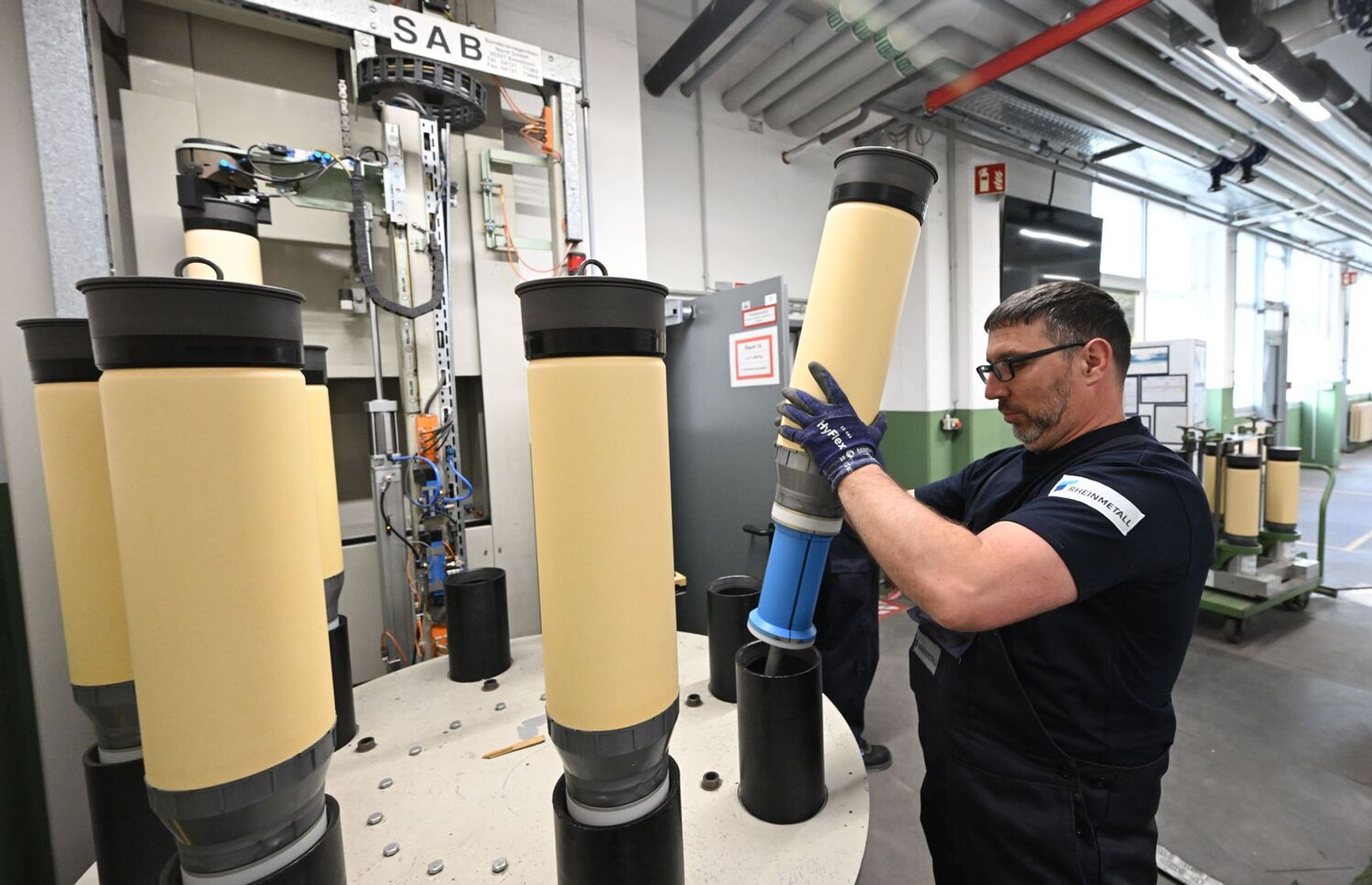
The EU also took steps to shore up its defense industrial base. In March 2025, Brussels presented its “White Paper for European Defence,” an initiative with the ambitious goal of ensuring Europe’s technological and industrial defense capability by 2030. The White Paper, which suggests direct involvement of Ukraine in joint projects, is accompanied by a Readiness Roadmap for individual sectors. This past May, the EU launched the Security Action for Europe (SAFE), providing up to €150 billion in loans for joint military development and procurement. The project allows for the participation of non-European partners, such as Canada.
In June, the European Commission removed multiple bureaucratic barriers to the implementation of defense know-how, setting a maximum project approval period of 60 days. This past fall, Brussels officially expanded the powers of the European Defence Fund, opened it to Ukraine as a full partner, and launched two additional multi-billion-euro programs for defense investment and the development of the defense industry.
The year 2025 also brought significant changes in Europe–U.S. relations. At the end of 2024, recovering from the shock of Trump’s reelection, European leaders decided to try to reach an understanding with the “difficult” president. The first visits to Washington by Macron (February 2025) and Merz (June 2025) still bore the mark of past compromise-driven policies, with the French president openly trying to avoid “sharp corners” and the more assertive German chancellor still showing a willingness to make concessions in the interest of improving relations.
In the second half of 2025, however, European leaders noticeably altered their approach to interacting with the White House. Merz established a new political tradition, holding operational meetings of European leaders both immediately before Zelensky’s meetings with Trump and after the announcement of a new initiative from Washington. The EU and NATO leadership are also involved in these consultations. In essence, Europe is shaping an alternative course, largely distinct from current U.S. positions.
In 2025, three components of the new strategy became clear. First, the American president cannot fail to notice that the United Kingdom is aligned with the EU. Second, a prominent role is given to Italian Prime Minister Giorgia Meloni (who, despite being the European leader most ideologically aligned with Trump still openly maintains a united front with her EU colleagues). Third, Poland’s capabilities are being actively leveraged.
Warsaw is one of Washington’s most loyal allies. Even during Trump's second presidency, the Poles remain perhaps the most pro-American nation in Europe. Surveys show a high level of trust in the U.S. and confidence that American military assistance will arrive in the event of a Russian attack. For Trump, Polish President Karol Nawrocki embodies the image of a “positive European patriot,” yet relations between Washington and Nawrocki’s chief domestic opponent, Prime Minister Donald Tusk, are also relatively congenial. At the same time, Warsaw emphasizes the need for Europe-wide security, a position that is fully in line with the priorities of Brussels.
European initiatives are already producing tangible results. In December, the EU announced a zero-interest loan of €90 billion to Ukraine to help Kyiv cover military expenditures and the ongoing needs of its government apparatus over the next two years. Not long ago, such a consolidated European decision would have seemed unlikely.
In 2025, the European Union took a significant step toward establishing itself as an actor whose global political and military weight at least roughly matches its economic potential. However, there is still a long, long way to go.
Last year, not a single European initiative aimed at stopping the war in Ukraine was actually implemented. Outside Europe, only a few countries, such as Canada, expressed even cautious support for Brussels’ proposals. Otherwise, the Western world remained U.S.-centric.
True, Trump showed more interest in signals from Europe and was, to some extent, forced to coordinate some of his actions with America’s traditional allies. Still, the main problem with the peace process as a whole, and European involvement in particular, is that Vladimir Putin does not take Europe seriously, preferring to see only Americans at the negotiating table.
Putin does not take Europe seriously, preferring to see only Americans at the negotiating table
Trump’s general skepticism toward the European project has by no means disappeared, and in certain areas it borders on hostility. The current U.S. National Security Strategy goes far beyond the earlier critical remarks of Trump and Vance, explicitly outlining the vision Washington has for Europe and specifying which “patriotic” forces should hold power in European capitals. Not only Merz and Macron, but also Meloni, Starmer, and Tusk will find it all but impossible to reach an agreement with this administration.
Additionally, serious controversy persists within the European Union. Hungary, Slovakia, and to some extent the Czech Republic continuously oppose calls for the creation of a well-armed Europe and the provision of ongoing support for Ukraine. As for peacekeeping and defense initiatives, only about a third of EU member states actively support them. Spain, Portugal, Greece, Belgium, Bulgaria, Croatia, Slovenia, and a few others remain passive — if not challenging the “Franco-German line,” then at least limiting their participation in defense projects and new European security structures.
Even at the height of its activity in 2025, the EU was still unable to reach a consensus on the use of frozen Russian assets. Commenting on the EU’s decision to provide Ukraine with a €90 billion loan, Chair of the European Parliament’s Defence Committee Marie-Agnes Strack-Zimmermann dismissed it as “not a good compromise.” She noted that the EU lacks the resolve to use Russian funds for the benefit of Ukraine as a victim of aggression.
Nevertheless, Europe's awakening has indeed begun, as the continent seeks to take on a new role in a changed world. The year 2025 was marked by a serious, if not flawless, attempt by the EU to accept this reality and to begin developing a new approach.
К сожалению, браузер, которым вы пользуйтесь, устарел и не позволяет корректно отображать сайт. Пожалуйста, установите любой из современных браузеров, например:
Google Chrome Firefox Safari