SOCIETY
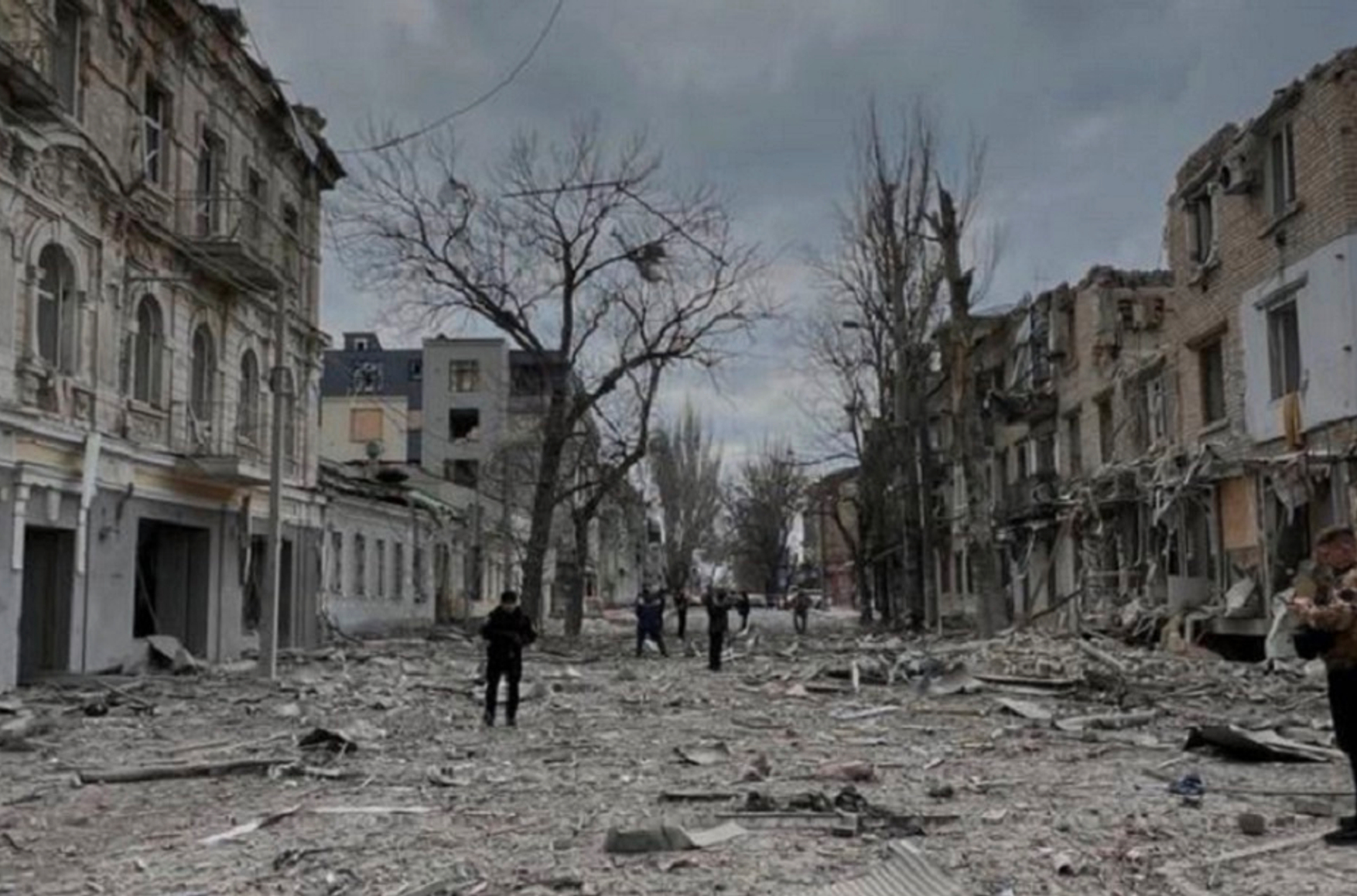
Russian shelling killed 712 residents of Ukraine’s Kherson region in the years 2024-2025, wounding an additional 4,175. This past December also saw a devastating Russian strike that knocked the local thermal power plant offline, leaving more than 40,000 residents without heat. Kherson has been enduring Russian military aggression for nearly four years, but the attacks have grown steadily more intense — and deadly — since Russian forces were driven to the opposite bank of the Dnipro River in November 2022. Residents of the region told The Insider how they are coping with the freezing temperatures, moving into underground bomb shelters, and helping one another.
No lights, no heat
“Red zone”
“Stepping outside your apartment is a risk”
“Human safari”
Volunteers against drones
Information as self-defense
Underground city
Karate under fire
A habit of surviving
Russian shelling killed 712 residents of Ukraine’s Kherson region in the years 2024-2025, wounding an additional 4,175. This past December also saw a devastating Russian strike that knocked the local thermal power plant offline, leaving more than 40,000 residents without heat. Kherson has been enduring Russian military aggression for nearly four years, but the attacks have grown steadily more intense — and deadly — since Russian forces were driven to the opposite bank of the Dnipro River in November 2022. Residents of the region told The Insider how they are coping with the freezing temperatures, moving into underground bomb shelters, and helping one another.
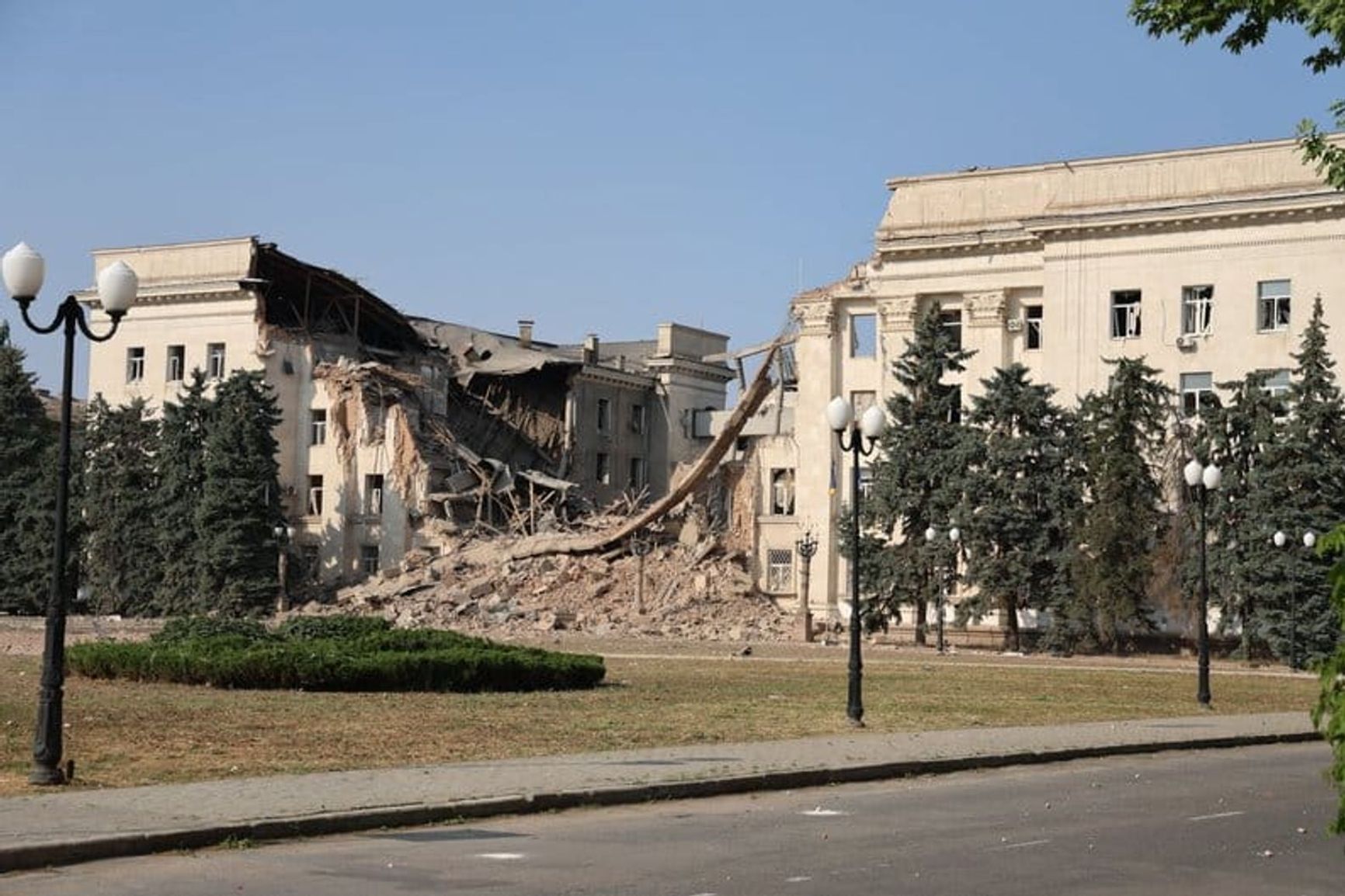
Russian forces have been carrying out regular strikes against Kherson’s power and heating infrastructure since December 2022. By the end of 2025, city officials said the local thermal power plant was “almost destroyed” after being hit simultaneously by artillery, fiber-optic-guided drones, and high-charge Molniya munitions, making it virtually impossible to repair.
Household heaters are the last remaining hope, but not all residents can use them because of the unstable supply of electricity. “Along the river, power stations and substations were gradually knocked out, and then drones disrupted repair work. There are neighborhoods in the city that have had no electricity since 2023, and in the region some have been without it since 2022. These zones keep expanding,” an administrator of the Kherson Non Fake Telegram channel told The Insider.
In January 2026, the Russian military continued attacking Kherson’s remaining heat-generation facilities, with Ukrainian officials calling the strikes “deliberate terror against civilians.” The regional administration has been forced to decentralize the heating system, moving to modular boiler houses and individual heating.
For residents of villages along the Dnipro (more than 40,000 households), authorities have organized the distribution of firewood and financial assistance. In the city, they are handing out electric and gas heaters and expanding the network of “Invincibility Points,” where people can warm up, charge devices, and receive first aid.
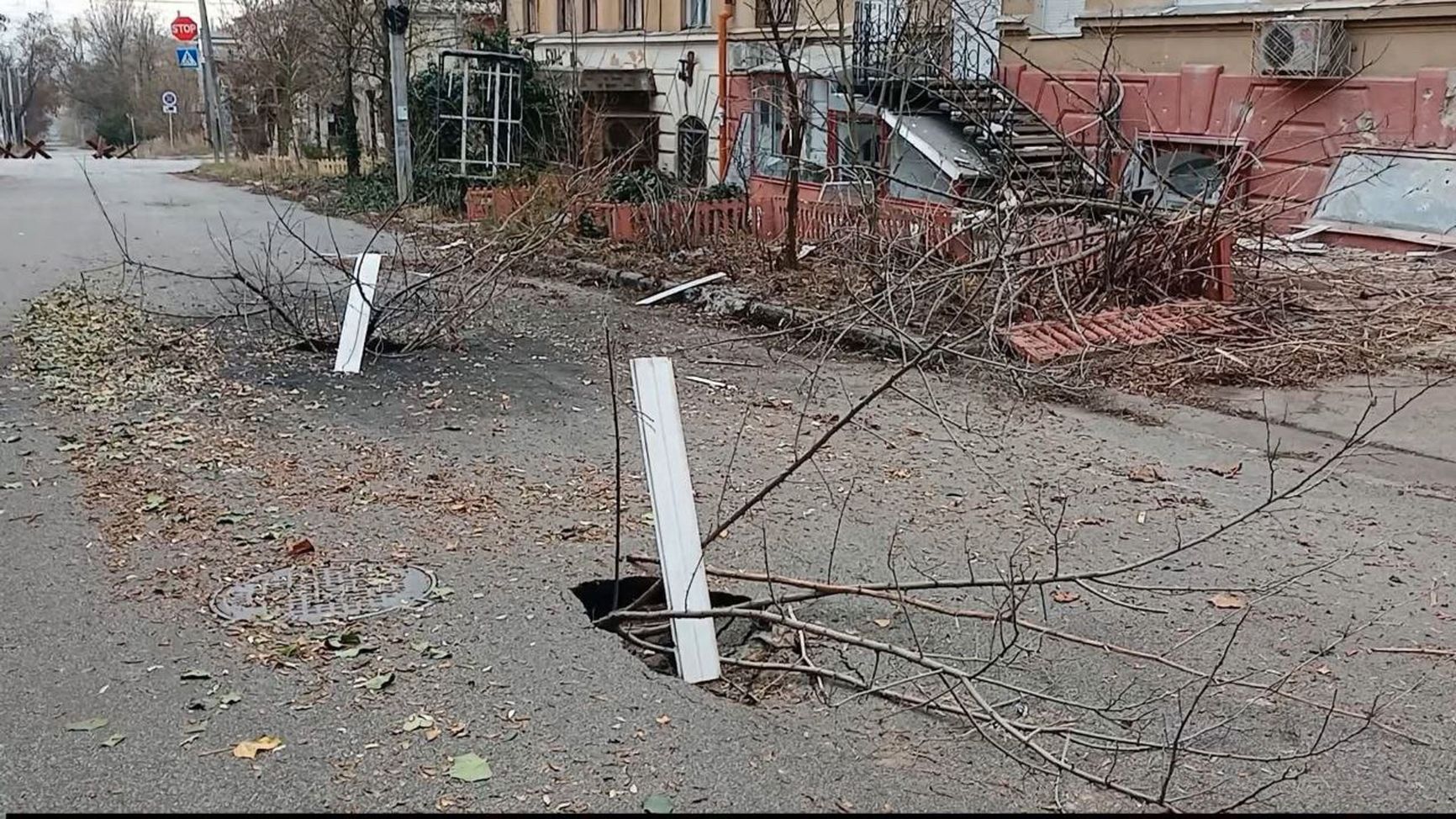
Pensioner Ivan tells The Insider that this winter has been especially cold, with temperatures in December and January dropping to -15°C. Due to the sporadic heating, even indoors the thermometer never rises above +10°C:
“Frost seeps into the apartment. Of course, it’s not like a refrigerator — it’s just a bit warmer. I wear three or four layers of clothing, and before going to bed I take off only one layer. Right now I’m wearing a T-shirt, a tracksuit jacket, a sweater, and another jacket on top. It’s impossible to make yourself get out from under the blanket.”
Ivan has been saved by his single electric heater: “You live in one room, and the rest of the apartment stays cold.” Still, due to electricity cuts resulting from Russian attacks, even this minor amenity is frequently knocked offline for hours at a time.
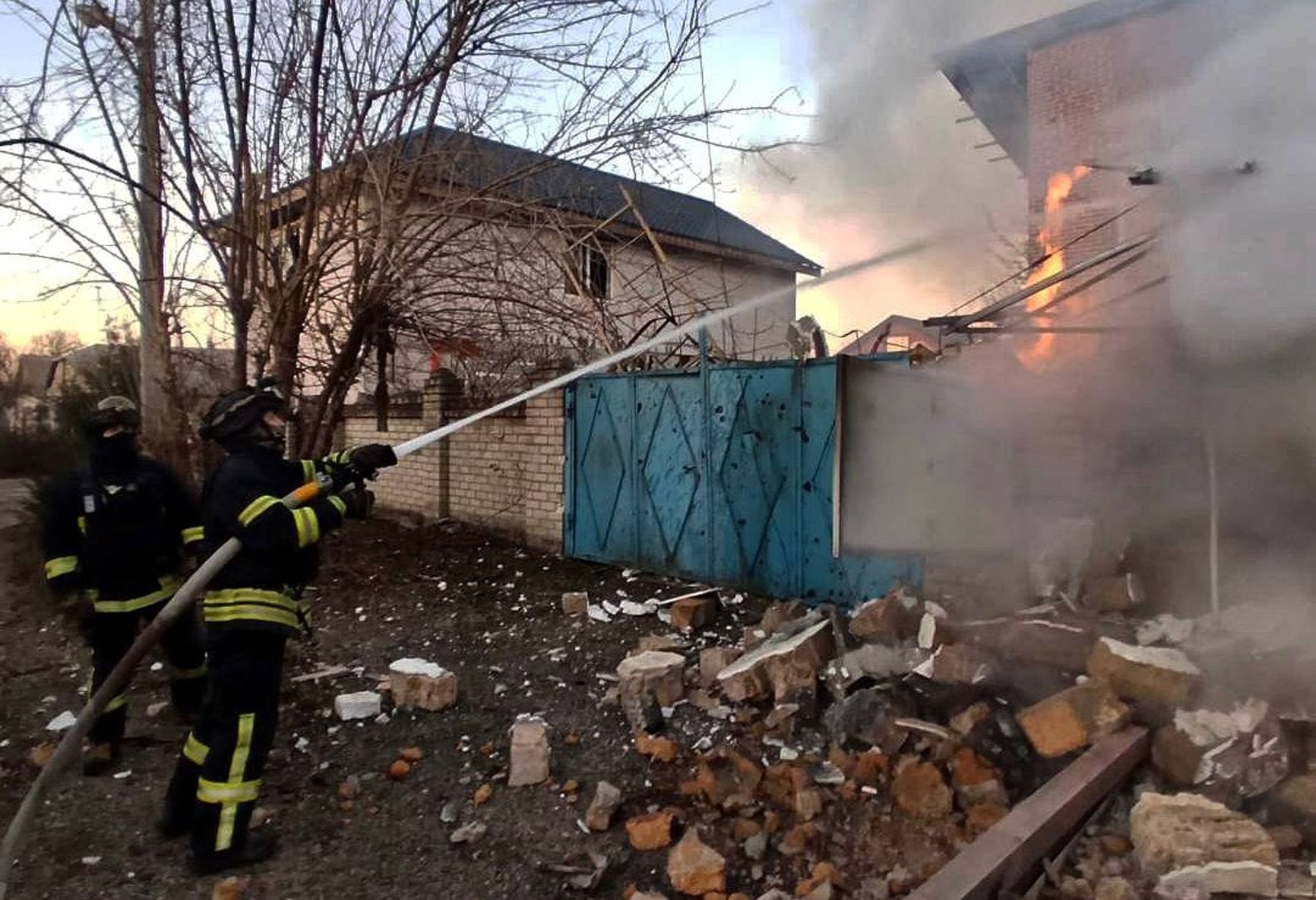
Strikes on residential buildings had left many residents without heat even before the thermal power plant was knocked out. As Ivan explains: “At the end of the summer, a shell first landed in our yard, then a Grad hit the roof of the neighboring house — it was a very powerful explosion. One of the fragments punched through the window and tore off the radiator. Naturally, the heating was shut off immediately. You can’t get into the apartment – the owners aren’t there. So the issue of heat in the building was closed.”
The city’s districts are divided according to the intensity of Russian shelling prevalent there. Repair crews will not go into the dangerous “red” zone, and even calling an ambulance to such areas is difficult. Residents are being urged to relocate. “They say, ‘Evacuate, we’ll help you, but if you stay, that’s your choice, you’re responsible for yourself,’” Ivan says. “And the line dividing the ‘red’ zone from the conditionally safe one runs right down my street.”
Recently a relative came to see his neighbor — an elderly woman with a disability — and found her unconscious: “They called an ambulance, but to get someone out of here they basically have to carry out a full military operation. Paramedics travel with a police vehicle equipped with electronic warfare systems that protect against drones. The crew rushes in, grabs the person, and rushes out, because during such a mission they can be attacked and bombed.”
At the same time, Ivan admits his neighborhood is not the most dangerous: “I lie on my couch and don’t care, but there are places where you simply cannot exist. Drones are flying, roads are strewn with mines and the wrecks of burned-out cars, buildings are in ruins — and that’s just a couple of kilometers from here.”
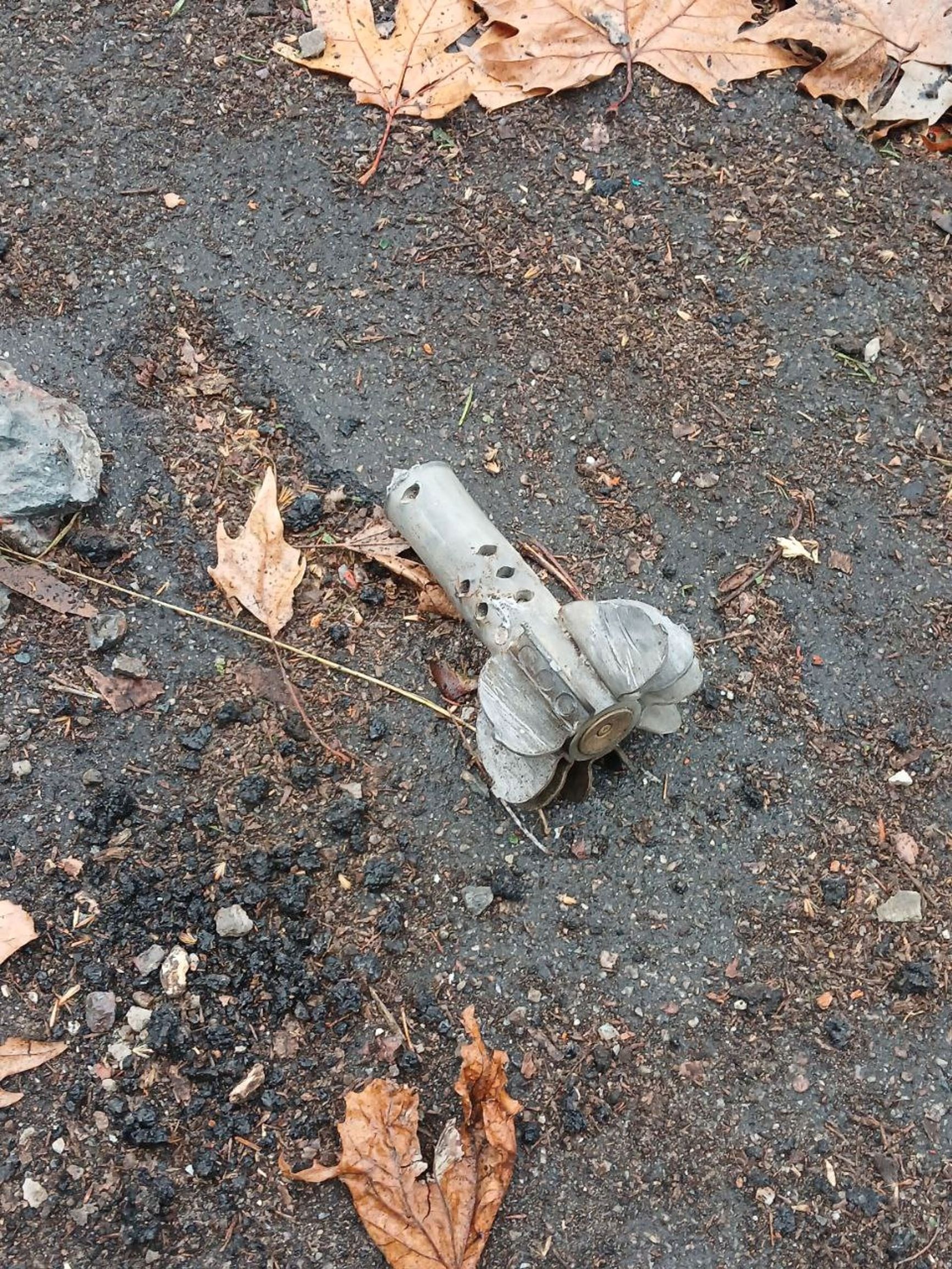
Even the occasional hits to the courtyard near the apartment block where Ivan lives have devastating consequences. “In the summer a rocket arrived and hit the roof of the house across the street. It struck the very edge of the wall, and the shrapnel flew in all directions,” the pensioner says. “Two elderly women were sitting in the yard — Aunt Shura and Aunt Lyuba. One was almost untouched: when the shock wore off, she found only small scratches on her cheek and leg. The other had part of her head blown off, and her arm severed at the elbow. After the strike, she was lying face down, trying to move. Blood was flowing. When they turned her over, it turned out her whole abdomen had been torn apart.”
Ivan called an ambulance and gave the wounded woman first aid: “I tried to bandage her severed arm, and I was covered in a stream of someone else’s blood.” A tourniquet and medical gloves helped — Ivan always carries them, given that such things can make the difference between life and death. “One of the doctors said, ‘Watch the sky while we’re dragging her,’” Ivan recalls. According to him, drones are often launched after strikes to hit those who come to help the injured.
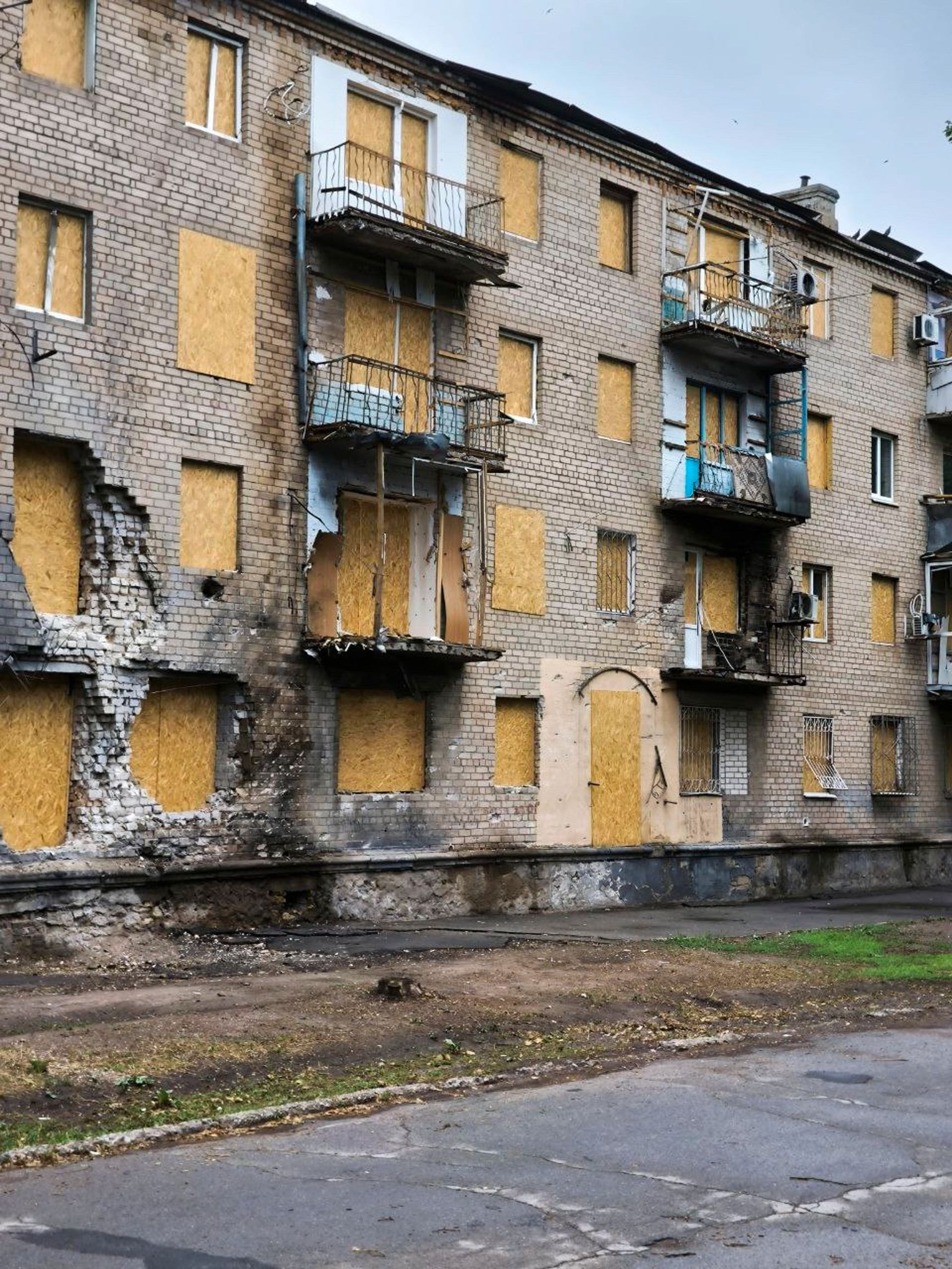
Ivan notes that it is safest to stay indoors. The walls offer protection, and he remembers warning the women that sitting on a bench all day was “a bad idea.” People in Kherson no longer distinguish between houses that are beautiful or ugly, old or new: “The main thing is thick walls. Whether a shell will punch through them — that’s what matters. Housing is now seen as a bunker, a fighting position. If it’s solid, then it’s a good house.” During shelling, Ivan refuses to go down to the basement even though heavier calibers are already hitting his neighborhood: “If the first shell hits, the explosion will be outside and it will destroy the wall. And for me to get hurt, you need a second strike. But I won’t wait for it — I’ll move to a backup position the same way a soldier does. If the bunker is destroyed, he goes to a prepared trench.”
This fatalism is not Ivan’s preference. The pensioner says he simply has nowhere to evacuate and no means to do so. “Everyone keeps nagging me to leave, and I say I’ll wait until a shell hits and the building becomes uninhabitable. As long as it’s possible to live here, I’m staying,” Ivan says. “And really, it’s fate: one family moved from Kherson to Odesa, and then a rocket hit their house and killed them. You never know where it will catch up with you.”
Public transportation in Kherson has become less frequent because Russian drones have repeatedly struck city buses. In January 2025 a drone killed two people and wounded eight; in August two passengers were killed, and 16 were injured; in November a child was wounded in a drone strike. “There are about 30 percent fewer vehicles on the routes now, and many people get to work by bicycle or on foot, which isn’t much safer,” says volunteer and civic activist Hennadii Ofitserov, who has remained in Kherson since the start of the war and is fighting for the release of his son Serhii (who on Jan. 30 was sentenced to 17 years in a Russian maximum security penal colony on the fabricated charge that he was preparing an assassination attempt against the occupation administration of the Kherson region).
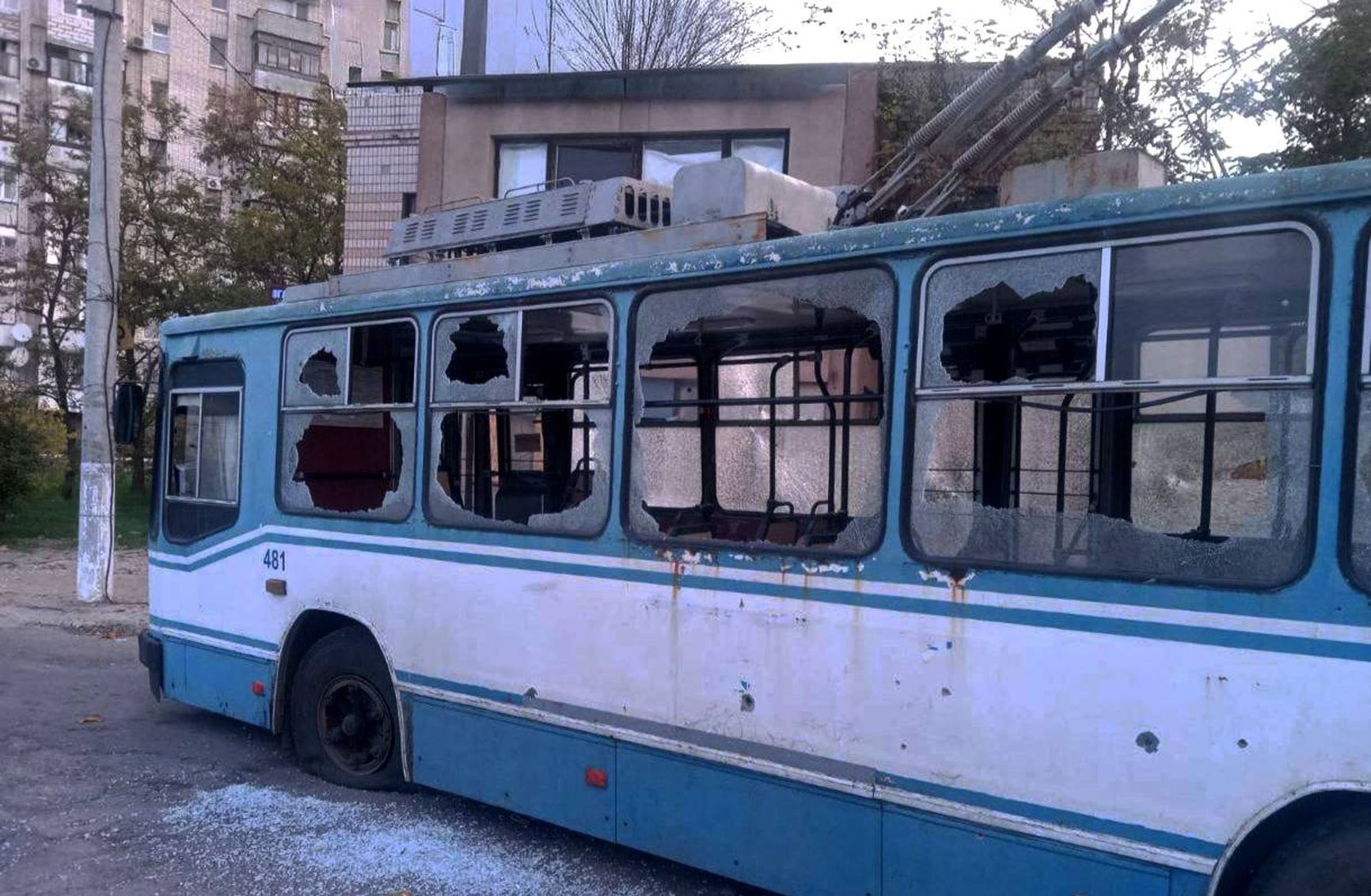
Before stepping outside, Hennadii always checks the situation: “You look at where the drones are positioned like you’re checking a weather forecast. On the street you navigate by sound.” Once he narrowly escaped becoming the victim of a Russian drone: “I walked out of a store and heard an approaching sound. The main thing is to become invisible quickly. I hid behind a tree, and it flew past.” Hennadii believes the drone’s target was a nearby bus parking lot. The UAV made several circles and dropped a munition somewhere in the distance.
Another time, Hennadii found himself two hundred meters from the site of an artillery strike: “Any time you step outside your apartment into the open is a risk. I’m sitting on a bench on the main street, and then a shell weighing about 250 kilograms slams into a tree. It flashes before your eyes, people are taking cover, and you don’t know where to run or whether there will be another strike.”
The constant thunder of explosions, the whistle of shells, and the buzzing of drones have altered how residents perceive the world, Hennadii says: “There’s now a reaction to any sounds that resemble flying shells or drones — hissing like snakes. You hear grass being cut, and it already makes you tense.”
People are forced to judge danger by sound: “It’s frightening when a shell’s sound gets closer and then — silence. I don’t know whether it exploded or not. You have to wait, listen, analyze. Maybe they’re dropping mortar shells from above, the so-called ‘petals.’ And when something finally explodes somewhere, you think: thank God, now it’s clear where not to go. But overall, the feeling is unpleasant, like being trapped. You don’t know how many more they’ll fire, or where. It’s rarely just one.”
As the administrator of Kherson Non Fake explains, drone attacks were relatively rare in 2023, but they grew more intense in 2024 before reaching an entirely new level in 2025: “Now UAVs are used for several purposes at once — FPV-drone strikes on analog and fiber-optic signals, explosive drops, and electronic and aerial reconnaissance.” The rise in such activity has corresponded with the development of the Russian Defense Ministry’s Rubikon drone operator training center.
Russian drone attacks on Kherson began to resemble a deliberate hunt for civilians, and the media started using the term “human safari” after American journalist Zarina Zabrisky released a documentary of the same name. It shows Russian FPV-drone operators selecting and attacking civilian targets — cyclists, ambulance crews, pedestrians, volunteers.
The goal of the “human safari,” in Hennadii’s view, is to make living conditions in the city unbearable and force all residents to leave. Russian pro-war Telegram channels state this outright. “We will constantly write about the need to evacuate the entire civilian population. All of them. You won’t be able to wait it out — one way or another, the war will come for you,” Z-propagandists commented in 2024 as they circulated drone-camera videos showing attacks against civilians in Kherson.
The goal of the “human safari” is to create unbearable conditions and force Kherson residents to leave. Russian pro-war channels state this outright
In January 2026, footage showing a Russian drone operator dropping an explosive on a residential building in the “red zone” came with the caption: “The more dill we grind up, the easier everyone in the world will breathe.” The author of another post thanked Russia’s 98th Airborne Brigade for a video in which a drone hits a man in ordinary clothing in a riverfront district of Kherson. The text claims: “Naturally, he’s not a civilian; there are none there and never will be again under the Armed Forces of Ukraine.”
A clip showing a drone dropping a charge on an elderly man in a damaged private home is captioned “For The Hague.” The author again claims the victim is a Ukrainian soldier in disguise, “a rooster in civilian clothes.” Passenger cars are described by Z-propagandists as “dual-use transport,” and they warn that any vehicles are a “legitimate target” for Russian forces.
The administrator of Kherson Non Fake believes the enemy’s brutality is deliberate and linked to Russian forces’ inability to conduct combat operations along the Dnipro’s banks: “They have one tactic — kill everything in such zones. They know they will kill civilians, but the military’s logistics will remain anyway, and in the long run it will be easier for them to knock it out. They knowingly accept these civilian casualties.”
Footage of civilians being killed and of strikes on residential buildings and public transport prompted the director of the Anti Human Safari project, Lisa Crofts, to start helping Kherson residents defend themselves from drones. In an interview with The Insider, she recalls how in some clips drone operators do not hide their delight at the killings: “They were literally laughing: ‘Ha-ha-ha, we’ve destroyed another Ukrainian.’ They consider anything that moves a target.” Lisa began studying the work of volunteers in Kherson and discovered that one of the main challenges was evacuating people while relying only on sound, without knowing when the enemy might strike again.
Crofts concluded that volunteers needed reliable equipment to protect against drones. Electronic warfare systems proved too expensive and complicated to use, so the choice fell on drone detectors. “They make it possible to know where the drones are, so people can hide in time. I delivered these devices to volunteers, helped with evacuations, and with distributing food to residents,” Lisa recalls.
It took time to find the right type of equipment: at first she bought basic Tsukorok detectors, developed by Ukrainian programmer Dmytro Selin to scan signals across different frequencies. However, many UAVs used the same frequency as Wi-Fi, meaning the devices kept “buzzing” out false alarms, especially in the city center.
Another difficulty was determining the distance to a drone, Lisa says: “A regular detector beeps when it picks up a signal’s strength, but it’s hard to quickly figure out how far away the drone is. You have to ‘decode’ the reading. If you work in an ambulance crew, evacuating people in an emergency, there’s no time for that. You hear a signal, and you dive under a bush. But if you’re helping an elderly woman out of her house, you can’t drop her every time the detector picks up a drone that might still be three kilometers away.”
According to the activist, detectors with screens help volunteers understand where a UAV is flying and whether there is a threat to their safety. They intercept the video feed received by an FPV-drone operator, making it clear where the drone is headed and how close it is. Anti Human Safari has been purchasing and delivering such devices to volunteers, ambulance crews, and repair teams for more than a year.
Lisa recalls one case: “During an evacuation, the bridge came under heavy shelling. The volunteers who had received video detectors from us said they detected a drone waiting for them under the bridge, so they stopped and waited until it flew away.”
Drone detectors that intercept UAV video feeds help people learn in time whether there is danger
Lisa lives in Germany but has roots in Kherson. After the war began, her grandmother stayed in the city, and the two spoke frequently by phone. In 2024 she noticed her grandmother mentioning drone attacks more and more often. “She’d say, ‘a drone was buzzing today,’ then tell me how she was having tea in the yard when another one flew in — even though earlier the main threat had always been missiles.”
In the fall of that year, a drone killed a neighbor’s child near a retirement home, and in November contact with the grandmother was lost. Lisa began searching for information through volunteers: “I learned then that the way to our neighborhood was now called the ‘Road of Death.’ Drones had attacked public transport there several times, and well-known volunteer Rymma Baranenko was killed when the bus she was in was hit by a Russian drone. After that the minibuses stopped running there.” In the end, the grandmother was found, and contact with her was restored.
By May 2025 it had become even more dangerous to go outside, Lisa recalls. For her grandmother to make a call on a mobile phone, she had to go into the yard at strictly defined times and hide behind bushes: “She would call only in the early evening, because in the dark drones use night-vision devices and thermal sensors.”
The family spent a long time trying to persuade the woman to leave: “She refused, then eventually she suddenly said, ‘Lisa, I’ll come to you.’” But by that time, the only route out of the district had become the “Road of Death.” A brief cease-fire announced by Vladimir Putin on May 9 helped: “A couple of hours of silence were enough for us to evacuate my grandmother safely to Europe.”
Telegram channels provide vital information for Kherson residents. As the administrator of Kherson Non Fake tells The Insider, he created the channel out of a desire to be useful. At first, many reacted skeptically, but by the summer of 2022 it had become an important source alerting locals about the deployment of Russian checkpoints to filter the population, and also about apartment break-ins and abductions.
After the city’s liberation in November 2022, the channel ran direct fundraisers for people affected by the war. In 2025 Kherson Non Fake helped install UAV-detection systems in nearly two dozen city buses. Medical workers in Bilozerka thanked the team for a drone detector that helped save five people.
In addition, the spin-off Kherson Non Drone channel helps locals to move around the city as safely as possible. Residents are encouraged to join the chat and report whenever they hear drones. This information is then sent to an alert channel via a bot. “You need to write the word ‘drone’ and the street, and the neural network picks up the message in a second and informs all readers through the channel,” the project’s creator explains. The team also assembled special stations with antennas connected to various analyzers that search for video signals from drones flying toward Kherson.
There are several rules for survival that Kherson residents follow. “The first and most important — the city lives only until nightfall. Some districts are almost deserted by 3 or 4 p.m., since enemy artillery fires more often after dark,” the author of Kherson Non Fake says. According to him, most casualties are caused by shrapnel wounds, and the only way to protect yourself from shrapnel is to stay indoors.
Kherson lives only until nightfall, as Russian artillery fires more often after dark
Another important habit is paying attention to the weather. “If people need to go toward the river, many wait for fog or for rain with strong wind — it lowers the risk of drones hitting vehicles.” The interviewee tells The Insider that in the Dnipro district, residents look for potential shelters while planning their routes: “Some seasoned survivalists in the coastal areas move along streets in a way that narrows the angle of fire. People choose paths behind buildings that shield them from the riverside and avoid stretches without trees — foliage offers real protection from drones.” Another rule is to avoid using cars. Any vehicle can become a target, so people go out for groceries only on foot.
According to the administrator of Kherson Non Fake, Russian drone operators have recently begun actively searching for antennas on buildings in the Korabelnyi and Central districts. Residents are advised to remove them for safety: “TV antennas of the ‘grid’ and ‘wave’ types get hit particularly often. We urge people to take them down so they don’t become accidental victims.”
The interviewee’s channel also combats disinformation put out by enemy propagandists — for example, claims about a supposed Russian advance on the right bank of the Dnipro, which is under Ukrainian control. The team tracks how such statements spread across different levels: “At first a couple of local propagandists wrote about it, then the collaborator heading the occupation administration, Vladimir Saldo, began to amplify it, then Russia’s Defense Ministry joined in, and finally the claims reached the Foreign Ministry.” At the same time, the author of Kherson Non Fake has observed an increase in strikes along the riverfront and believes that if this continues, it could indicate efforts to conduct “fire preparation” for a ground operation on the shore.
Life in Kherson has effectively moved underground: people study, exercise, and receive medical care in shelters. Hennadii Ofitserov says that in 2024 the authorities organized a bomb shelter where several government agencies relocated: “They took it seriously, first inspecting it to make sure the building above wouldn’t collapse, then reinforcing the walls and doing an excellent renovation.” In addition, the basements of many residential buildings have been converted into shelters, equipped with enough comforts to allow people to stay there for long periods.
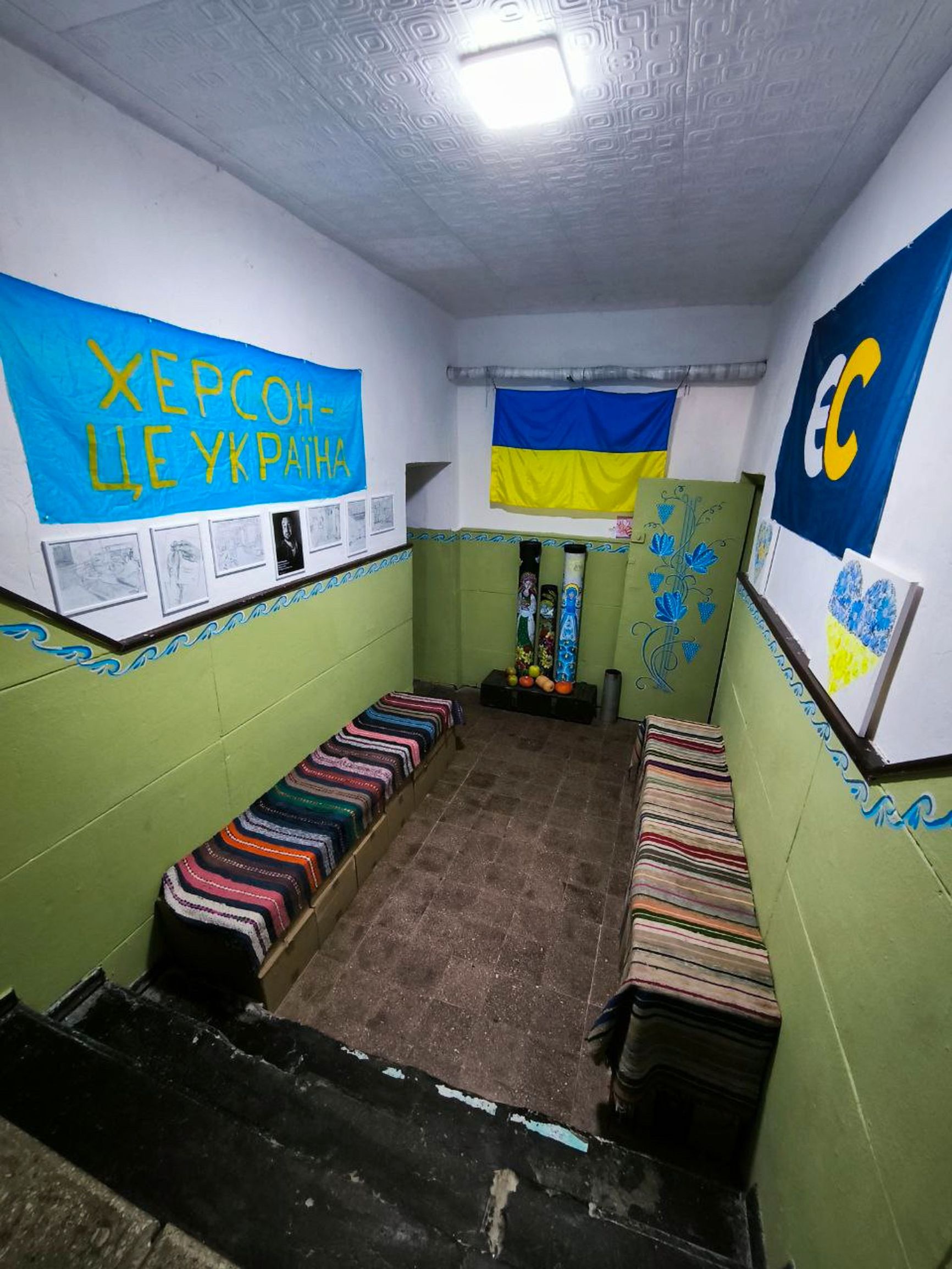
Some medical institutions in Kherson have also had to move underground, where doctors see patients and take blood donations. In January of this year, the head of the Kherson City Military Administration, Yaroslav Shanko, said that American entrepreneur and philanthropist Howard Buffett had visited one of the underground hospitals and saw how surgeries and post-trauma rehabilitation are carried out.
According to the author of Kherson Non Fake, there is not a single medical facility in the city that has not been attacked by Russian forces: “There was even an attempt to strike a hospital in the Central district with a ballistic missile. It missed and fell nearby. The oncology center in the riverfront area of the Eastern district was destroyed long ago. This created a major problem for cancer patients in the city.” He says drones have repeatedly attacked medical staff vehicles and pierced hospital roofs. Sometimes anti-personnel “petal” mortar rounds are scattered near entrances.
A painful issue for residents has been the lack of progress when it comes to the construction of underground schools — more than a year after efforts to build such structures began, none are ready, and work has not even begun at some of the proposed sites. In-person classes are currently banned in the city, meaning children can only study remotely, and Shanko has stated that in-person schooling will not resume until the attacks on Kherson cease. However, according to a report from the Center for Journalistic Investigations, millions of dollars in outside funding have already been spent on the construction projects.
The construction of underground schools, launched in 2024, has become a painful issue for Kherson residents. Not a single one has been completed
Hennadii says one of the construction sites immediately ended up in a risk zone: “They began digging pits, and of course this was seen from above. Strikes started hitting the area. One shell, then a second, then a third. And nearby were residential buildings where windows were blown out, and people were injured. Money was allocated for this — it flowed there in a stream and was stolen.” According to Hennadii, hundreds of outraged citizens wrote petitions, published video appeals, and attended meetings with officials, but there were no mass protests due to the fact that such gatherings are banned because of the war.
Residents were most concerned about safety, Hennadii says: “How are children supposed to get to this school? Who will drive them? They could be killed on the way.” As a result, the project was frozen and contracts were terminated — even if, this past August, it was reported that construction had continued.
Overall, Ukrainian authorities plan to build 221 educational institutions underground, the country’s Minister of Education Oksen Lisovyi said in November. He did not specify dates but noted that four dozen such facilities have already opened, serving hundreds of children. In remote areas of the Kherson region — Vysokopillia and Orlove, near the border with Dnipropetrovsk region — underground schools have been functioning since September 2025.
While schooling in Kherson remains remote, shelters host entertainment and cultural events, as well as sports classes. The head of the organizing committee of the Ukrainian Karate Federation, Ruslan Khomutenko, travels to the city from Odesa to teach children martial arts. He tells The Insider that before the war he had been to Kherson “once, and even then by accident,” but when he saw residents taking to the streets with Ukrainian flags in the early days of the Russian occupation, the city became a symbol of resilience and inner strength.
“That is the essence of martial arts. Kherson became the quintessence of everything I had ever read about the romance of willpower and human character,” Khomutenko recalls. After the de-occupation he began bringing humanitarian aid to Kherson. His car came under fire several times, but Ruslan continued his trips, even helping to evacuate families who wanted to leave but were afraid to do so. Yet the needs of children remained overlooked — all activity clubs in the city had closed. So Khomutenko began holding training sessions.
He organized the first classes in a shelter located around a mile from the banks of the Dnipro at the only facility the authorities were offering to provide for free. The trainer formed two groups: one in self-defense for women, and another for children (the oldest of whom was 14).
“We trained in that space for six months. But the security situation kept getting worse. In addition to artillery shelling, drones became more active,” Khomutenko says. Getting there grew harder. Parents were afraid to bring their children to class, and residents began leaving the district. So the trainer had to look for another location.
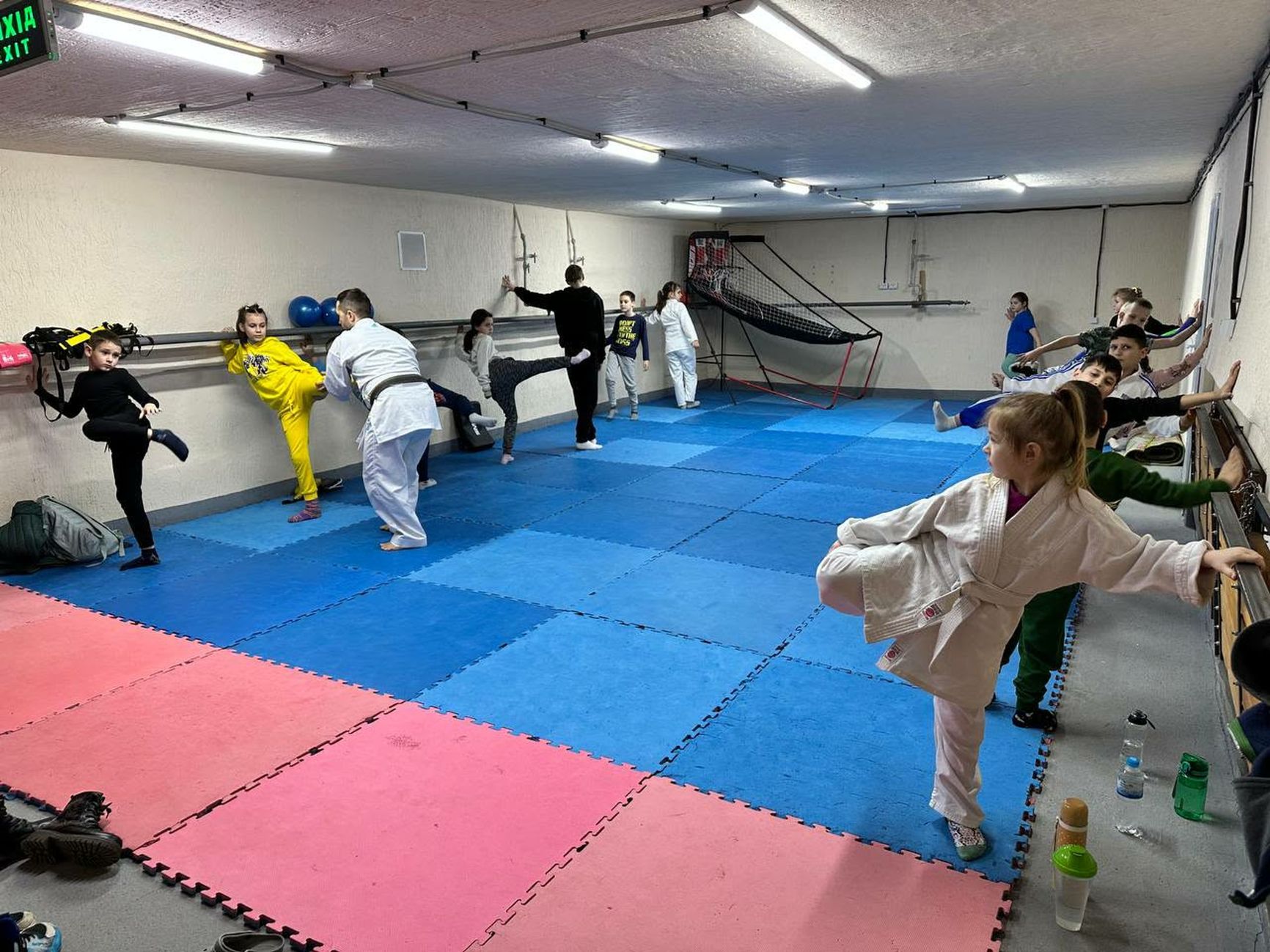
In 2024 the class moved to a bomb shelter in a safer part of the city. A Swedish organization, Operation Aid, helped equip the hall, purchasing toys, educational materials, televisions, beds, and later paying for high-quality flooring that, according to Ruslan, is better than what can be found at some professional facilities. The sports club was also supported by the Ukrainian Karate Federation: “They provided us with gear — gloves, shin guards — so we could train and practice strikes. This played a huge role. The kids saw they were being cared for. It lifted them up.”
Children who grow up in warzones differ from those living in peaceful regions, Ruslan notes. He realized this from the reaction-speed test he gives all his students: the coach drops a ball, and they must catch it before it hits the floor. For adults, the standard rate of success is to catch one ball out of three, while children usually catch two thanks to the fact that their nervous systems are more active.
Among Khomutenko’s Kherson students, the results were different: “I see a terrible picture. Children start reacting to the falling ball only at the moment it touches the floor. Their reactions are slowed. This sports test highlights the depth of the war’s impact on their nervous systems. To protect itself, the body blocks the impulses for quick reaction.” Ruslan stresses that this is not about a child’s athletic prospects, but about the consequences of war that will be seen for decades.
Still, as they continue to live under constant shelling, the training sessions help children feel that they have not been abandoned: “There are no schools, no kindergartens. Children are essentially not socialized. Some had no regular contact with peers even before the war because COVID happened right before it.”
Khomutenko not only provides his students with an environment where they can spend time together, but also takes them to competitions outside Kherson: “We managed to organize a trip for the children to the Odesa regional championship. Three girls won medals — in the beginners group, but still.”
After the trip, the coach says, the children became even more passionate about sports: “The problem for teenagers is being able to see who they can grow up to be in the future. During a war, that’s almost impossible. These children now have goals. For a coach and teacher, that’s happiness.”
Ruslan admits that today’s Kherson is no place for children, and he tries at every opportunity to impress on parents that they need to leave. But the unknown frightens the families of his students, as it does many other Kherson residents, who ask, “Who will need us there?” Sometimes he has to resort to tricks: “I already have five families whom I convinced to go to Odesa ‘for the weekend,’ and they stayed to live there. They don’t want to come back.”
Khomutenko calls drones the city’s greatest scourge. Children talk about them on their way to training, during the session, and when they are getting ready to go home. In other cities, children might skip practice because they feel unwell, because of a friend’s birthday, or for no reason at all. But in Kherson, they most often ask to stay home because of the drone threat, the coach says.
According to Ruslan, children see the danger just as clearly as their parents do: “Everyone understands that they are being hunted personally. A drone sees you specifically, attacks you specifically. This sense of personalization — that you are the victim, that you are the target — is the most terrifying thing happening in Kherson right now.”
Pensioner Ivan moved to Kherson shortly before the full-scale invasion and noticed that local residents react to wartime realities differently than people in other regions. According to him, many Ukrainians treat the war lightly and prefer not to notice it, whereas peaceful life in Kherson has been unmistakably destroyed. “At first we thought it was impossible to live like this and that we would all die, but then we adapted — and to the subsequent changes as well,” he says.
Under Russian occupation, Kherson was cut off from supplies of food and medicine, and the situation did not improve immediately after liberation. As Ivan recalls, there was no sugar for two months, pharmacies were empty, and people with chronic illnesses had to search for medicine online. When retreating, the Russian army blew up two large transformer substations, leaving the city without electricity just as winter was setting in.
“We lived like in the 17th century: at four in the afternoon the sun went down and the city plunged into darkness. A flashlight illuminated only a meter ahead; nothing was visible,” Ivan says. Then the water system was blown up: “We spent two hours a day standing in line with cans, then went home, and by three in the afternoon everything in the city was already closed. After that there was only reading a book with a flashlight or going to sleep.”
Ivan sees the cold as just another trial Kherson residents will get used to: “One day we’ll become cyborgs here, people who can’t be killed.” He says he has often been told that living in a “red zone” must be frightening, but he would reply that “it’s fine.” “If a shell lands 20–50 meters from you, that’s scary. But whether it lands 200 meters away or in Kharkiv — it makes no difference. The shrapnel won’t reach you, so you don’t pay attention to it,” Ivan says. “People who haven’t gone through the shocks Kherson residents have endured think, ‘they’re firing artillery nearby, and he says he’s not scared. It’s madness.’ But it’s not madness — it’s the normal way of life.”
“If a shell lands 20–50 meters from you — that’s scary. But whether it’s 200 meters away or in Kharkiv — it makes no difference”
Ruslan also notes the extent to which people get used to the war. For residents of Lviv, what is happening in Odesa is horrifying; for Odesa residents, life in Kherson is what’s unimaginable; and for those living just a bit outside the “red zones” in Kherson, it is those in the city’s more vulnerable districts whose existence seems all but impossible. “It’s hard to say you’re scared when 7- or 8-year-old children come to your classes,” the coach says. “It’s hard to say you’re scared to travel to the city, and when you arrive, you see a mother walking with a stroller. It’s hard to say you’re scared when a 12-year-old brother comes on a bicycle to pick up his seven-year-old sibling from practice.”
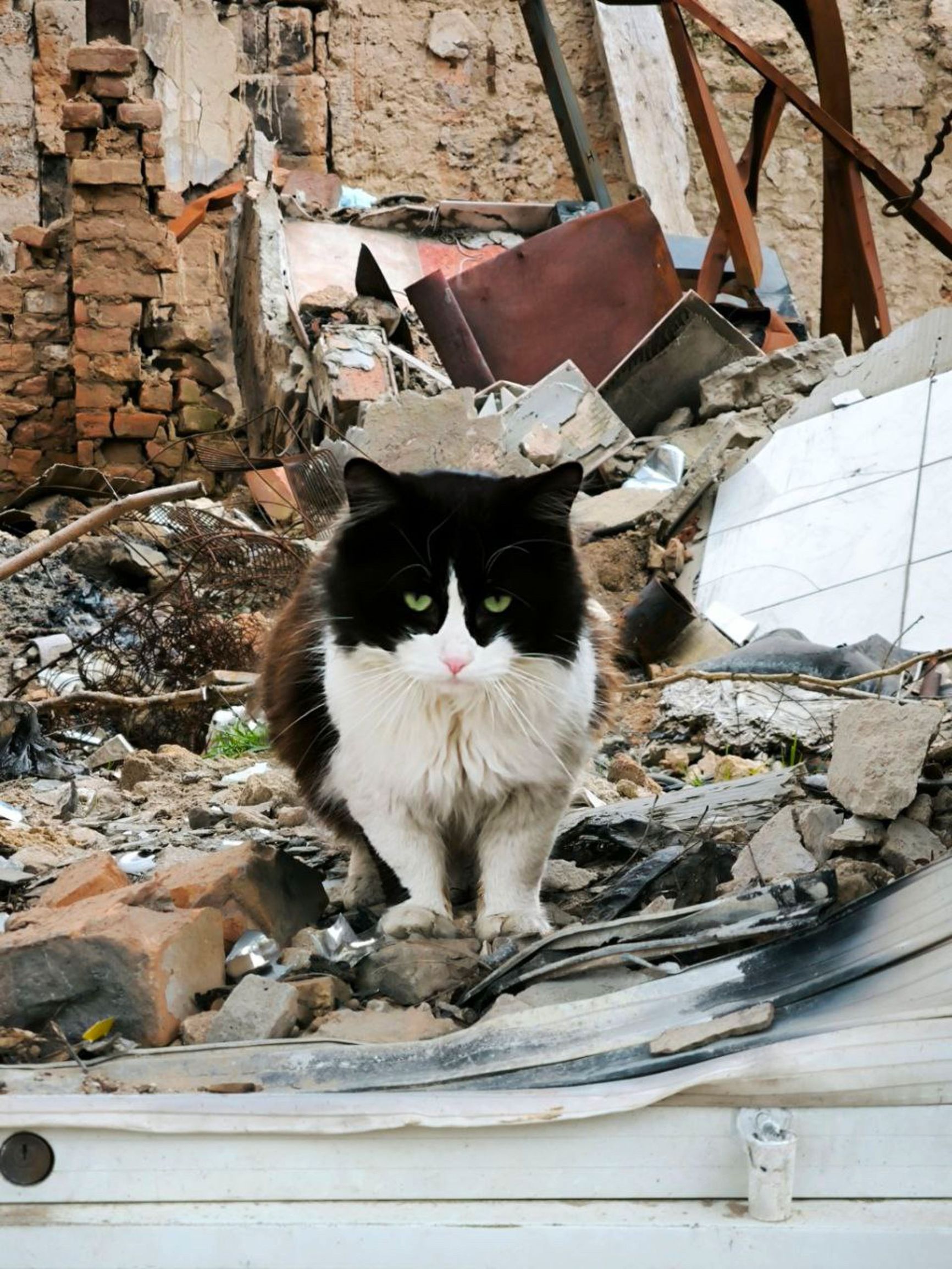
Kherson residents are largely of one mind when it comes to the war and the Russian army, Ivan says: “There’s maybe one Putin supporter left out of a hundred.” In Soviet times, Kherson was a Russian-speaking city, and some people genuinely thought of themselves as Russian. “When Russian bombs started falling on their heads, something clicked for many of them — though not for everyone,” he says.
There are also people in the city whom the Russian army uses for its own purposes. Ivan recalls how, once, an ambulance brought in a man “who looked like a tramp,” but he turned out to have an expensive phone. Medical workers suspected something was wrong, decided to look at the photos, and found images of important sites. They called the SBU, and it turned out the man had been working with the enemy for money.
At the same time, though, Ivan says, most of Putin’s ideological supporters left together with the occupiers back in 2022: “The Russians launched a panic campaign during their retreat, saying the Ukrainian army was coming and would kill you, but that the Russians would evacuate you to their happy life. People fell for it and left, and the occupiers needed this to create a human shield. Because of the civilian evacuation, our forces couldn’t target them with artillery, and that’s how they all slipped away.”
Of the prewar population of 300,000, fewer than 64,000 people remain in the city. Most are over 50. There are young people, but far fewer than before the war. Many, Hennadii says, return only because of the financial difficulties they faced in a new place.
Still, Hennadii says some come back to Kherson with their whole families, and he is glad that life in the city continues: “There’s a sandbox here, and in good weather children play in it, and in the evening I see that in the building next door, out of 50 windows, 10–12 are lit. It also lifts my spirits when I see trolleybuses. The drivers are heroes. If they’re running, it makes it easier for me to walk around. It’s a sign that life goes on.”
К сожалению, браузер, которым вы пользуйтесь, устарел и не позволяет корректно отображать сайт. Пожалуйста, установите любой из современных браузеров, например:
Google Chrome Firefox Safari