
Donald Trump’s proposed peace plan for Ukraine violates international law and undermines the core principles of global security developed since the end of the Second World War, international law scholar Gleb Bogush argues for The Insider, as recognizing Russian control over occupied Ukrainian territory would amount to legitimizing aggression. As such, Bogush argues that any peace agreement explicitly codifying Russia’s territorial acquisitions would be legally null and void. That means any attempt to formalize Russian sovereignty over occupied regions would merely freeze the conflict, rendering a renewed war only a question of time. Such a “peace deal” would be a political victory for Vladimir Putin, but not for Russian citizens, who would face a double blow: a harsher dictatorship at home and deeper isolation from the global community.
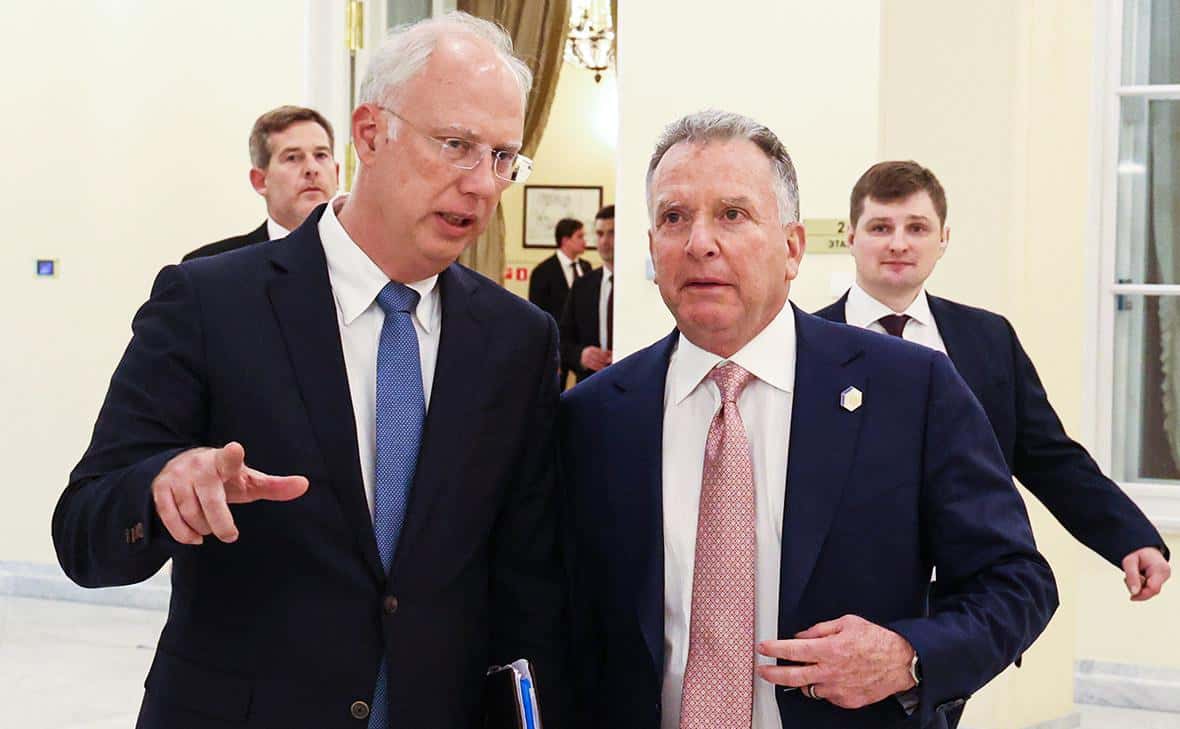
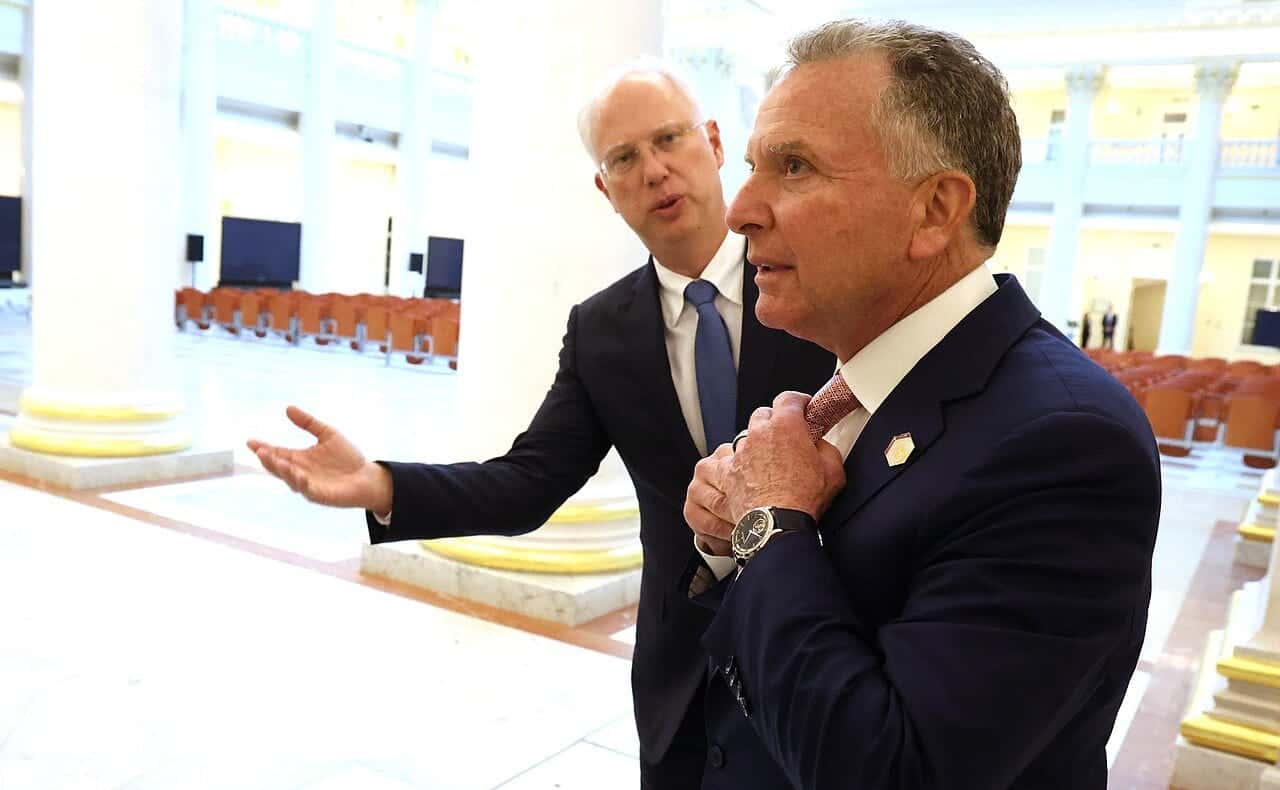
The original 28-point peace initiative drafted by Kremlin official Kirill Dmitriev and U.S. special envoy Steve Witkoff to resolve the Russian-Ukrainian conflict has evolved significantly since its introduction last month. Even before a U.S. delegation that included the president’s son-in-law visited the Kremlin to talk with Putin and traveled to Miami to meet with Ukrainian negotiators, the document had already begun to change. At the same time, the “European trio” of France, Germany, and the UK presented “alternative” initiatives that were even less realistic than Trump’s original proposal. Putin, like Zelensky, rejected even the shortened version.
Still, the plan has not disappeared entirely — individual elements remain under discussion — but the implications of merely entertaining these points are significant in and of themselves. After all, norms of international law and even loosely defined “rules” are being replaced by “realism,” while genuine peace efforts are reduced to “unpleasant concessions” made under pressure from “peacemakers.” Multilateralism risks giving way to a form of “multipolarity” defined by spheres of influence. The issue is not only specific territorial provisions but also a broader shift in paradigm — from a “rules-based order” to a world in which powerful states negotiate among themselves which parts of international law may be ignored.
Norms of international law and even loosely defined “rules” are being replaced by “realism.”
Against this backdrop, it is hardly surprising that talk of the “death of international law” has become fashionable again. Paradoxically, Putin himself underscores its relevance, constantly demanding “legally binding” guarantees, signed documents, and “firm commitments” — language drawn straight from international law. At the same time, many elements of the Dmitriev–Witkoff plan directly contradict that law.
In Russia’s case, observance of international law has gone into a form of “hibernation” of international law. Many of its institutions and mechanisms are effectively suspended: judgments of international courts are ignored, obligations are violated, and principles are dismissed as “idealism from the era of globalization.”
But hibernation is not death. The real question is not whether international law is alive, but who is trying to convince us otherwise — and why.
The “de facto recognition” of Ukraine’s occupied territories
A common thread in many of today’s “peace proposals” is the idea of accepting “facts on the ground” — meaning Russian control over occupied Ukrainian regions. Advocates of the Trump plan call this de-facto recognition, distinguishing it from de-jure recognition. The notion of returning Kyiv’s control to the “1991 borders” — as if Ukraine had any other borders — is increasingly dismissed as unrealistic or counterproductive.
We are watching political circles in Europe grow more receptive to the idea of “factual recognition.” Germany’s foreign minister Johann Wadepuhl has spoken of “unpleasant concessions” that Ukraine will supposedly have to make. The president of Finland, Alexander Stubb — a politician highly attuned to political winds — has said Kyiv must prepare for painful compromises.

Donald Trump and Finnish President Alexander Stubb after a golf tournament at the U.S. president’s Mar-a-Lago resort in Florida in March 2025.
Of course, establishing lines of control or demarcation in a peace deal is not unusual. Agreements may regulate ceasefires, demilitarized zones, or transitional governance arrangements. But recognizing an annexation is something else. Such recognition is not a “peace agreement” in the legal sense; rather, it legitimizes the result of aggression.
Recognizing the occupied territories as part of Russia is not simply a “departure from international law.” It is a violation of its peremptory norms (jus cogens) and, above all, the prohibition of aggression. Such actions in themselves violate international law.
Acknowledging the occupied territories of Ukraine as part of Russia violates peremptory norms, and, above all the prohibition on aggression.
The talk of “recognizing borders” is largely manipulative. International law does not contain a standalone “institution” of border recognition. It recognizes states, governments, and certain specific territorial rights, usually in connection with treaties. Only recognition of states has relatively fixed procedures, and states generally avoid formally recognizing or rejecting specific governments, much less endorsing maps of other countries.
What international law does contain is an obligation not to recognize the results of serious breaches of fundamental norms — above all, aggression and annexation. That rule broadly holds, and violations are rare. After the United States recognized Israel’s sovereignty over annexed East Jerusalem and the Golan Heights in 2019, no major state followed suit. Not only that, the U.S. embassy’s move to East Jerusalem prompted Palestine to bring a case before the International Court of Justice.
This is precisely the problem with “factual recognition.” International law allows limited exceptions to categorical non-recognition of occupation — mainly humanitarian ones, known as the “Namibia exception,” in which certain actions of occupying authorities (such as issuing civil documents) are recognized solely in the interests of supporting members of the population under occupation.
More than aggression
Against this backdrop, it is important to understand the scale of Russia’s actions. Most cases of “factual recognition” in international practice involve situations that do not include annexation.
Putin’s Russia has gone further than most aggressors in the postwar era. Between 2014 and 2022, Moscow declared the incorporation of six Ukrainian regions — Crimea and the city of Sevastopol in 2014, and Donetsk, Luhansk, Kherson, and Zaporizhzhia in 2022. In the case of the latter four, this even includes areas that Moscow’s forces do not physically control. The territory absorbed is only slightly smaller than the land seized by Nazi Germany between 1938 and 1940.
What is being violated is not only the prohibition on aggression but also the separate ban on annexation. Even if Ukraine had attacked Russia — a claim the Kremlin tried to frame as “self-defense” in 2022 — annexation would still be illegal. Aggression cannot be legalized retroactively through references to purported “prior” threats.
Even if Ukraine had attacked Russia, annexation would still be illegal.
On Oct. 12, 2022, a total of 143 UN member states voted for a General Assembly resolution condemning Russia’s annexation of the four southeastern Ukrainian regions and affirming all states’ obligation not to recognize situations created by aggression. Other international bodies and individual states have taken the same position. This is essentially the minimum the international community owes a victim of aggression: doing more would be welcome, but at the very least, the result of aggression must not be recognized.
Until the Trump administration, the United States had traditionally adhered to the Stimson Doctrine, which holds that Washington will not recognize territorial changes achieved through aggression. This commitment underpinned the U.S. refusal to acknowledge the Soviet annexation of the Baltic states. During Trump’s first term, Secretary of State Mike Pompeo issued the “Crimea Declaration,” stating the United States would never recognize Crimea as part of Russia. And yet, the second Trump administration is nevertheless discussing the validity of Russia’s territorial seizures in eastern Ukraine.
Can annexation be legalized by treaty?
Any international agreement that explicitly confirms territorial acquisitions resulting from Russia’s aggression would be invalid. Article 53 of the Vienna Convention on the Law of Treaties leaves no room for interpretation: a treaty that conflicts with a peremptory norm of general international law is void from the moment it is concluded.
This leads to a broader rule: no territorial gain or special advantage obtained through aggression, the use of force, or the threat of force can be considered lawful. The International Court of Justice has repeatedly stressed that the prohibition on territorial acquisitions by force is a customary rule binding on all states.
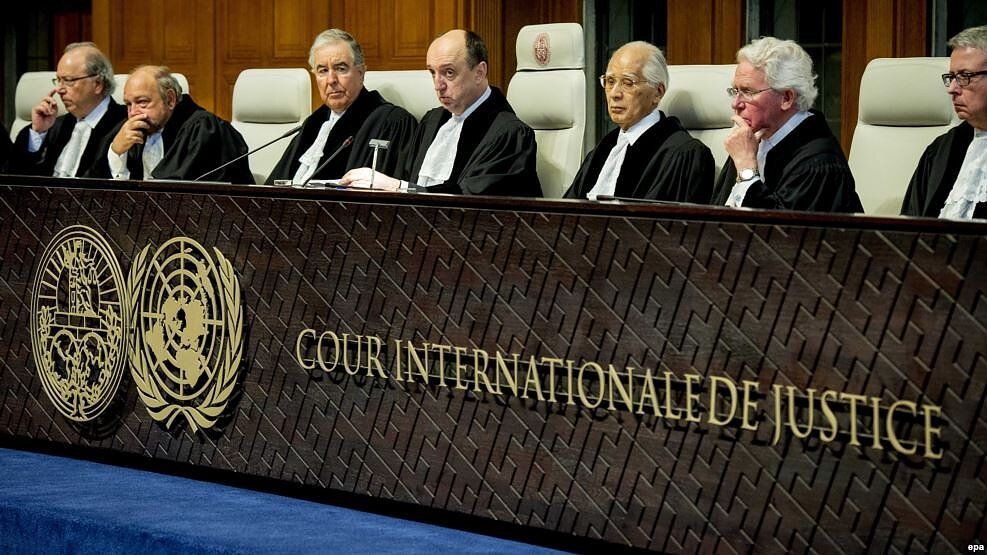
The UN’s International Court of Justice (ICJ)
In its recent advisory opinion on Israel’s policies in the occupied Palestinian territories, including East Jerusalem, the court reaffirmed that:
• an occupying power has no right to annex occupied territory;
• occupation does not create title to territory under any circumstances;
• the duration of occupation is legally irrelevant;
• domestic legal forms used to formalize annexation do not affect its illegality.
International law also invalidates agreements concluded under coercion.
Accordingly, under international law, territories occupied by Russia remain part of Ukraine and cannot be transferred to Russia in a peace agreement. A peace deal involving territorial concessions — including leases, shared jurisdiction, or partial surrender of Ukraine’s sovereignty — risks becoming worthless paper. Meanwhile, Russia would continue to be a state occupying part of a neighbor’s territory.
Implications for Russia: A white elephant
Of course, a blanket recognition of Russia’s land seizures would have devastating consequences for the global order, but even efforts to seek a kind of compromise solution would leave just about all concerned parties worse off — Russian citizens among them. Sometimes it seems that discussions about the “Trump plan” for ending the war are being conducted as if Putin will be the main beneficiary of a potential deal, and Ukraine and Ukrainians will be the main losers. This is indeed partly true. But there is another loser that is hardly ever mentioned — Russians themselves.
From Russia's point of view, such a deal could easily become a trap. It would give Putin significant external legitimacy — the occupied territories would be recognized, sanctions would be partially lifted, and the war would be over. But at the same time, it would cement the extremely vulnerable position of the country and its population in the global system of international relations. Occupied or annexed territories are the definition of a white elephant. Any Russian activity there would trigger new rounds of restrictive measures, and as experience shows, sanctions tend to affect the economy and population rather than only specific officials.
Any Russian activity in the occupied territories of Ukraine would trigger new rounds of restrictive measures.
Russia’s “containment” in the economic, technological and humanitarian spheres would continue, causing severe and potentially irreversible damage to the country’s development. Putin would gain a free hand for domestic repression and for further attempts to reshape the identity of the population in the occupied areas — practices increasingly described under international law as criminal. Russians would take a hit from both sides: mounting repression at home and deepening isolation abroad.
None of this means negotiations are unnecessary or that a ceasefire is not a priority. The issue is not prolonging the war “for the sake of principles,” but honestly assessing what price is being demanded — and who will pay it.
A clause on “full-scale amnesty and non-prosecution,” one of the most controversial points of the Trump proposal, has appeared alongside “factual recognition.” The shortened version removed it on paper, and it does not appear in European alternatives, but its mere appearance is telling. Amnesty for international crimes is an important signal, as recognizing Russia’s occupation would entrench ongoing criminal practices and would implicitly “legitimize” those already committed.
At the same time, however, the utility of pursuing half measures is questionable at best. As laid out above, any deal that allows Putin to achieve international rehabilitation while retaining the levers to maintain his grip on power at home can only lead to further problems. In the end, there is no plausible scenario in which discussions about the legitimization of Russian territorial seizures might lead to a positive outcome.
The Dmitriev-Witkoff Plan as a symptom of a new foreign policy
The most troubling aspect of the Dmitriev-Witkoff proposals is not the plans themselves but how naturally they fit with the new U.S. National Security Strategy, which effectively removes international law and democratic principles from its list of America’s guiding frameworks.
As a result, Ukraine is, in effect, being offered an updated version of the classical “Melian Dialogue” from Thucydides, in which “the strong do what they can, and the weak suffer what they must.” Under such circumstances, international law may continue to exist formally, but accepting its judgements becomes optional — a tool that strong states can use at their convenience.
Such a development would have troubling implications. International law remains the only set of norms that meaningfully restrains power and gives weaker states — and people — a language in which to assert their rights. If we accept that war in the 21st century can yield lasting territorial dividends — and that the execution of mass atrocities can lead to a deal for political immunity — restoring the global order will be far harder than waking international law from its current winter sleep.