After the Twelve-Day War this past summer — when Israel struck hundreds of targets in Iran linked to military infrastructure and the country’s nuclear and defense industries, and neutralized most of its air defenses — Tehran is preparing for what it views as a new existential war for the survival of the regime. But as Russia, a longtime ally of Iran, hesitates and delays already promised deliveries of Su-35 fighter jets and modern air-defense systems, China has moved into the lead and is becoming the primary supplier to Iran’s military.
For many years, Iran sought to develop its own military technology and reduce imports as much as possible. That was in part due to the difficulty of procuring foreign equipment, but it was also a case of a genuine desire to improve self-reliance.
Two generations behind
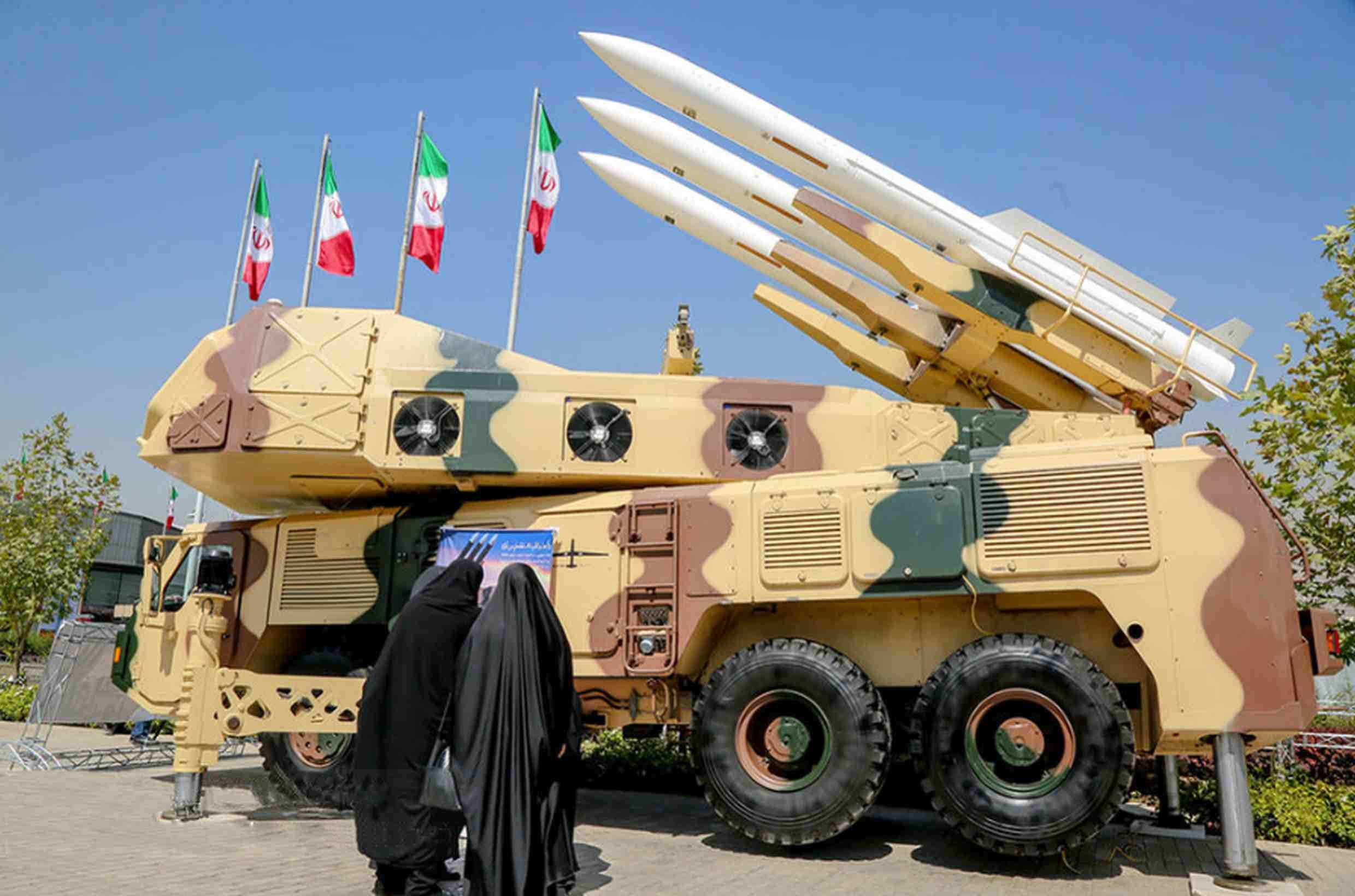
Tehran’s air defence forces are the most obvious case, as Iran developed a vast array of modernised American models of missiles and even manufactured some Russian models. The air force also relied on some purchases from Russia and China and on the modernisation of old American warplanes, mostly with Chinese avionics.
These efforts are now known to have been failures. The Revolutionary Guards and Iran’s military have always dodged questions about the capabilities of their home-made anti-aircraft missile systems and sometimes exaggerated the capabilities of some of the most recent models, such as the Bavar 373. Recently, however, one senior Revolutionary Guards officer acknowledged that while all air defence systems in Iran’s possession underperformed in the Twelve-Day War, even their oldish Russian systems still proved to be significantly better than the Iran-made ones. As for the air force, Iran’s efforts to develop locally made light fighters have gone nowhere, and the modernisation programmes aimed at old American warplanes of the 1970s produced aircraft whose only rational course of action when faced with Israeli fighters was fleeing. Iran was, as of June 2025, almost two full generations behind the Israelis and the Americans.
From Russia…slowly
Given the fact that Iran’s drive to develop its own technologies was so obviously flawed, there is a new urgency in Tehran to procure military hardware fast. With the psychological hurdles overcome thanks to the trauma of last summer’s direct conflict, the external obstacles might also be in the process of being removed. In October, the Kremlin hinted that Russian military sales to Iran were a consequence of the Twelve-Day War. However, a couple of weeks earlier, a leaked document showed that Russia and Iran had already agreed on the sale of 48 Su-35s way back in 2022.
In reality, the sale of Su-35s was touted by the Iranian authorities for years and therefore is no real news (even if it has created a certain buzz); however, for the first time, the exact number of warplanes ordered was revealed. Deliveries should have started already, and it is well known that the Iranian defence authorities complained loudly about the delays, which they attribute to Moscow’s desire to safeguard relations with Israel. The execution of the contract had started in earnest in 2022, say Iranian military sources, as Iranian pilots and mechanics started training in Russia to be ready to take over the new planes.
Iranian defence authorities complain loudly about the delays, which they attribute to Moscow’s desire to safeguard relations with Israel.
Iran also started receiving advanced new Yak-130 trainers from Russia, clearly an acquisition linked to that of the Su-35s. But the new warplanes have not turned up yet.
Now, say the same Iranian military sources, the Russian government has finally agreed to start deliveries of the Su-35s. Initially, 24 Su-35SEs, part of an order cancelled by Egypt, will be transferred to Iran, followed by 24 new production Su-35s in 2026-27. Russia implicitly acknowledged its culpability for the delay by gifting to Iran half a dozen modernised MiG-29 fighters.
The October delivery of such a small number of these fighters changes little or nothing in the balance of forces between Iran and Israel, not to speak of the disparity between Iranian and U.S. capabilities. From Russia’s point of view, it is a gesture of goodwill towards Iran and a reassurance that this time Moscow is serious, and perhaps also a reminder that Russia could also quickly and cheaply upgrade the small fleet of Iranian MiG-29s to 4++ generation standards.
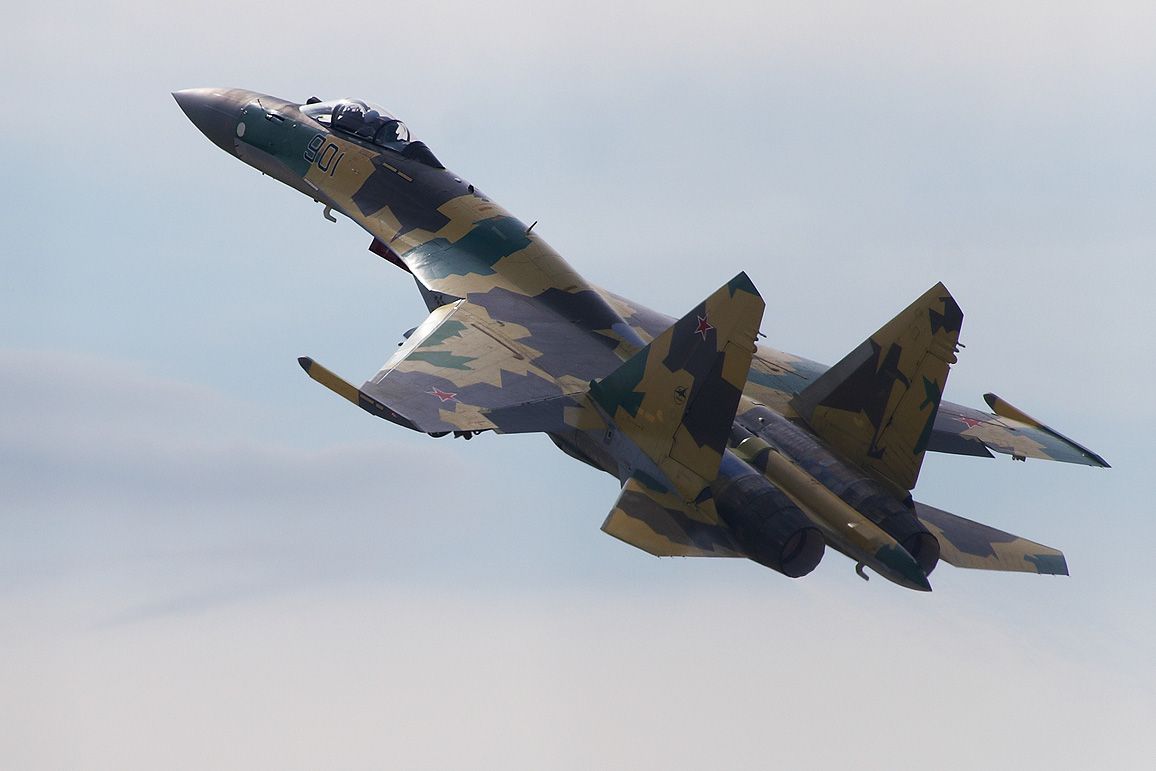
Russia’s Su-35 jet fighter
Realistically, Iran will not be able to afford to entirely replace its decrepit fleet of aircraft anytime soon, both because of the cost and because of production times. Upgrading part of its fleet could therefore make sense. The Russians nowadays use the MiG-29s mostly for advanced training, so this could be another reason for the delivery — to help Iranian pilots get ready for the Su-35s as quickly as possible.
The Iranians also covet the S-400 because it is the most advanced air defence system on the market that they can realistically expect to be able to buy. Although the Russian government denies having been approached by the Iranians about the S-400 before the 12 Day War, now it is definitely on the agenda thanks to its long range and its ability to target F-35s (even if only at a greatly reduced range). Iranian sources within the Revolutionary Guards say that a single battery has been delivered and is now active in Isfahan, where one of Iran’s most important nuclear sites is located.
A single S-400 battery has been delivered and is now active in Isfahan, where one of Iran’s most important nuclear sites is located.
The sale of larger numbers has not been agreed yet, but it is not ruled out. Although Russia clearly needs the S-400s to secure its own skies, it has massively increased production since the start of the full-scale invasion of Ukraine, meaning Moscow could conceivably spare some for Tehran. The negotiations, however, are moving too slowly for the very worried Iranians.
Beijing takes the lead
Once mostly reliant on purchases of advanced weaponry from Russia, with China running a distant second, Iran started importing more military technology from Beijing in recent years, using Chinese technology to upgrade its air defence systems and warplanes, for example. Now, due to Russian hesitation, China seems to be overtaking Russia as Iran’s lead provider of military technology — Beijing is both more willing and better able to deliver.
China seems to be overtaking Russia as Iran’s lead provider of military technology — Beijing is both more willing and better able to deliver.
Sources within the Revolutionary Guards say that in July Iran signed a contract with China for the delivery of HQ-9 air defence systems, probably the B version (essentially an improved derivative of the Russian S-300). Although it is reportedly a small order of about six batteries containing six launchers each, it compares favourably with the four S-300 batteries it took Russia nine years to deliver. Few, if any, manufacturers of advanced weapons can compete with China in terms of delivery times, and by October half of the promised batteries had been delivered.
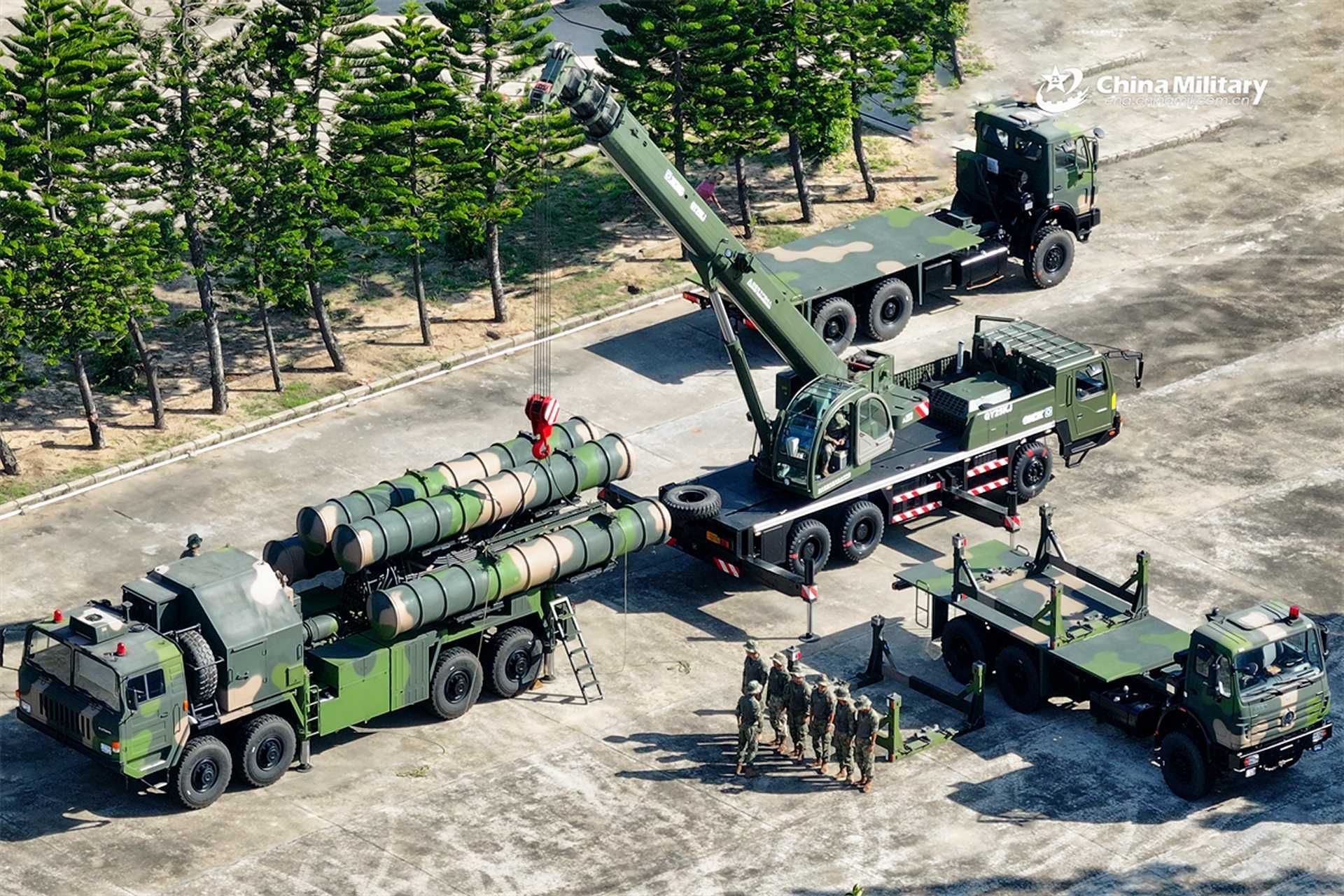
A Chinese HQ-9B air defense system
Once again according to sources in the Revolutionary Guards, China has already deployed advisers and technicians to Iran — to help with setting up the HQ-9 and training the crews, but also to lay the ground for the future delivery of J-10C fighters. This would suggest that a deal over the sale of J-10C has either been signed or is imminent. A lighter and shorter range fighter than the Su-35, the J-10C is, in some regards, more advanced, in particular as far as the radar is concerned.
A focus on ballistics
Iranian military officials are certainly convinced that a new war is around the corner and that this represents an existential threat to the regime. Hence their rush to fill the most obvious gaps in their defences. In reality, the HQ-9 batteries already delivered have not even started being integrated into the Iranian national air defence network, according to sources in Iran’s military. One of the main lessons of the 12 Day War is that Iranian air defences were overly segmented, consisting of systems of Russian, Chinese, American, and Iranian origins that often use completely different technologies.
Full integration of the new systems might take a long time or, judging from past performance, might never be fully achieved. Matters will become even more complicated if additional new systems were to be delivered, as integrating a large number of new systems together would require years. Therefore, the Iranians seem to have given up on creating a real national air defence system, opting instead for trying to raise the cost of penetrating Iran’s airspace to the Israelis. Rather than use the HQ-9s for improving the overall network, the Iranians seem to intend to use them to protect a few high value assets.
The Iranians seem to have given up on creating a real national air defence system.
According to Iranian military sources, the Russian Rezonans radar in Iran’s possession is able to detect Israel’s stealth fighters; however, this past summer the capability proved less than consequential, as Iran did not have any system capable of targeting the F-35s. Now the single S-400 battery and perhaps the HQ-9s (assuming they are of the B version) likely have some capacity to target the F-35s.
While such capabilities are still limited, they would raise the cost to the Israelis in the event of a new air campaign (assuming the Iranians will be able to protect the new system from special forces raids the next time around).
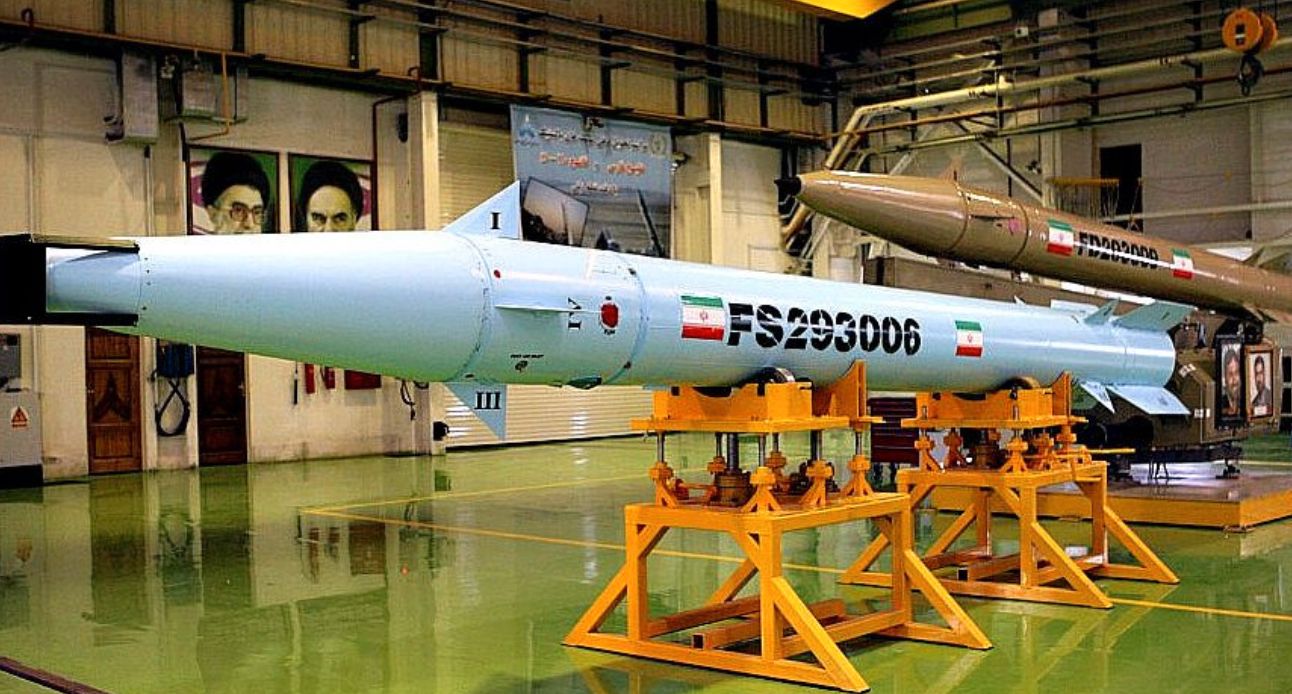
Iranian ballistic missiles
Nonetheless, the few HQ-9s and S-400s will not be able to stop a determined Israeli air campaign, especially if the Americans join in. The Su-35s and J-10Cs, even if they arrived in time, would also be of limited use, not least because it would take a long time to train the pilots to sufficient standards. The Iranian military knows this. The paradox, therefore, is that after all of this effort, Iran will still be largely forced to rely on its own technology, chiefly ballistic missiles, in any new confrontation with Israel or the U.S. that might take place over the next 1-2 years.